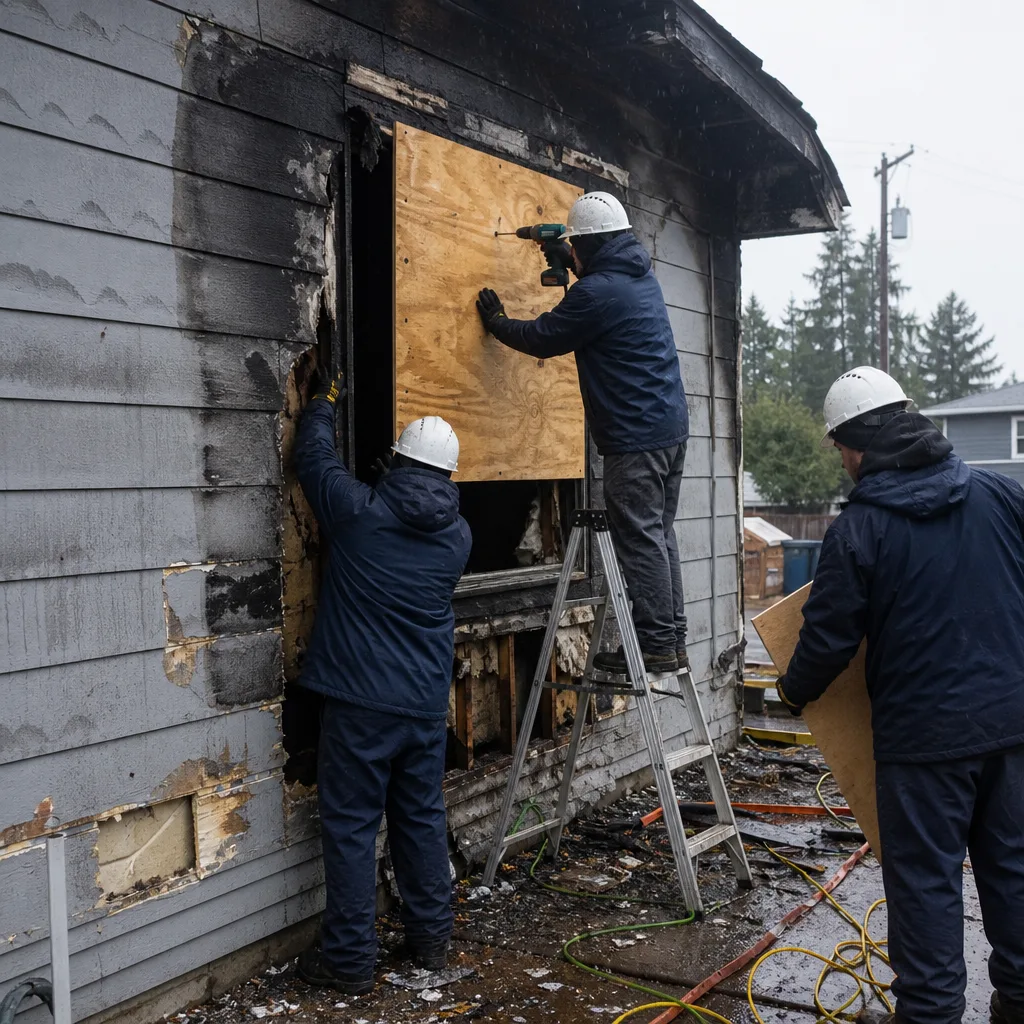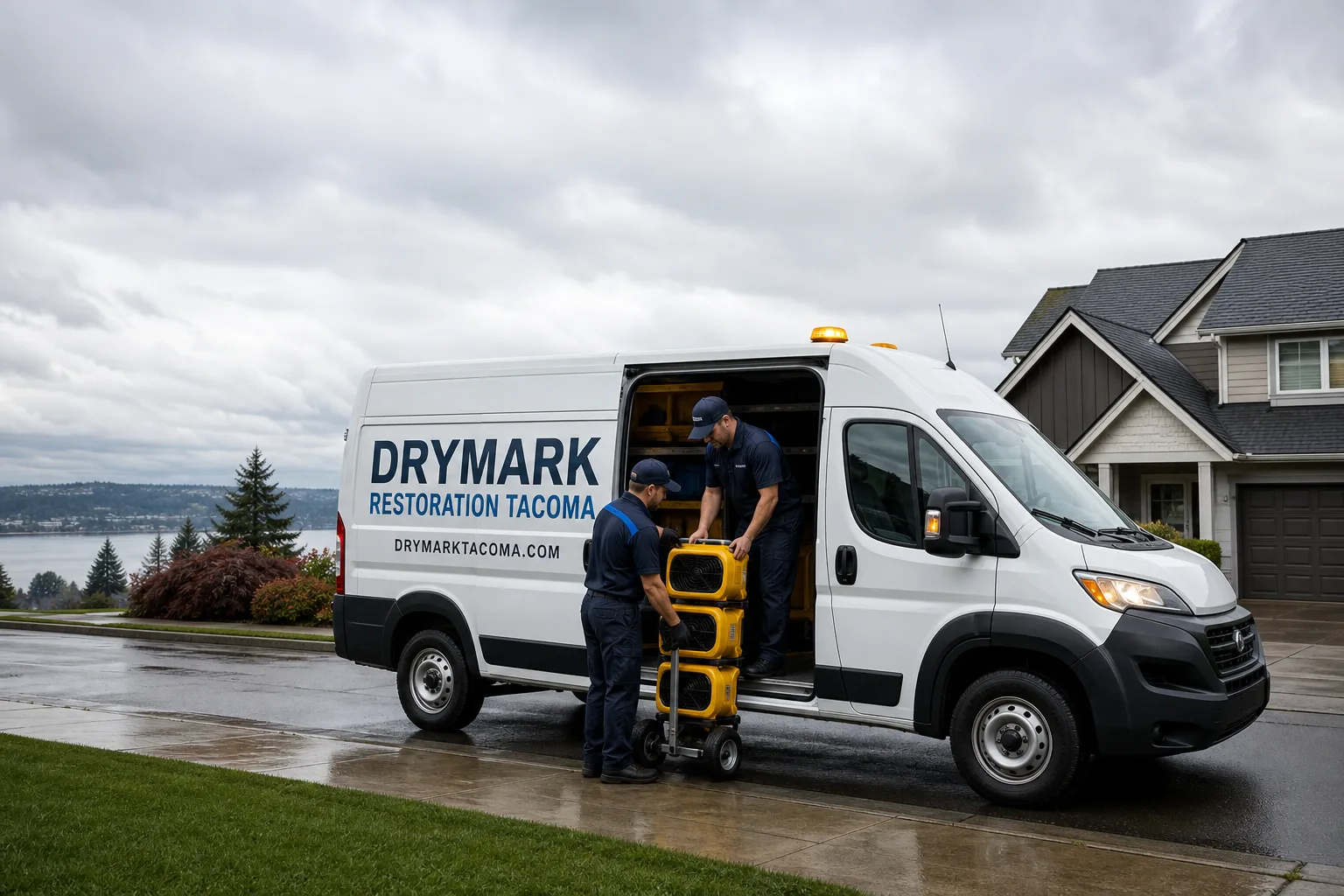
Free visual inspection and a written scope of work before any mitigation begins - photos, moisture readings, and drying logs go in your claim file
The scope we write is the scope we bill. Anything new gets shown to you, in writing, before we touch it.
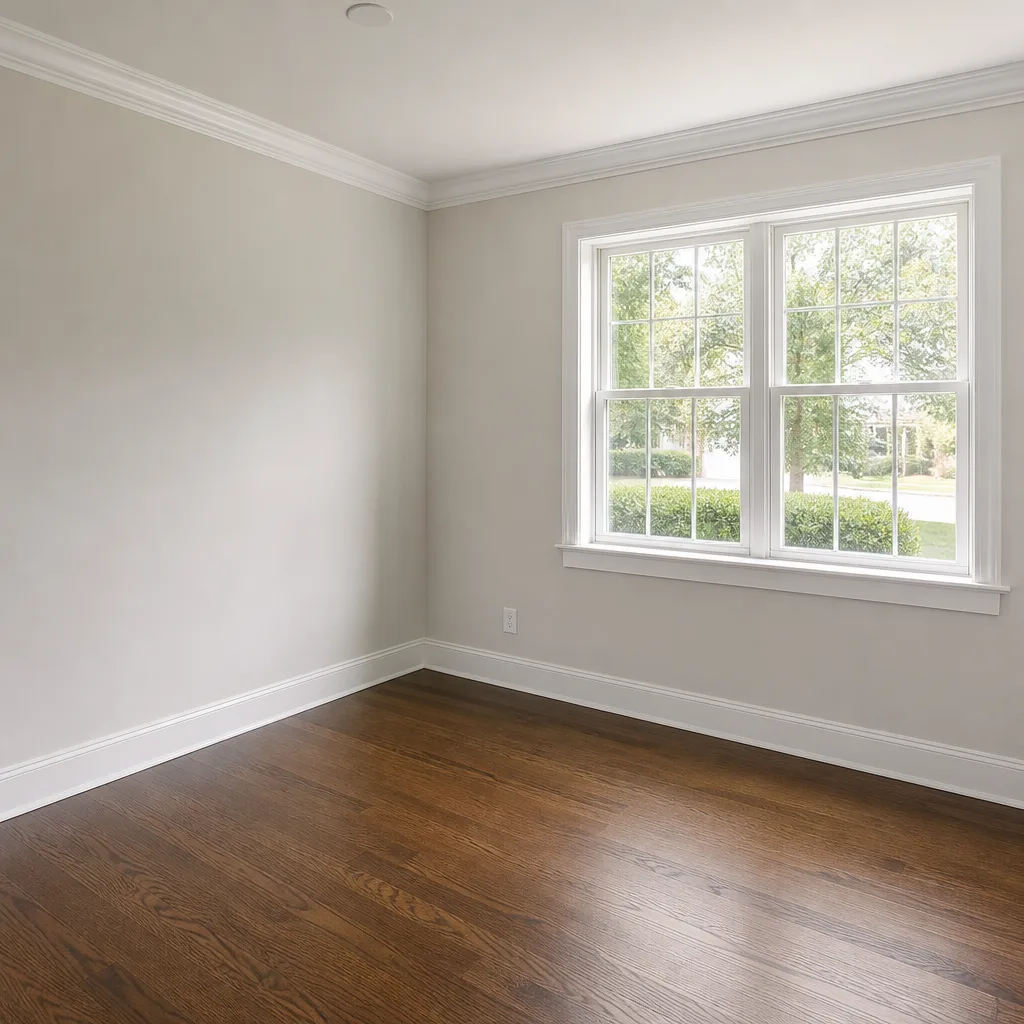
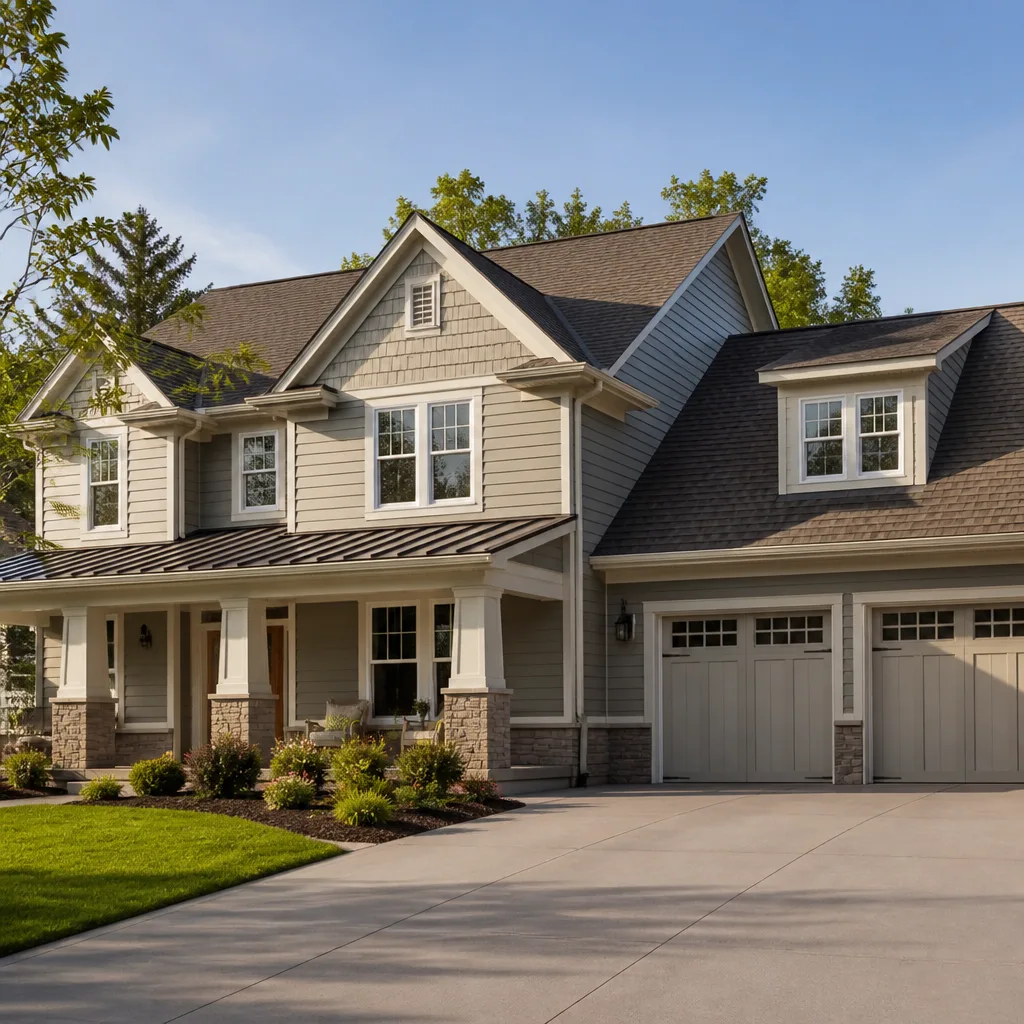
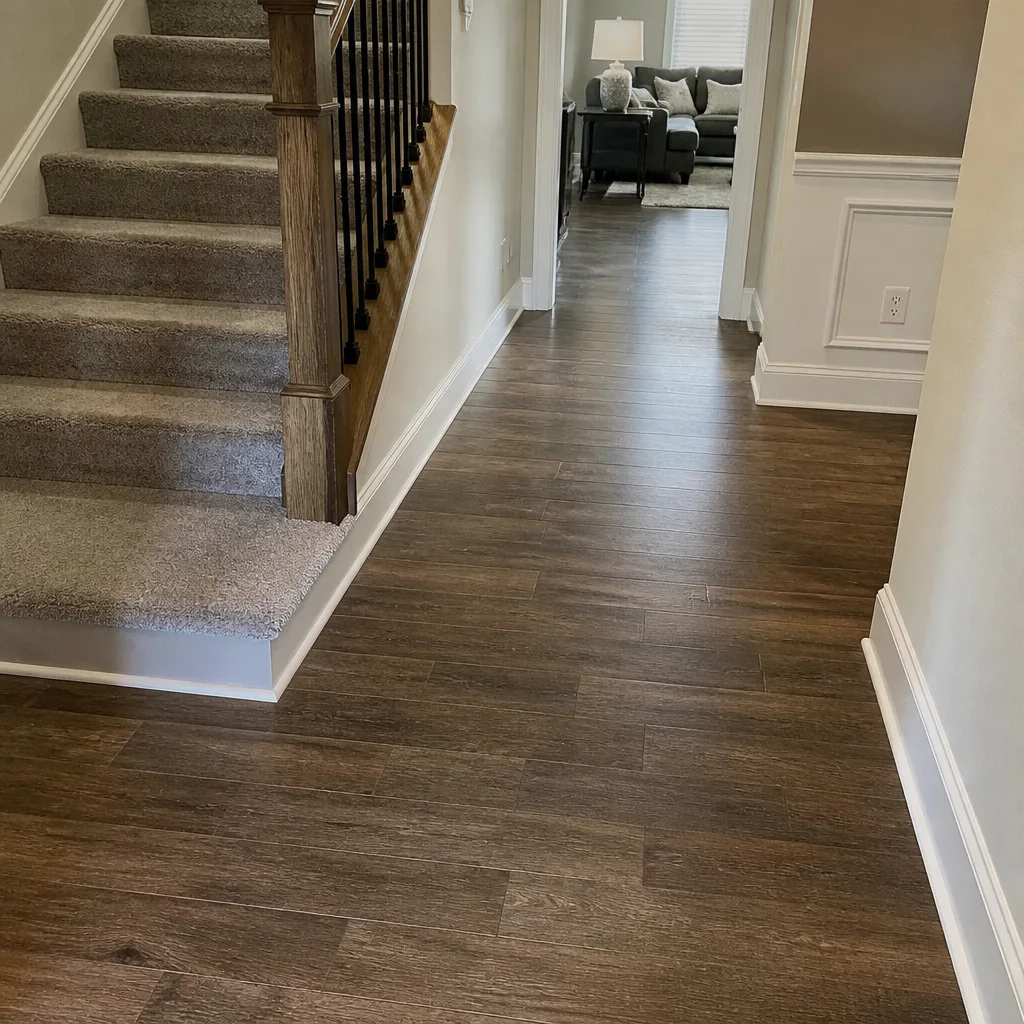
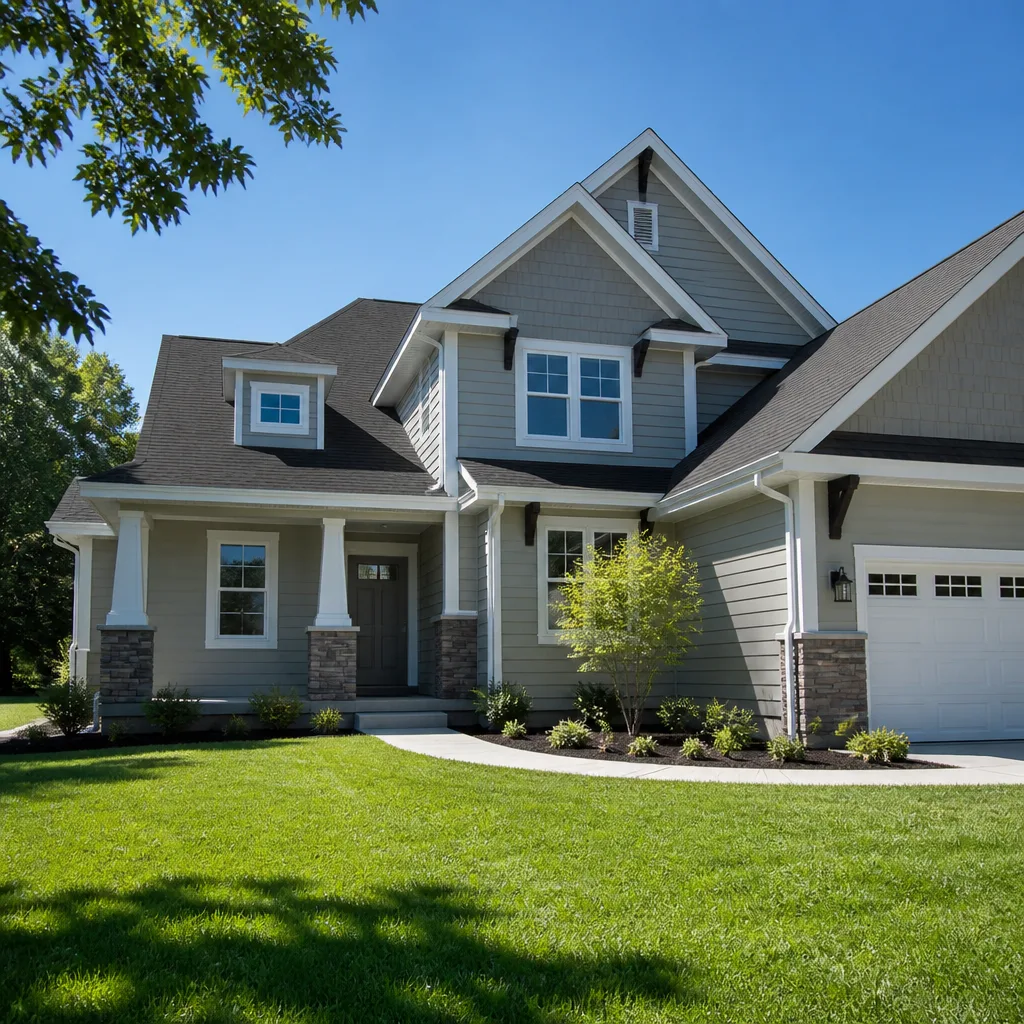
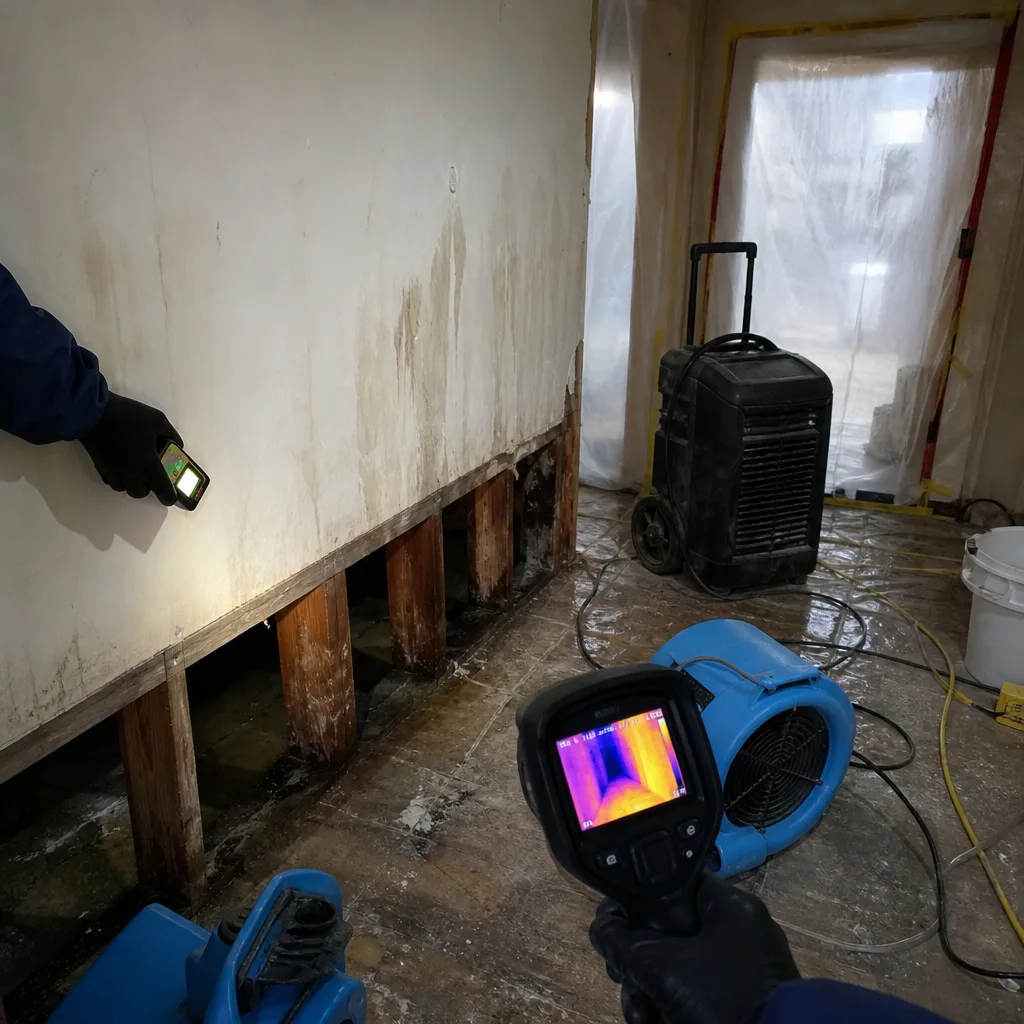 Before
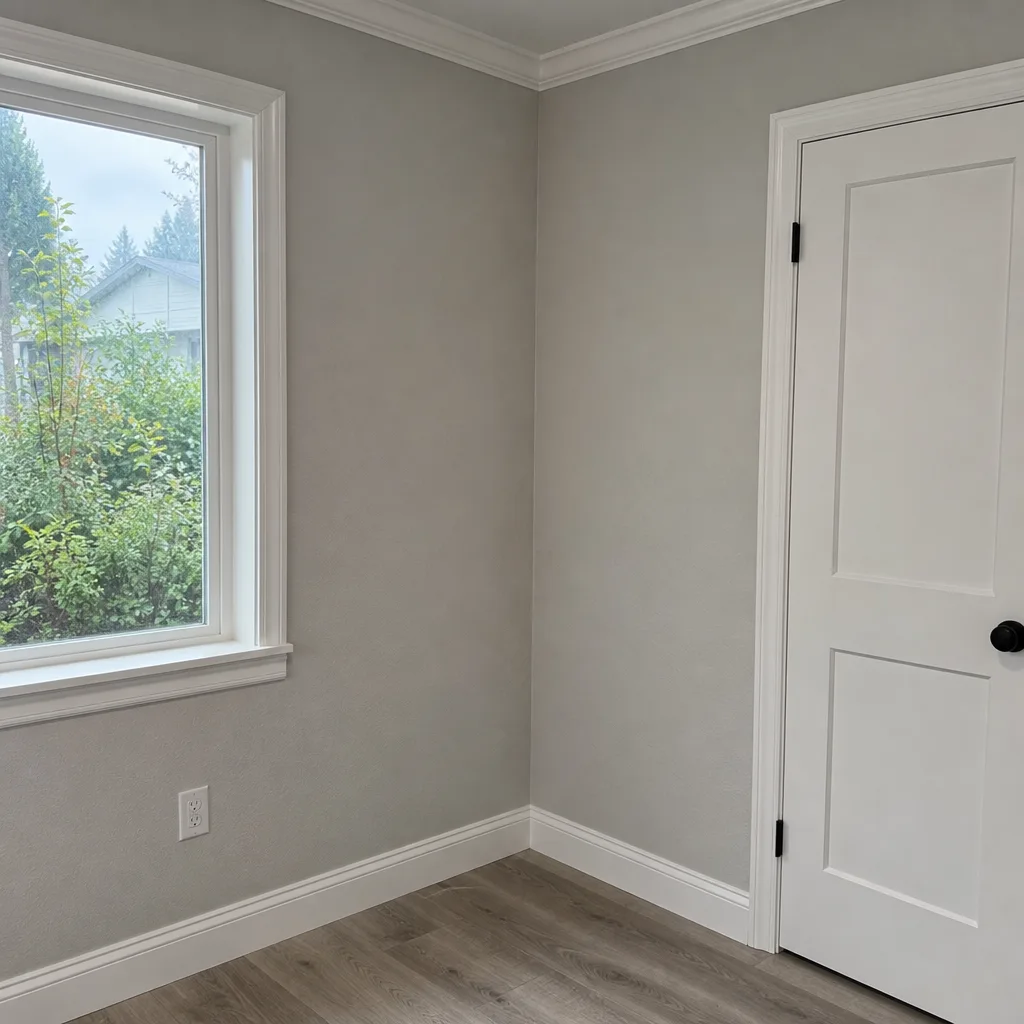 After
After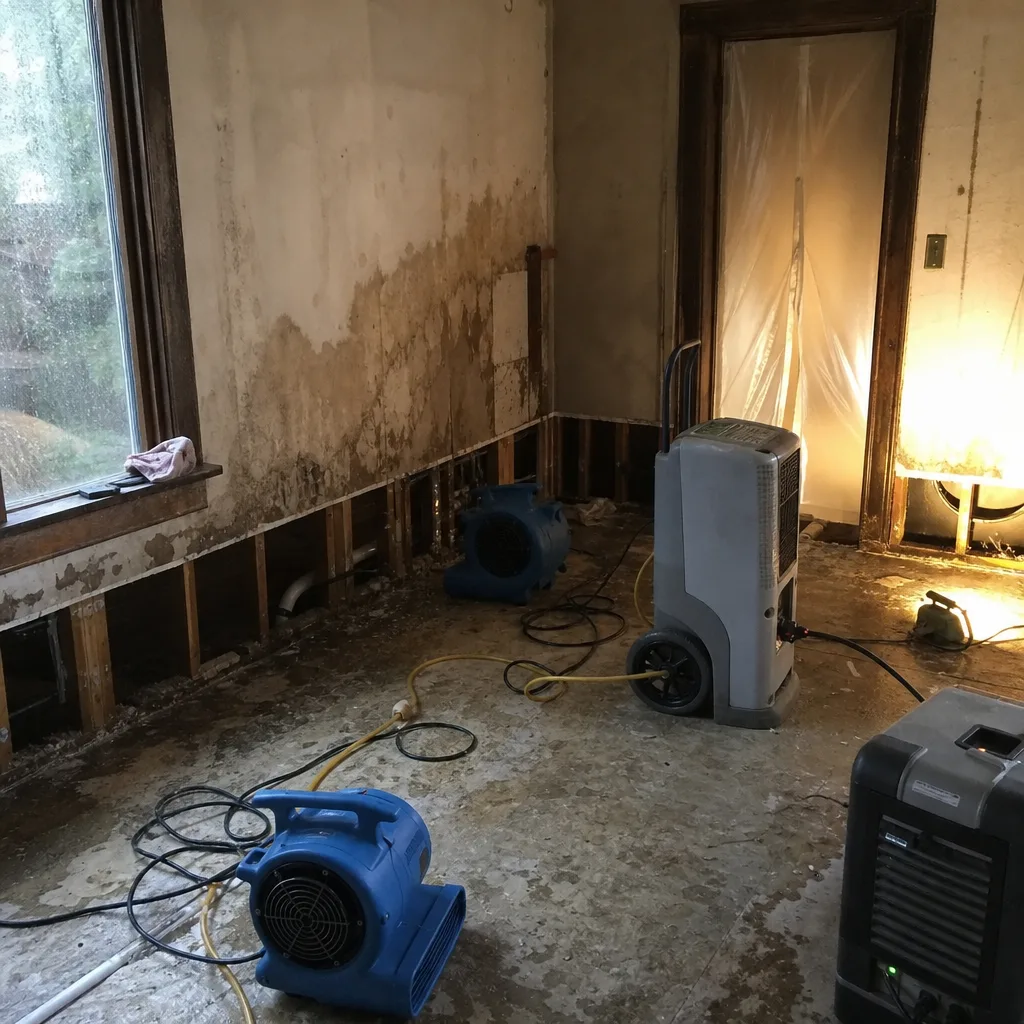 Before
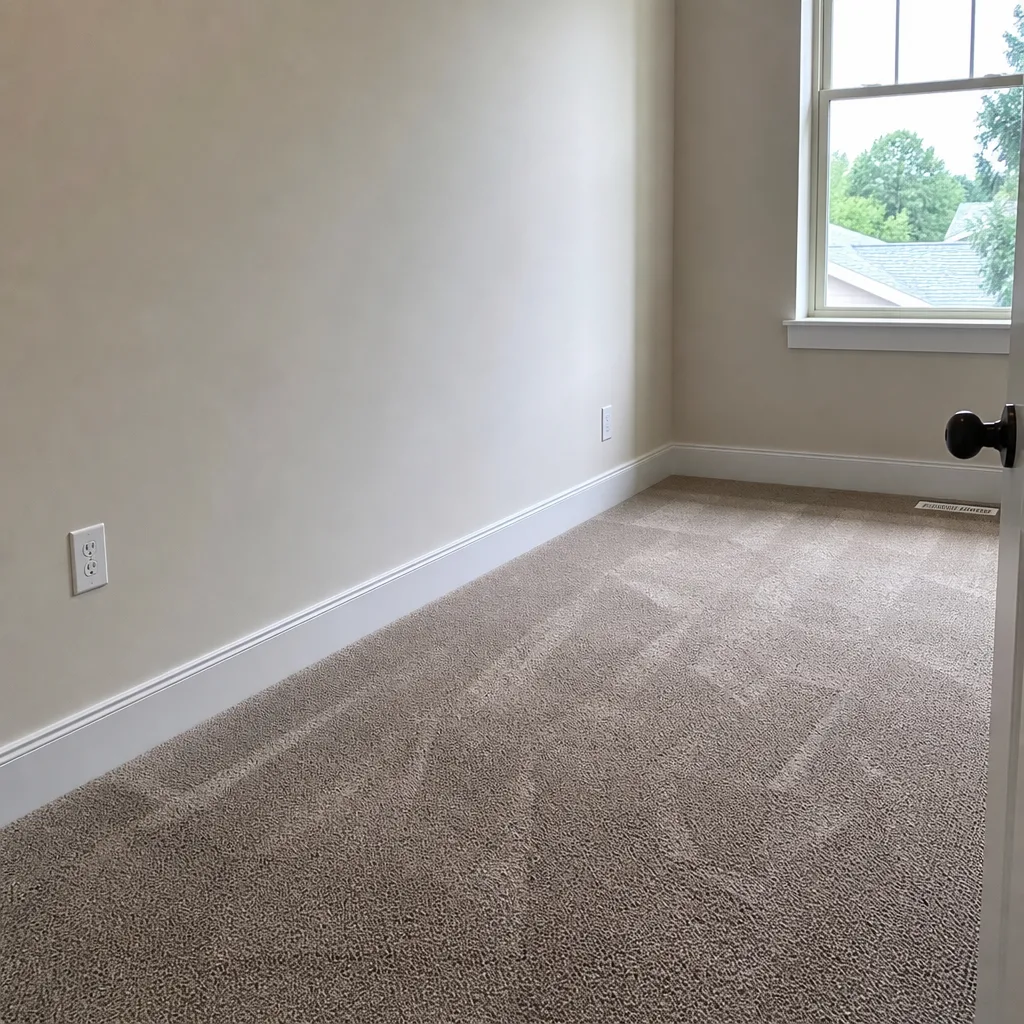 After
After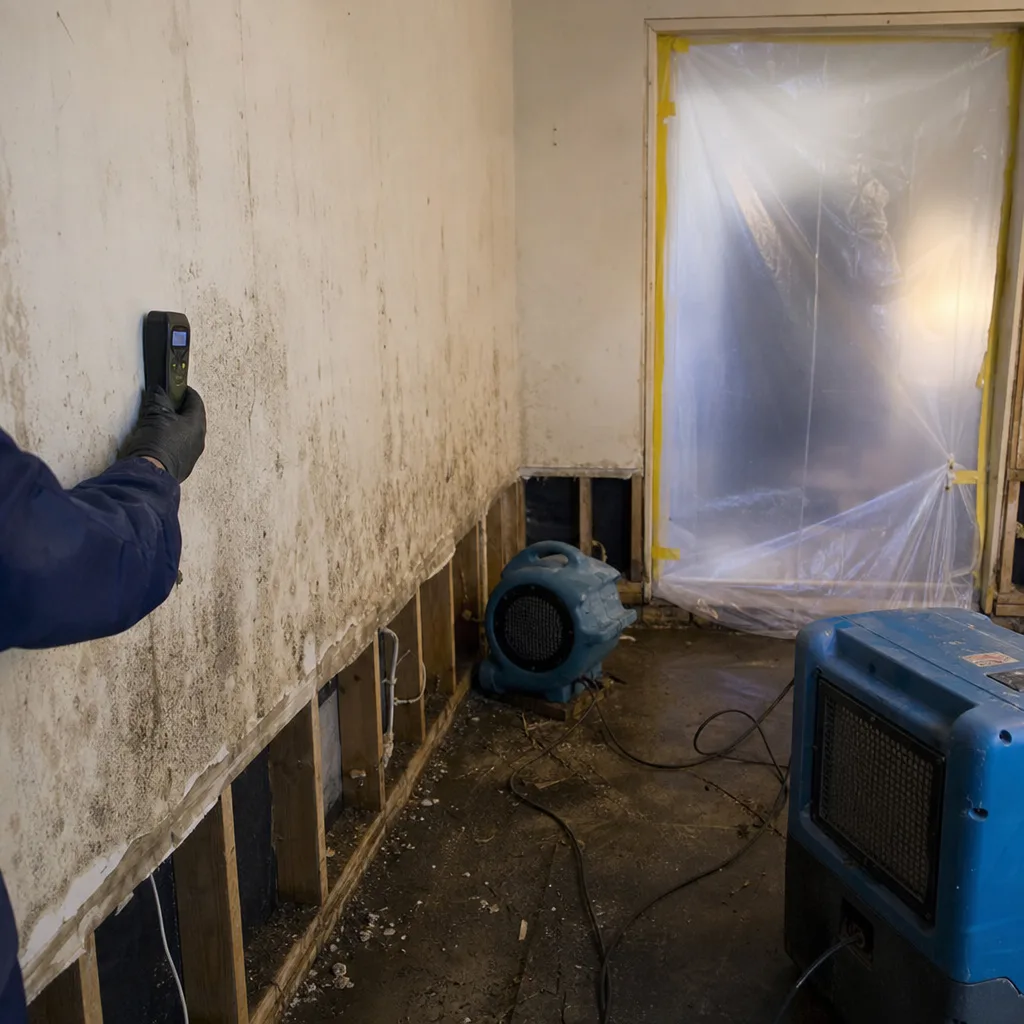 Before
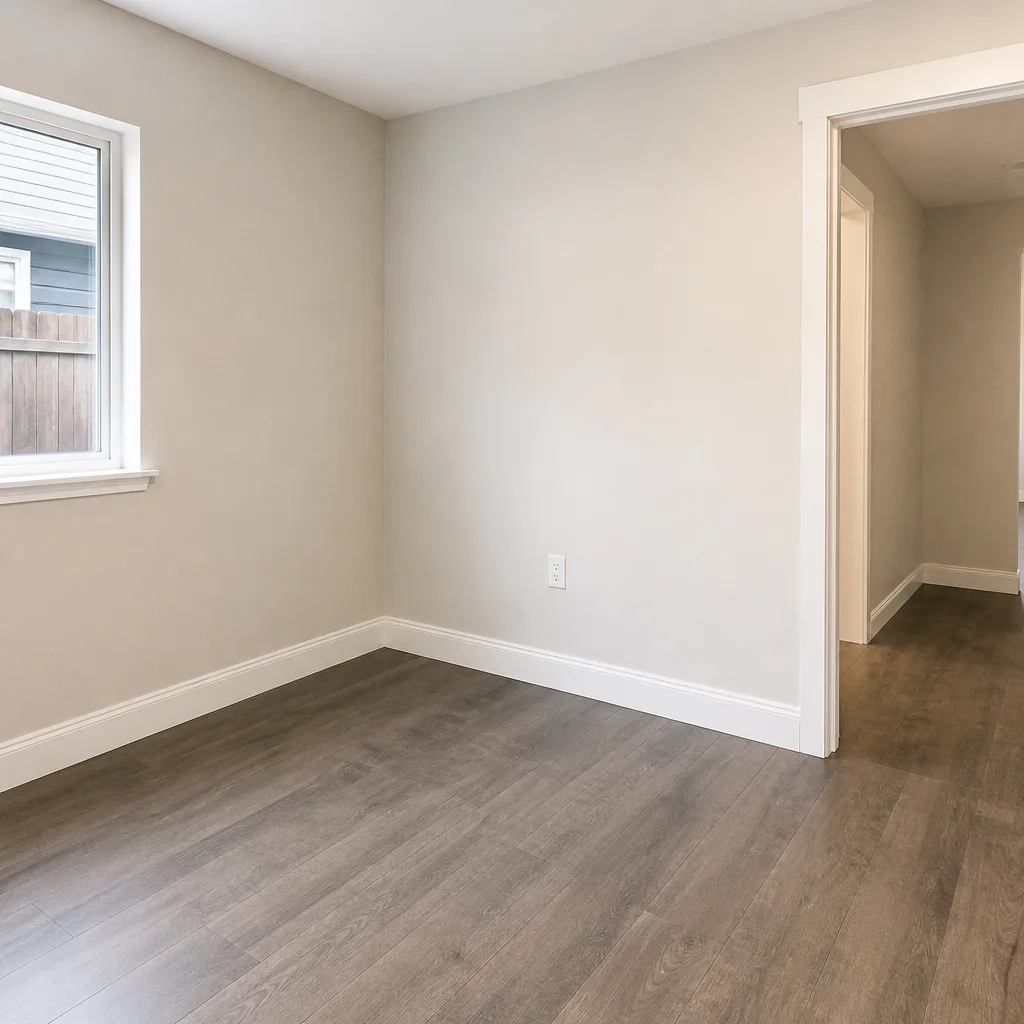 After
AfterFast, Reliable Water Damage Restoration Across Des Moines
Water damage restoration in Des Moines typically costs between $1,800 and $6,500 for residential jobs, with emergency extraction starting around $400-$800 and full structural drying running $2,200-$4,800 depending on square footage and material saturation. Most Des Moines homeowners see our crew on-site within 60-90 minutes of calling (253) 265-9692, with live dispatch coordinating from our Seattle office and routing crews directly to the mid-slope neighborhoods above the marina, the Creek corridor, and the bluff-top homes along Puget Sound.
Des Moines is not a flat suburb. The bluff topography, the marine air, and the post-war housing stock create a moisture problem that standard restoration playbooks miss. We’ve restored homes in this waterfront community since 2011, and we’ve learned that water here comes from two directions at once. That matters because the wrong drying strategy leaves mold growing where you can’t see it.
Our Water Damage Restoration team serves Des Moines under The Haven Standard, with a written price before any work starts, documented photo records on every visit, and the 365-Day Done Right Promise backed by Alicia Brennan.
Why DryMark Restoration Tacoma Is Des Moines’s Preferred Water Damage Restoration Company
We’ve restored over 12,000 homes since 2011, and the Des Moines jobs stick in our files because they test our documentation. The dual-source moisture assault here, hillside groundwater plus marine vapor, means our moisture mapping has to be more thorough, our drying logs more detailed, and our photo records more extensive than what inland jobs require. Insurance adjusters familiar with Des Moines claims know to look for that documentation, and they find it in our files.
Our response time to Des Moines averages under 90 minutes during peak storm season from November through March, when Pacific marine storms concentrate rainfall and the bluff topography channels runoff toward the mid-slope residential band. Dispatch coordinates from our Seattle office, but crews are already positioned for South King County calls.
Des Moines homeowners who research before calling tend to read our three-star reviews along with the fives. What they find is consistent: we show our moisture readings, we deliver written scopes before starting work, and we don’t add charges once the crew is inside. Haven Standard, Clause 1.
Our Water Damage Restoration Services in Des Moines
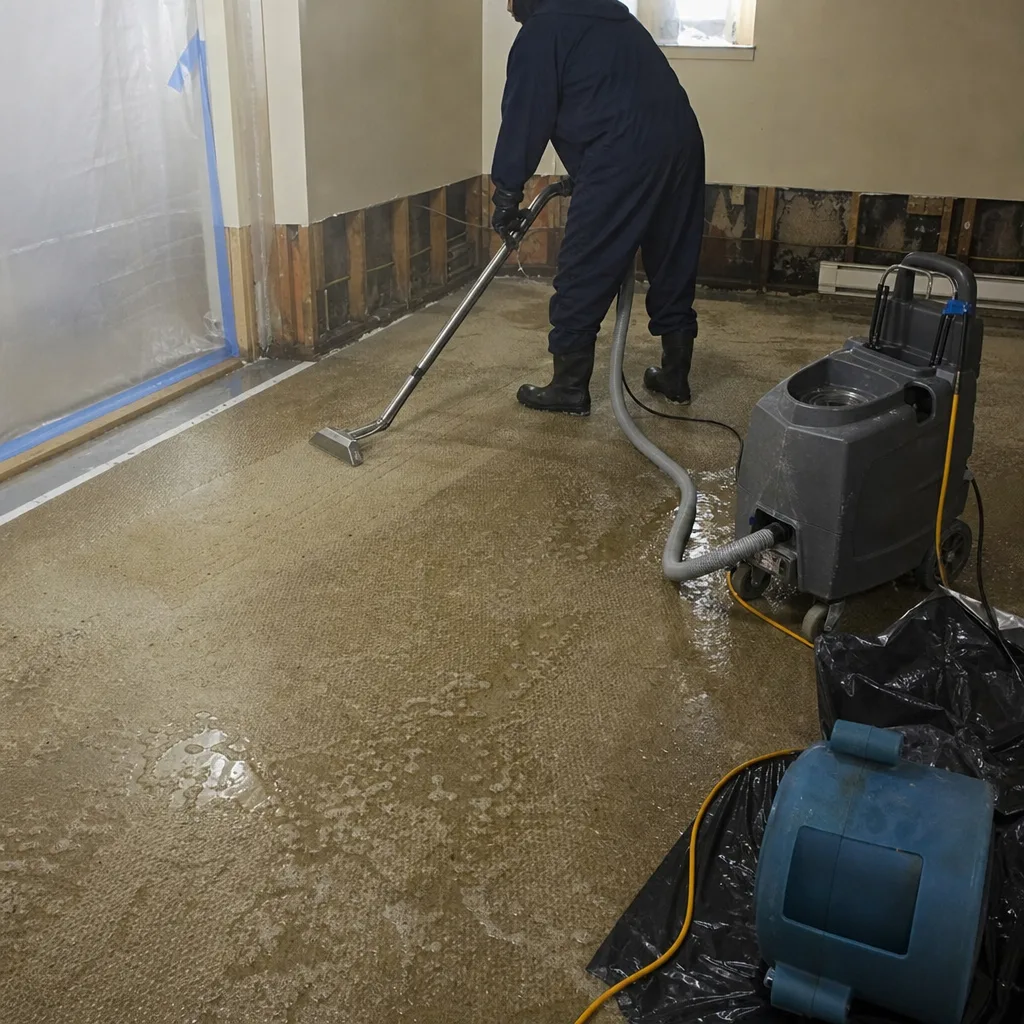
Emergency Water Extraction
When water enters a Des Moines home, speed matters. Our truck-mounted extraction systems remove standing water from flooded basements, crawl spaces, and main levels within hours, not days. In the Creek corridor neighborhoods, where localized flooding backs up into lower-level finished areas during multi-day rain events, we prioritize extraction that prevents lateral migration into drywall and framing. Every extraction job includes moisture mapping with thermal imaging to identify hidden saturation, and we document pre-loss conditions with dated photos before moving a single piece of furniture.
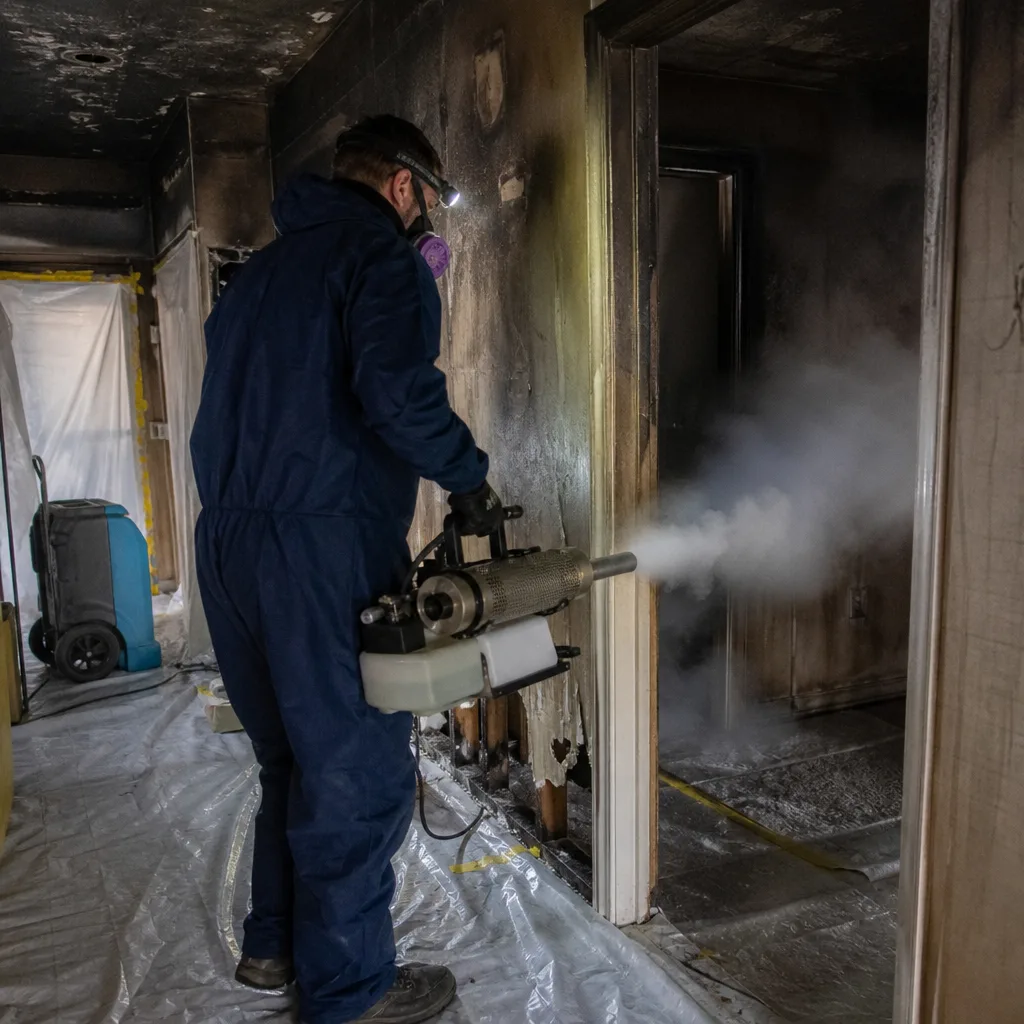
Structural Drying & Dehumidification
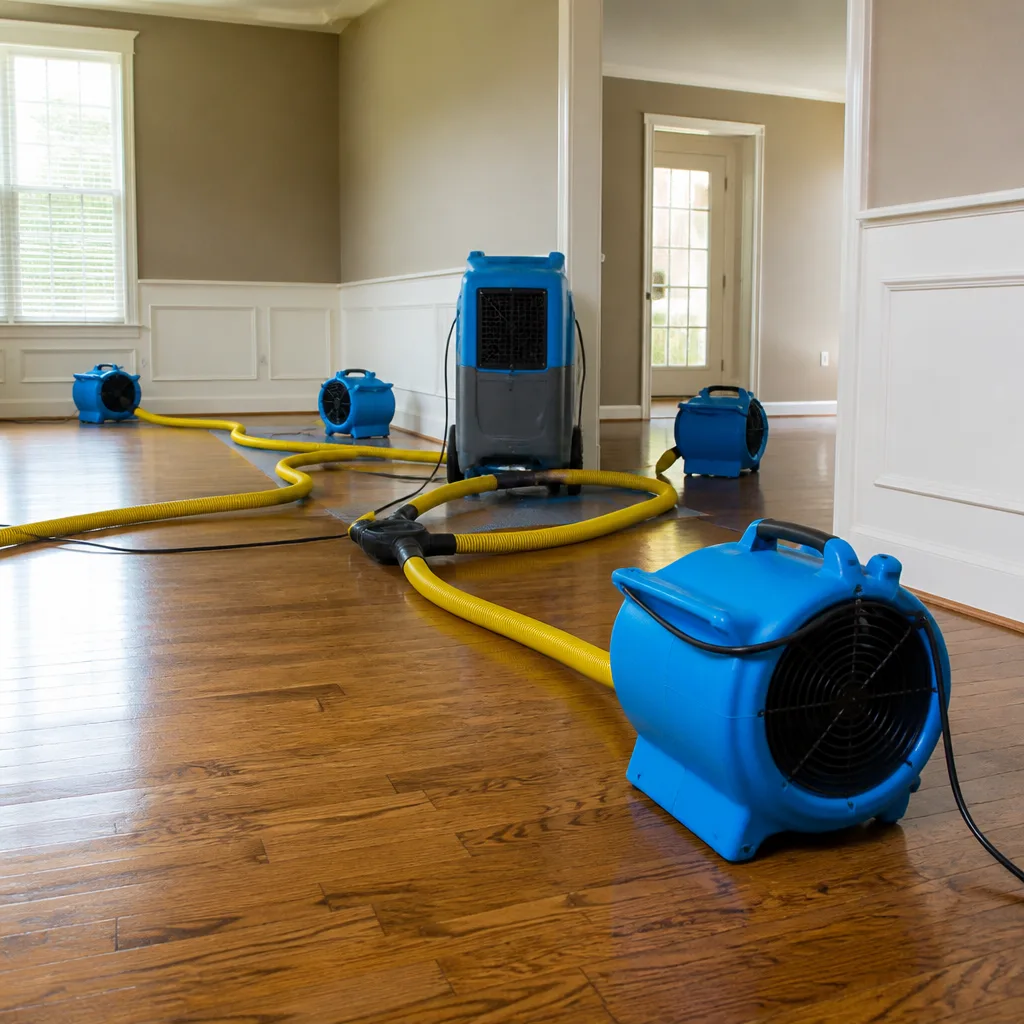
This is where Des Moines’s unique conditions demand expertise that inland contractors often lack. Standard dehumidification, the kind that runs upstairs in a living room, never reaches the mold colonization zones we find in Des Moines crawl spaces. Our crews deploy Phoenix and Dri-Eaz LGR dehumidifiers with Injectidry floor mat systems and air filtration devices, positioning equipment based on psychrometric data, vapor pressure differentials, and the specific moisture load of marine-influenced framing. We calculate drying goals from established standards, not guesswork, and we produce daily drying logs that adjust equipment placement based on actual grain depression readings. These logs become the documentation that turns your restoration invoice into a payable insurance claim.
Flood Cleanup
Des Moines Creek corridor properties face localized flooding that carries Category 2 or Category 3 contamination, particularly when storm runoff overwhelms drainage infrastructure. Our flood cleanup protocol includes source-containment, extraction, antimicrobial application, and full structural drying with independent moisture verification before reconstruction begins. We coordinate directly with adjusters, providing photo-documented assessments and written scopes that specify material classifications by trade name, so there’s no dispute about what was removed and why.
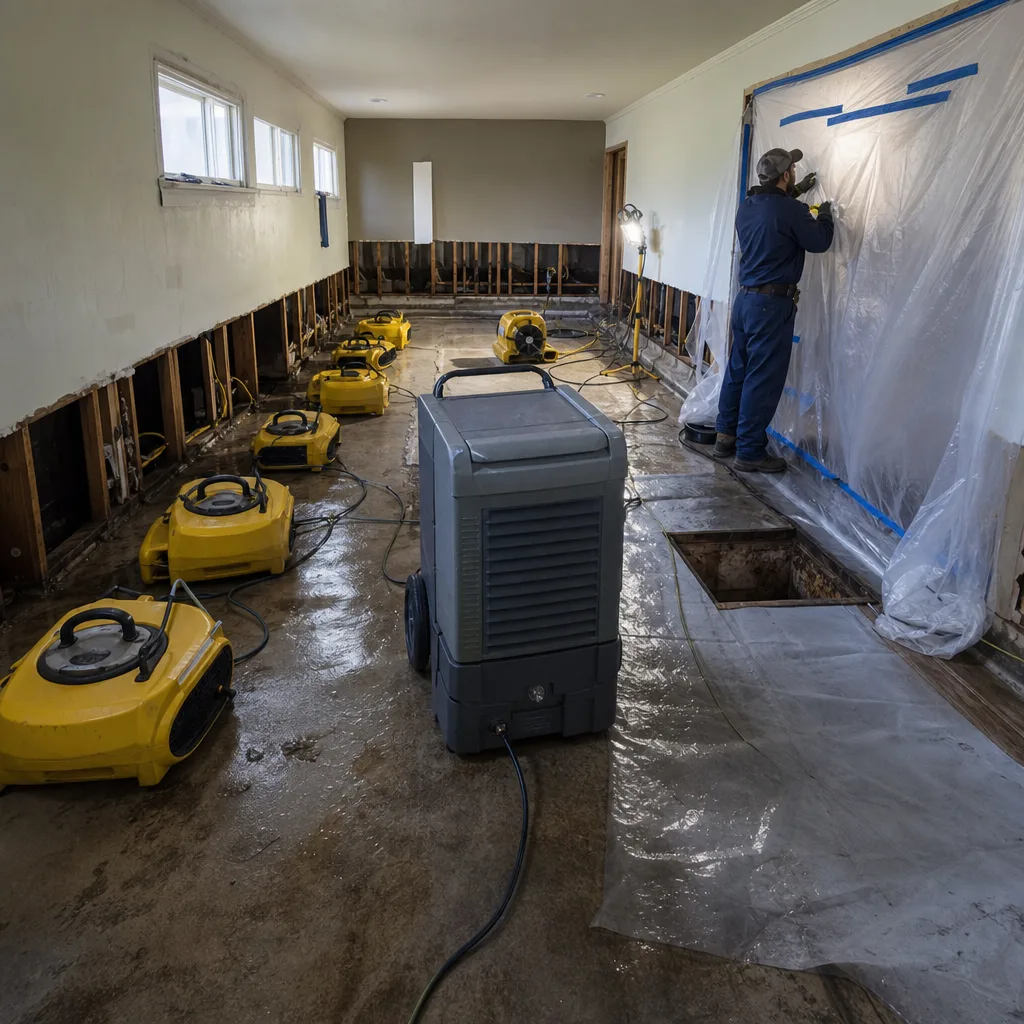
Burst Pipe Restoration
The majority of Des Moines homes were built between the 1950s and 1970s, with galvanized or early copper plumbing now at failure age. Burst pipe restoration in these ranch-style and split-level homes often reveals secondary damage in unencapsulated crawl spaces where water has pooled undetected. We extract, map moisture in subflooring and wall cavities, dry to IICRC standards, and document every phase. For homes closer to the marina corridor, where pre-vapor-barrier construction compounds the damage, our scopes address both the immediate burst and the chronic moisture conditions that made the space vulnerable.
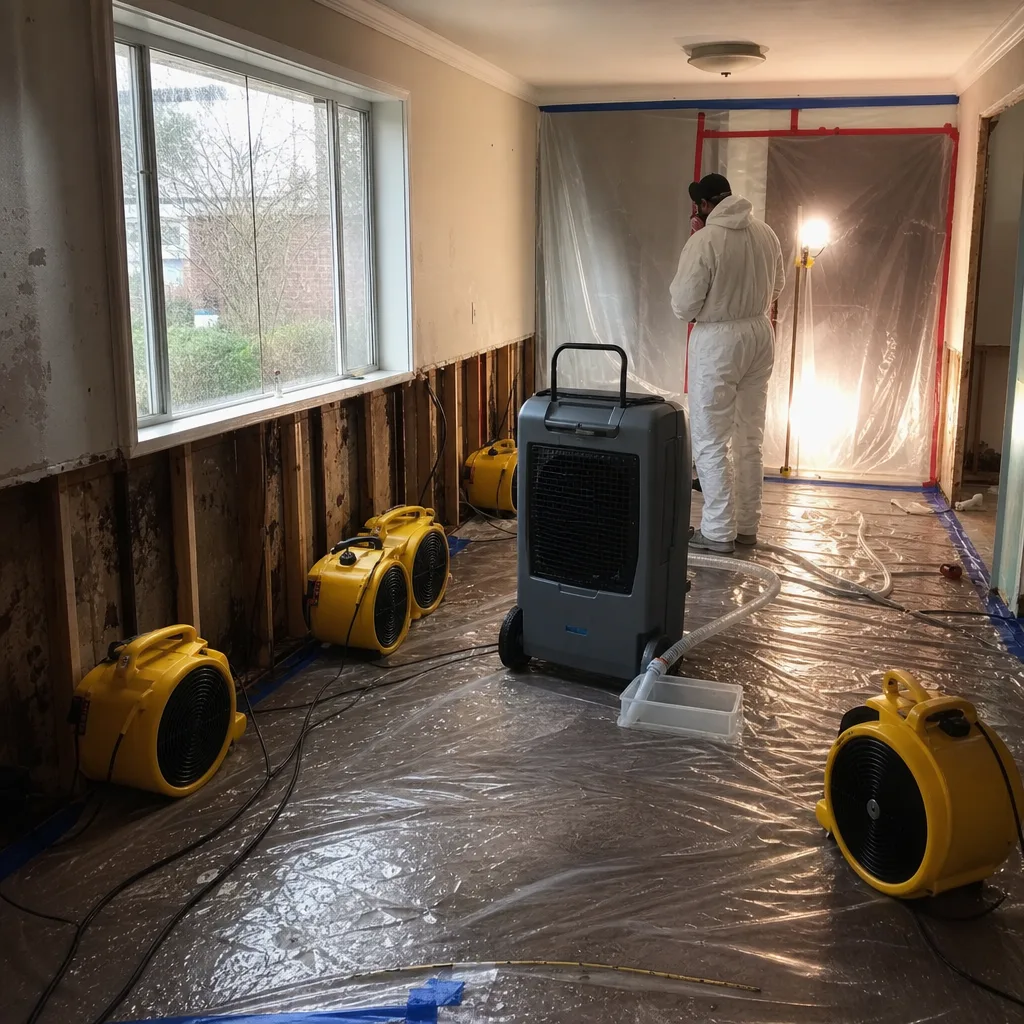
Basement Water Removal
Des Moines basements, where they exist in the split-level stock, sit at the intersection of hillside groundwater migration and marine vapor pressure. Water removal here requires sub-slab drying capability, not just surface extraction. We use Injectidry systems to create negative pressure beneath concrete slabs, pulling moisture from soils and gravel beds that conventional equipment cannot reach. This is standard on our Des Moines basement jobs because we’ve learned that extraction alone, without sub-slab drying, guarantees callback within weeks.
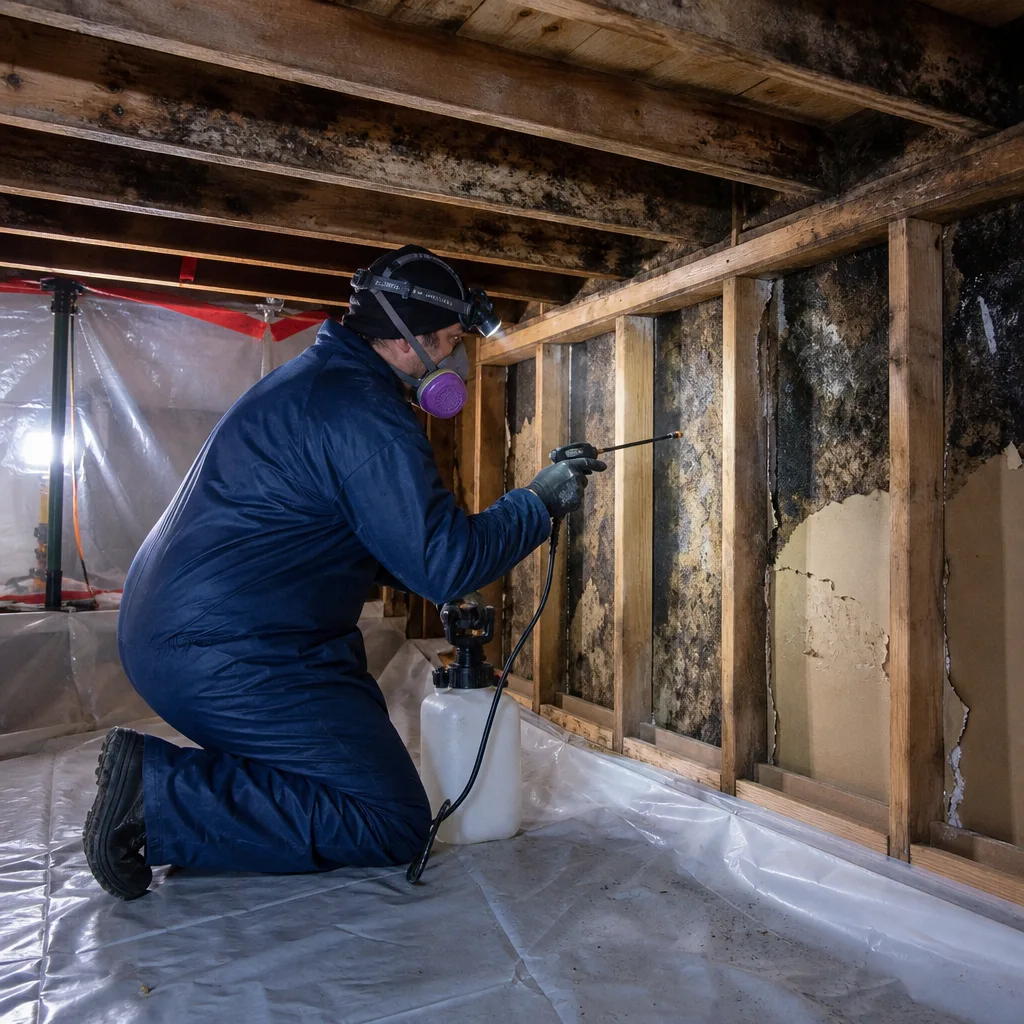
Ceiling & Roof Leak Water Damage
Wind-driven rain during November-March storms forces water through failing door and window seals on Des Moines bluff-top homes, overwhelming slope drainage and flooding lower levels. Ceiling damage from these leaks often travels laterally along top plates before appearing as stains, meaning the visible damage understates the actual saturation. Our thermal imaging locates the full migration path, and our written scopes specify exactly which materials require removal versus in-place drying.
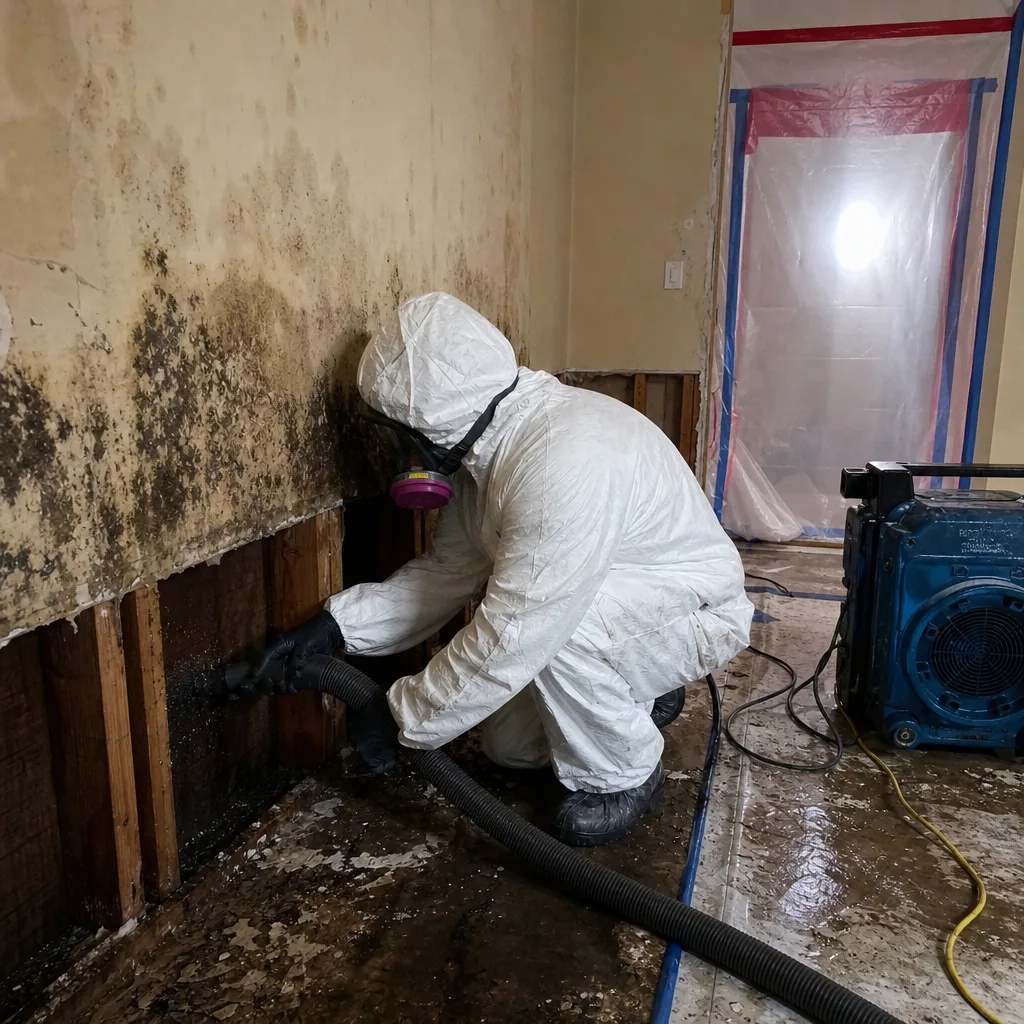
What happens when you call
- 1
A real person answersNo phone trees - you reach a local pro.
- 2
You get an upfront price rangeHonest numbers before anyone is dispatched.
- 3
A background-checked tech heads outLicensed & insured, dispatched right away.
- 4
You approve before work beginsNothing starts until you say go.
BeforeAfterCommon Water Damage Restoration Problems We See in Des Moines Homes
- Hillside groundwater under slabs. In the mid-slope neighborhoods between the bluff top and Des Moines Creek, groundwater that can’t migrate laterally pushes under foundation slabs and into crawl spaces. Homeowners run dehumidifiers upstairs where the air reads dry, never touching the mold on interior stem wall faces where the actual colonization lives.
- Marine vapor intrusion in lower levels. Persistent marine air off Puget Sound keeps lower-level framing chronically damp. Water extraction alone misses this vapor source. Without vapor-pressure-specific drying, mold returns within weeks, often on the same studs that just tested “dry.”
- Split-level crawl spaces with no vapor barrier. The dominant 1950s-1970s ranch and split-level stock in Des Moines was built without modern encapsulation. Restoration contractors frequently uncover damage that has compounded for years before becoming visible, with rot in sill plates and rim joists that standard moisture meters miss without probing.
- Wind-driven rain through compromised seals. Bluff-top homes catch the full force of Pacific storms. Water enters through door and window perimeters, runs inside wall cavities, and appears days later in ceilings or baseboards, by which time insulation is saturated and mold is established.
Pricing for Water Damage Restoration in Des Moines, WA
We publish ranges because Haven Standard, Clause 1 requires a written price before any work starts, and that price should not surprise you.
| Service | Typical Range in Des Moines |
|---|---|
| Emergency water extraction (up to 1,000 sq ft) | $400 - $800 |
| Structural drying & dehumidification (2-3 day protocol) | $2,200 - $4,800 |
| Flood cleanup with contamination protocol (Category 2-3) | $3,500 - $7,200 |
| Burst pipe restoration with sub-slab drying | $2,800 - $6,500 |
| Basement water removal with Injectidry mat system | $3,200 - $6,800 |
| Ceiling/roof leak damage (drywall removal, drying, repair) | $1,800 - $5,400 |
What moves a Des Moines job toward the higher end: multi-level saturation in split-level construction, Category 3 contamination requiring antimicrobial treatment and disposal protocols, sub-slab drying in basement or crawl space jobs, and the extent of material removal required when mold colonization is established on interior stem walls. What keeps costs controlled: fast extraction call, limited migration before we arrive, and salvageable materials that can be dried in place rather than removed.
Every estimate is free. Bring a competitor’s written quote and we’ll provide a Free Second Opinion at no charge. Call (253) 265-9692.
We Also Serve Cities Near Des Moines
Our crews respond throughout South King County and North Pierce County, including Des Moines, Tacoma, Fircrest, Milton, and Federal Way. Dispatch coordinates from our Seattle office, with routing optimized for response time to each community. The dual-source moisture conditions we describe for Des Moines, hillside groundwater plus marine vapor, are less pronounced in inland suburbs like Federal Way, but our documentation standards remain identical across every service area.
Serving Des Moines, WA - Our Local Coverage Area
We’re based in the Des Moines area and know this community well. Use the map below to see our service coverage - if you’re nearby, we can almost certainly help.
FAQs - Water Damage Restoration in Des Moines
Because your dehumidifier is running in the wrong location. In Des Moines’s mid-slope neighborhoods, hillside groundwater migrates under slabs and into crawl spaces, but the mold colonizes on interior faces of foundation stem walls, not the floor joists above. A dehumidifier running in your living space, or even in the crawl space but positioned for air-drying, never creates the vapor pressure differential needed to pull moisture from concrete and soil. Our crews use Injectidry systems and Phoenix dehumidifiers calculated for the actual moisture load, with daily drying logs that prove the stem wall cavity returned to pre-loss condition. Call (253) 265-9692 for moisture mapping that finds the actual source.
Mold can establish visible colonization within 48-72 hours in Des Moines homes, but the marine climate here accelerates that timeline. Persistent humidity off Puget Sound means materials that would dry slowly in any climate stay wet longer, and the chronic dampness in unencapsulated crawl spaces provides an established spore reservoir. We’ve documented mold on interior stem walls within 36 hours of a burst pipe in a Creek corridor split-level where the crawl space was already holding 18% wood moisture content before the incident. Fast extraction and calculated structural drying, not just air movement, prevent colonization. Call (253) 265-9692 for emergency response.
Category 3 water, also called black water, contains pathogenic agents from sewage, ground surface water, or seawater intrusion, and it requires full antimicrobial treatment, controlled disposal, and often material removal rather than drying in place. For Des Moines homes in the Creek corridor, localized flooding during storm events frequently carries Category 2 or 3 contamination because runoff picks up soil, debris, and potential sewage from overwhelmed drainage systems. Our flood cleanup protocol includes independent contamination assessment, source documentation for insurance, and written specification of which materials must be removed versus treated. We coordinate directly with your adjuster. Call (253) 265-9692 for a documented assessment.
Yes. Every Des Moines job receives dated photo records on every visit, room-by-room moisture readings with meter type and calibration date noted, and daily drying logs that track specific humidity, temperature, and grain depression. These logs are produced to IICRC, RIA, and IFA standards and are included as a standard deliverable, never an upsell. For Des Moines’s marine-influenced jobs, we also document vapor pressure differential calculations that justify equipment placement, particularly when sub-slab drying or stem wall cavity work is required. Insurance adjusters familiar with Des Moines claims expect this documentation, and we deliver it without being asked. Call (253) 265-9692 to review a sample drying log.
Yes. The 1950s-1970s split-level stock in Des Moines, concentrated in the mid-slope neighborhoods and marina corridor, has specific vulnerabilities: galvanized supply lines at failure age, unencapsulated crawl spaces that flood undetected, and rim joist configurations that trap water against framing. Our burst pipe restoration includes extraction, moisture mapping in wall cavities and subflooring, sub-slab drying where needed, and documentation of pre-existing moisture conditions that may have contributed to the damage. We provide a written scope before work begins and a photo record showing the space returned to pre-loss condition. Haven Standard, Clause 1 applies. Call (253) 265-9692 for a free estimate.
Water damage in Des Moines doesn’t resolve with standard approaches because the moisture here comes from two directions at once. Our documentation-first process, built by a former claims adjuster who founded this company in 2011, produces the evidence that gets claims paid and keeps mold from returning. Every job is covered by the 365-Day Done Right Promise under The Haven Standard.
Call (253) 265-9692 now for a free estimate. A live person answers, 24 hours a day, 7 days a week. No voicemail. No next-business-day callback while water is still moving.
Written by Alicia Brennan, Owner at Back to Dry Restoration, serving Des Moines under The Haven Standard since 2011.
Water Damage Restoration in Nearby Areas