
Last updated September 23, 2026
Free visual inspection and a written scope of work before any mitigation begins - photos, moisture readings, and drying logs go in your claim file
The scope we write is the scope we bill. Anything new gets shown to you, in writing, before we touch it.
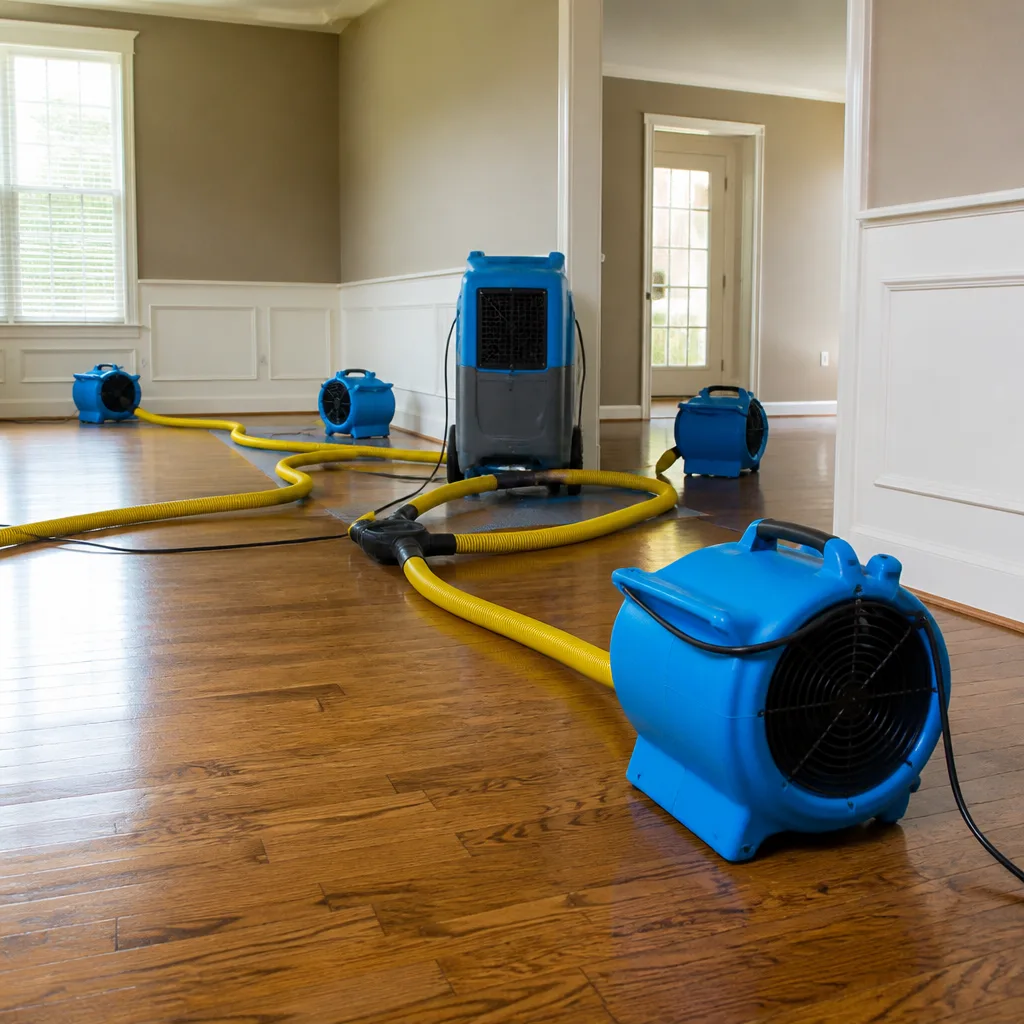
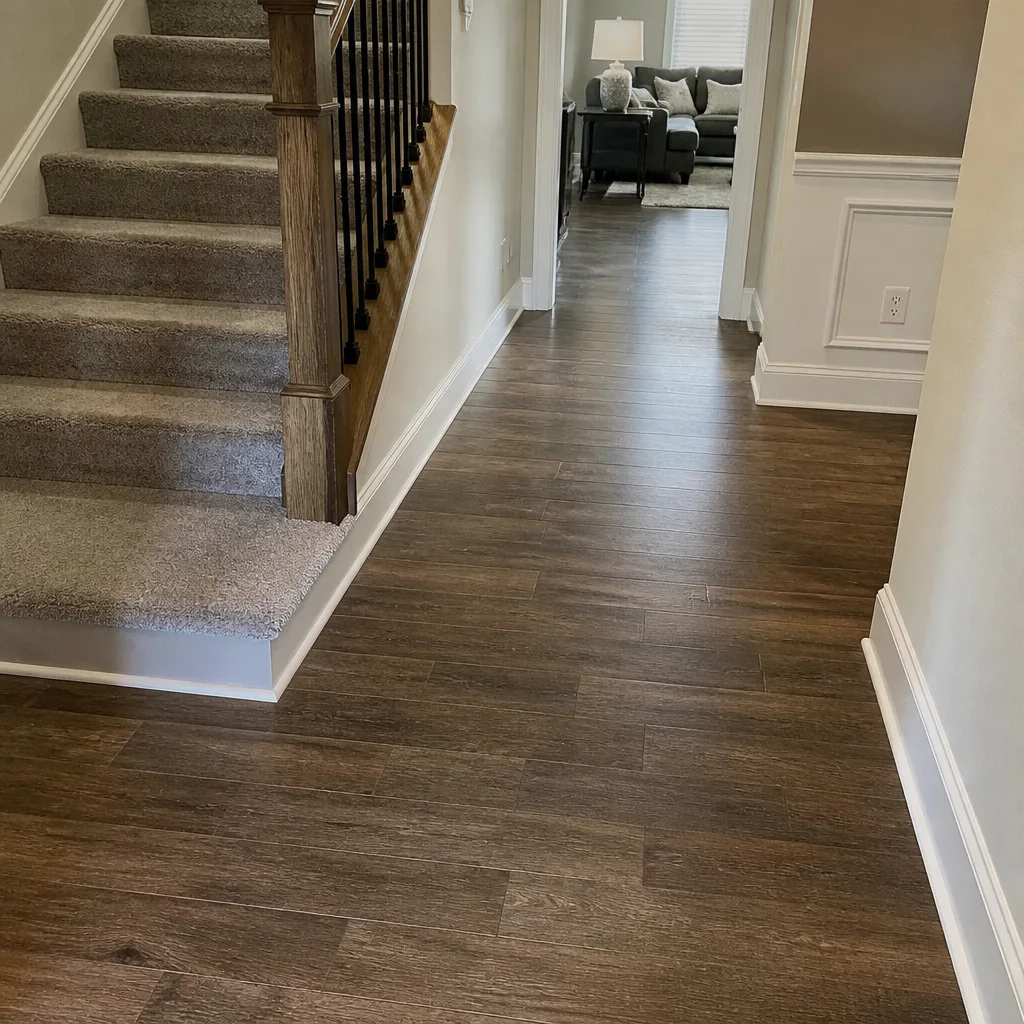
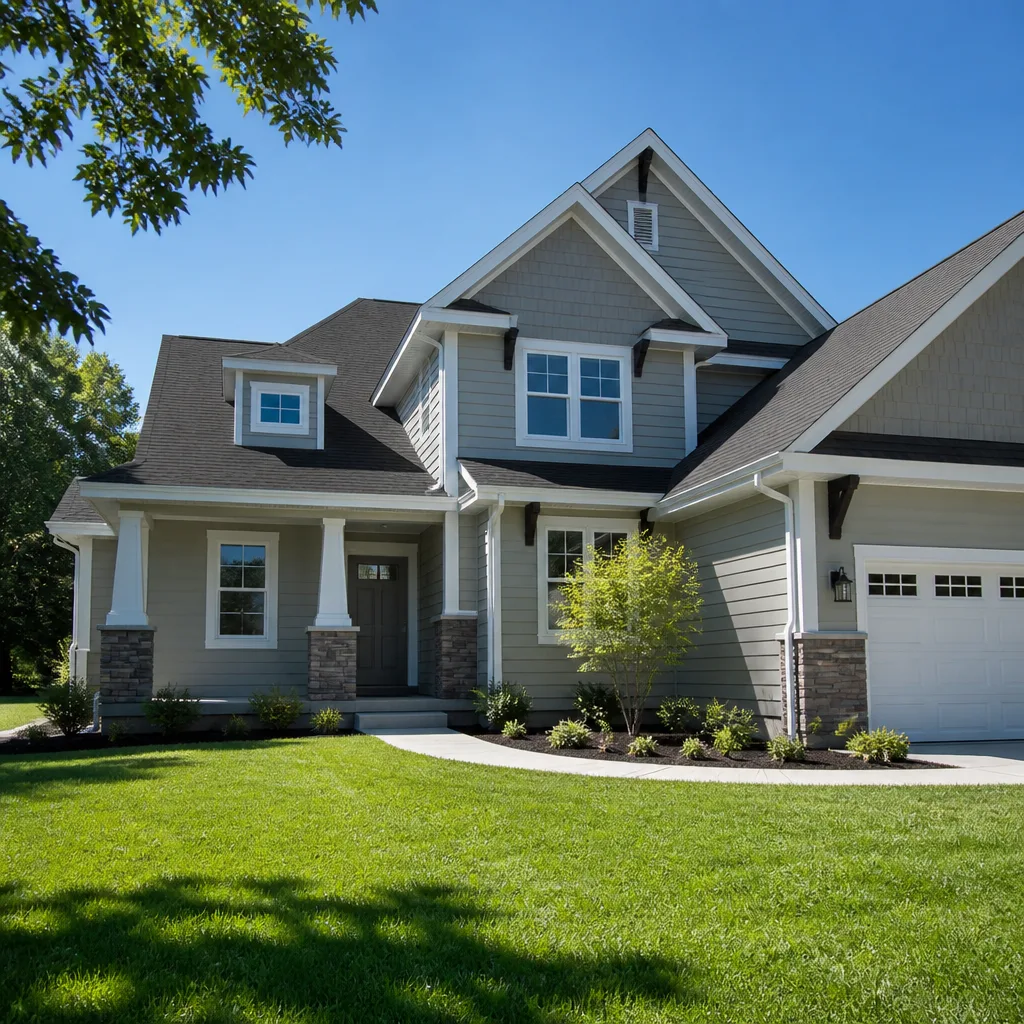
 Before
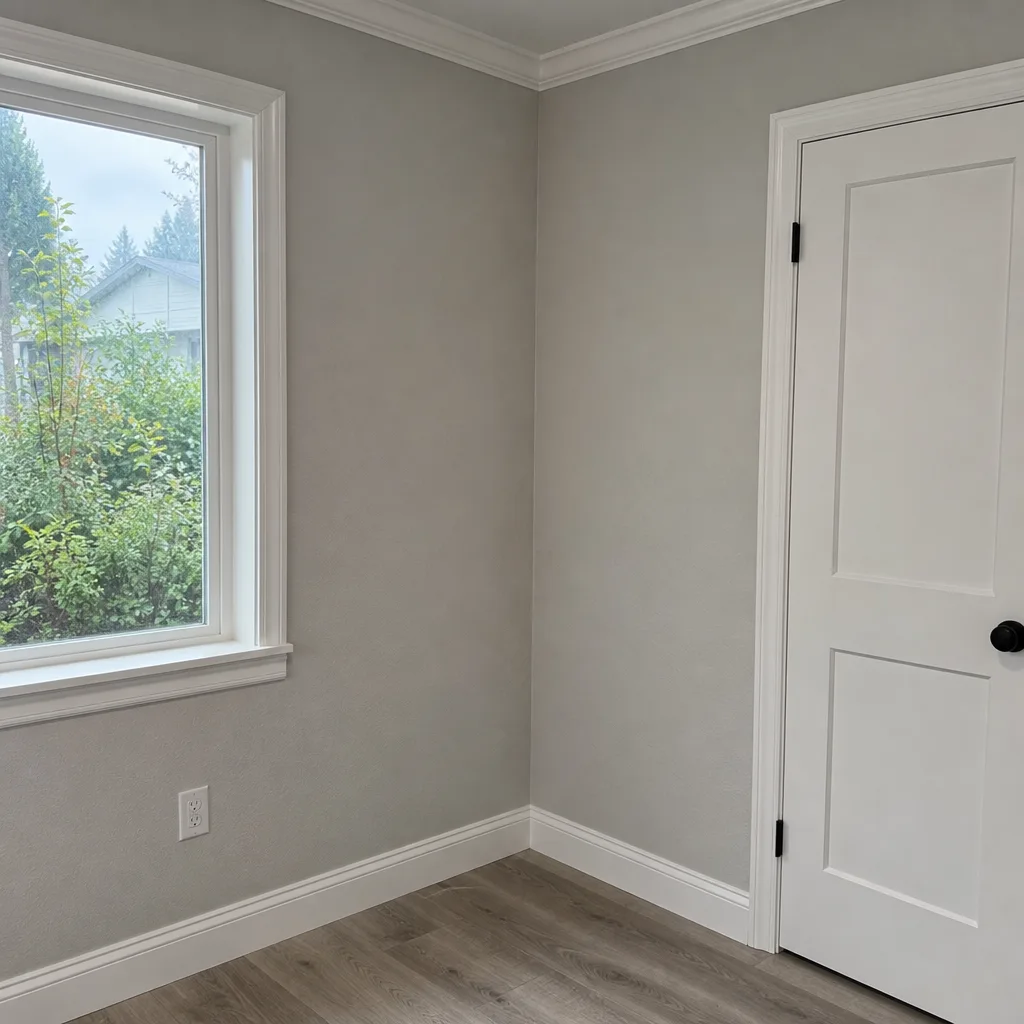 After
After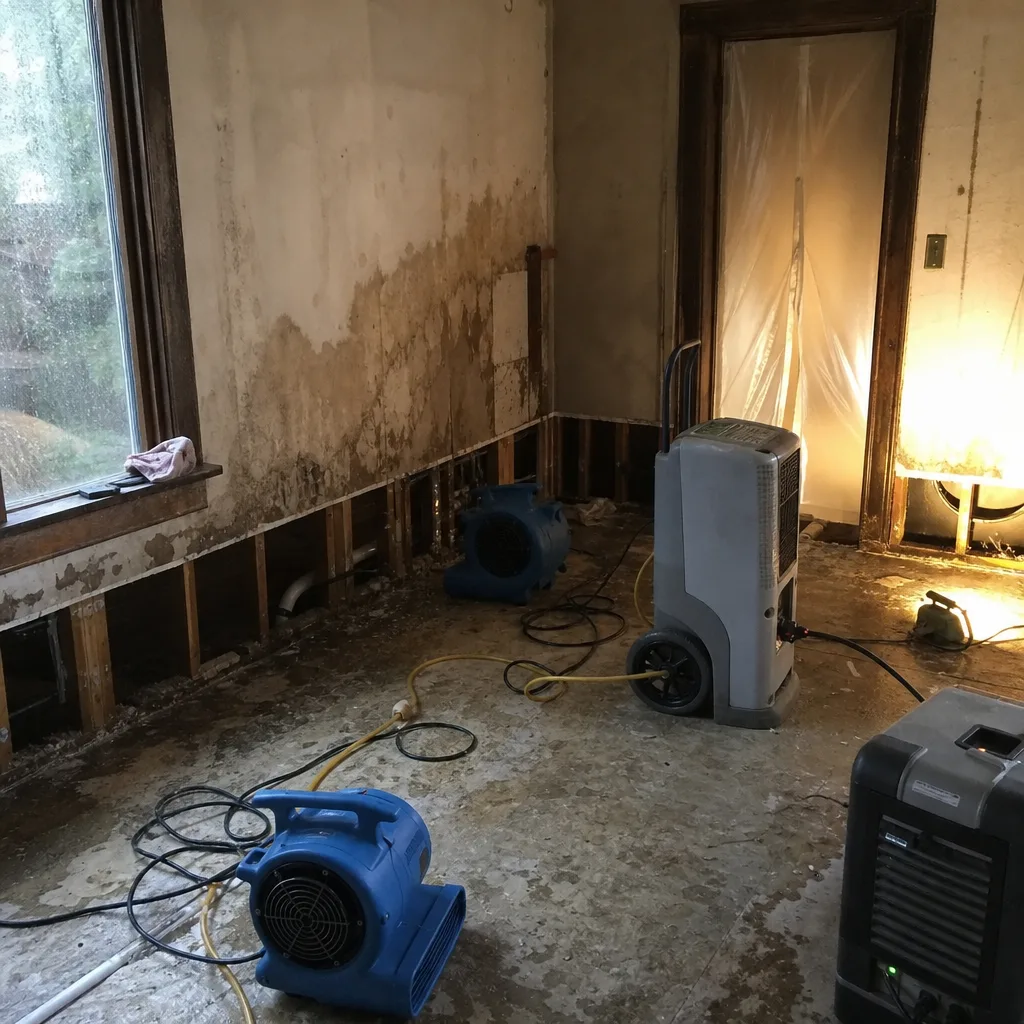 Before
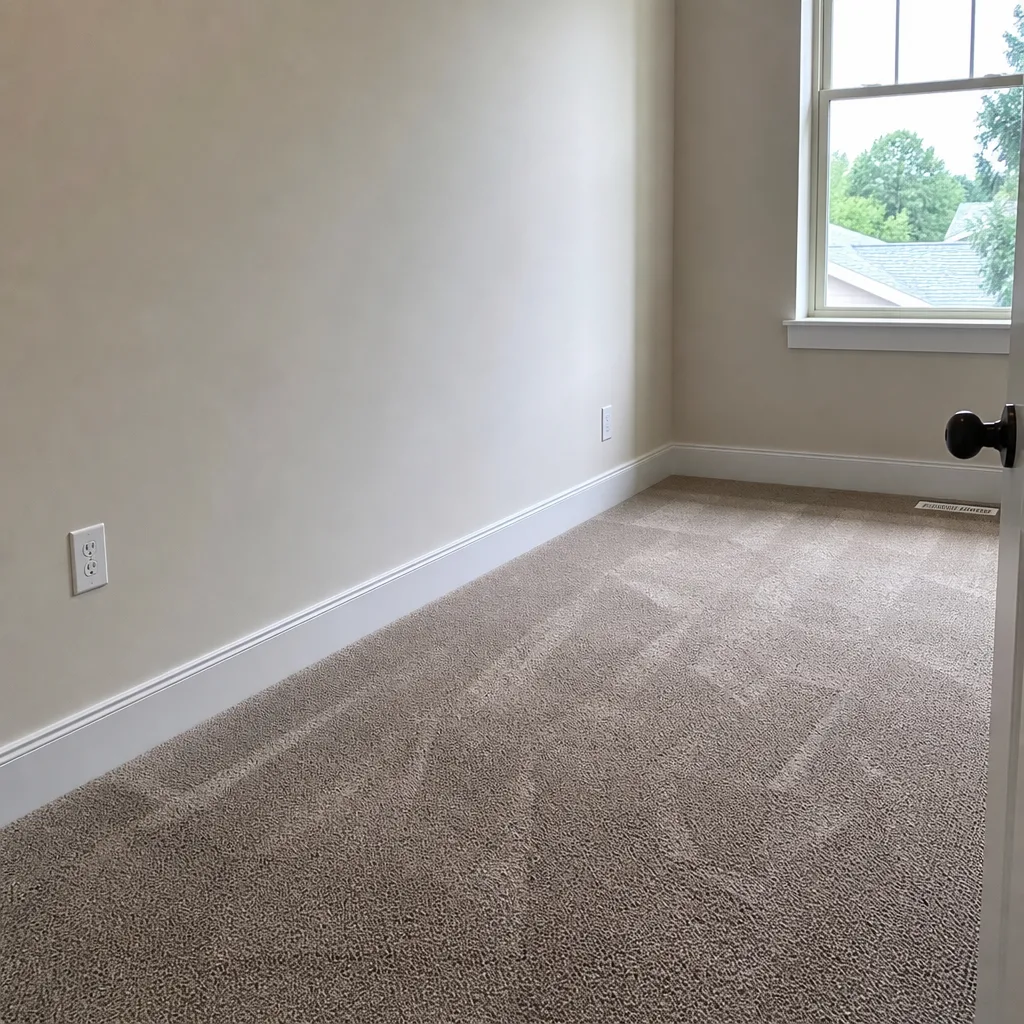 After
After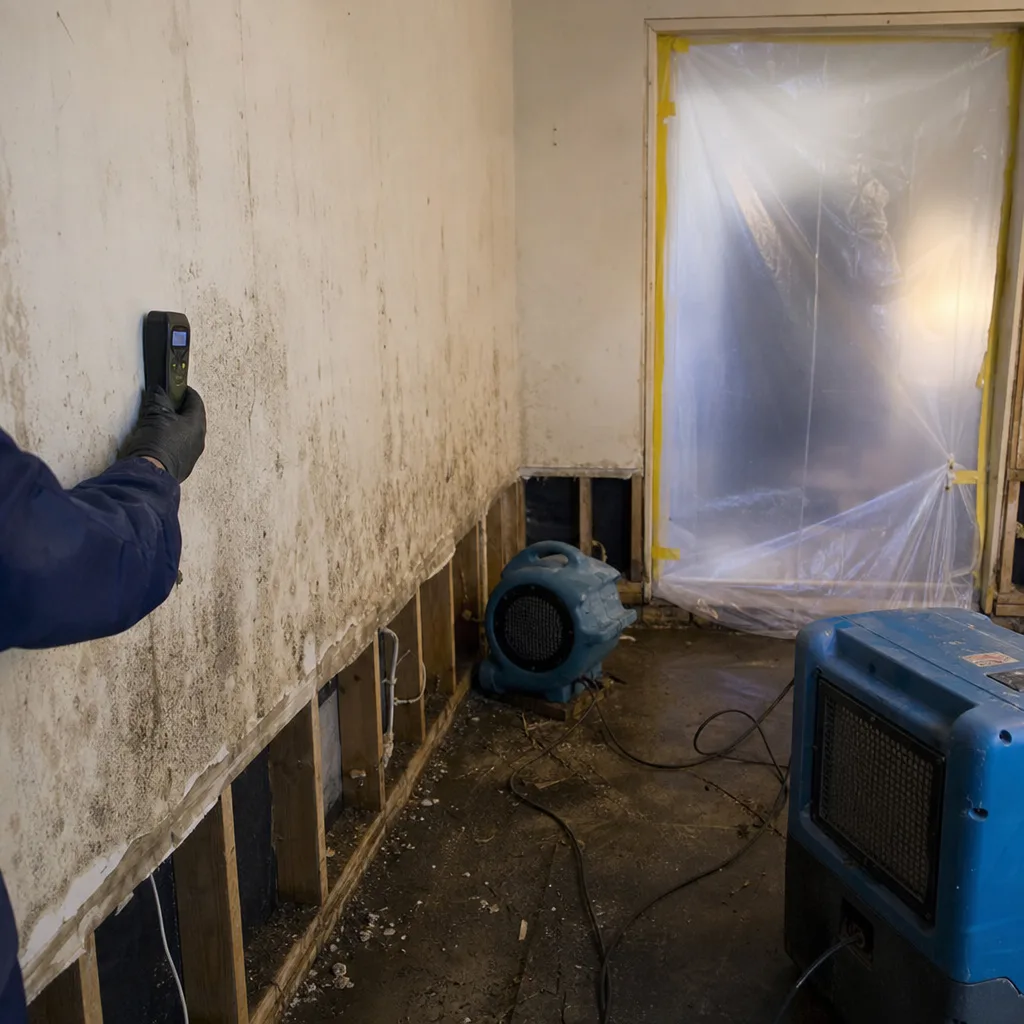 Before
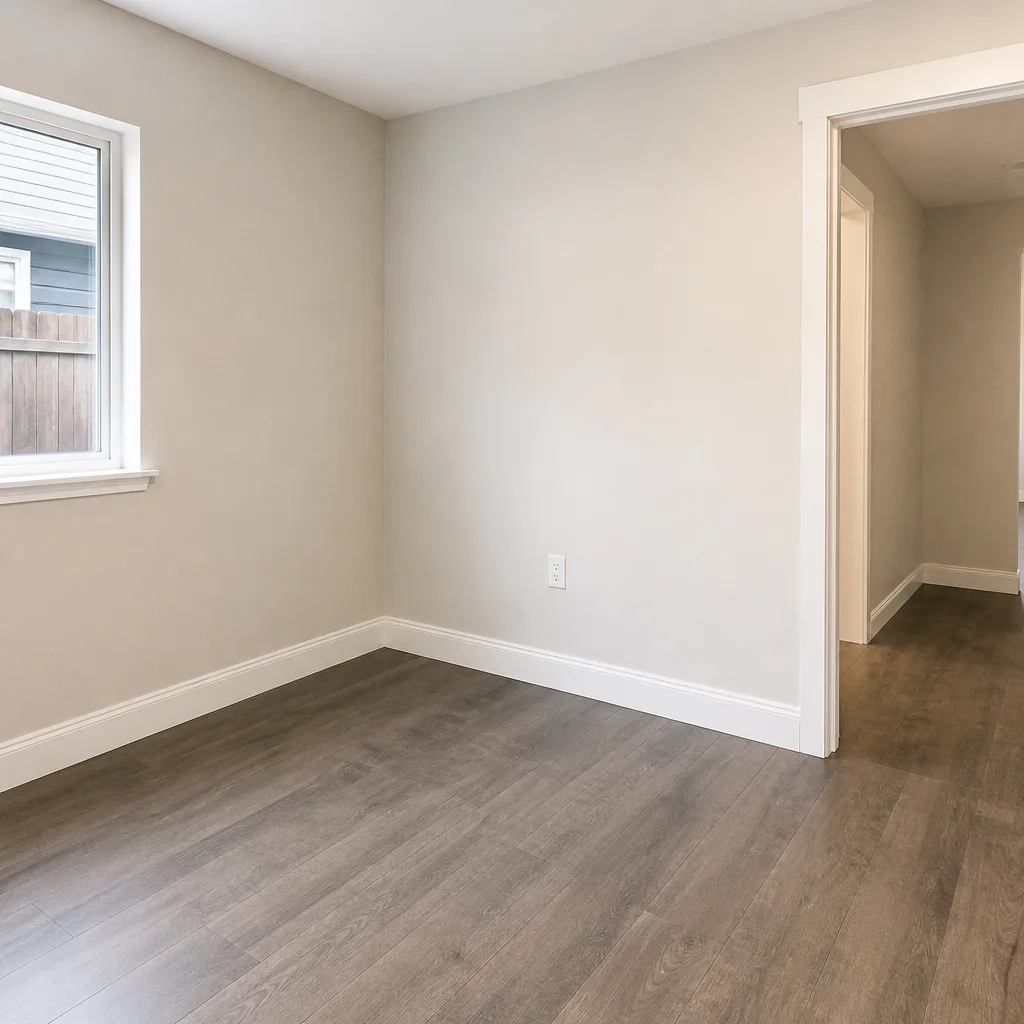 After
AfterDamage Restoration Warning Signs: A Tacoma Homeowner’s Reference Guide
A musty smell in a Tacoma crawl space is not a warning sign. It is a result. The warning sign was a relative humidity reading above 60% that went unmeasured three months earlier. In our work across Tacoma since 2011, we have documented this exact sequence in over 12,000 homes: the measurable condition precedes the visible symptom by weeks or months, and by the time a homeowner notices, the remediation cost has typically doubled. This guide will teach you to read the early, measurable indicators of water damage, mold, fire risk, and structural compromise before they become expensive emergencies. For more guides & resources, see our blog. You will learn which tools to use, which numbers matter, and how to document what you find so that any contractor, and any insurer, can act on it.
Quick Answer
The critical warning signs of damage in Tacoma homes are measurable conditions, not just visible symptoms. A pin-type moisture meter reading above 16% in drywall, a relative humidity above 60% in a crawl space or basement, and a temperature differential of more than 10°F between an exterior wall and the room center all indicate active moisture intrusion that requires professional assessment. Document these readings with dated photos, and you have established a timeline that protects both your structure and your insurance claim.
Table of Contents
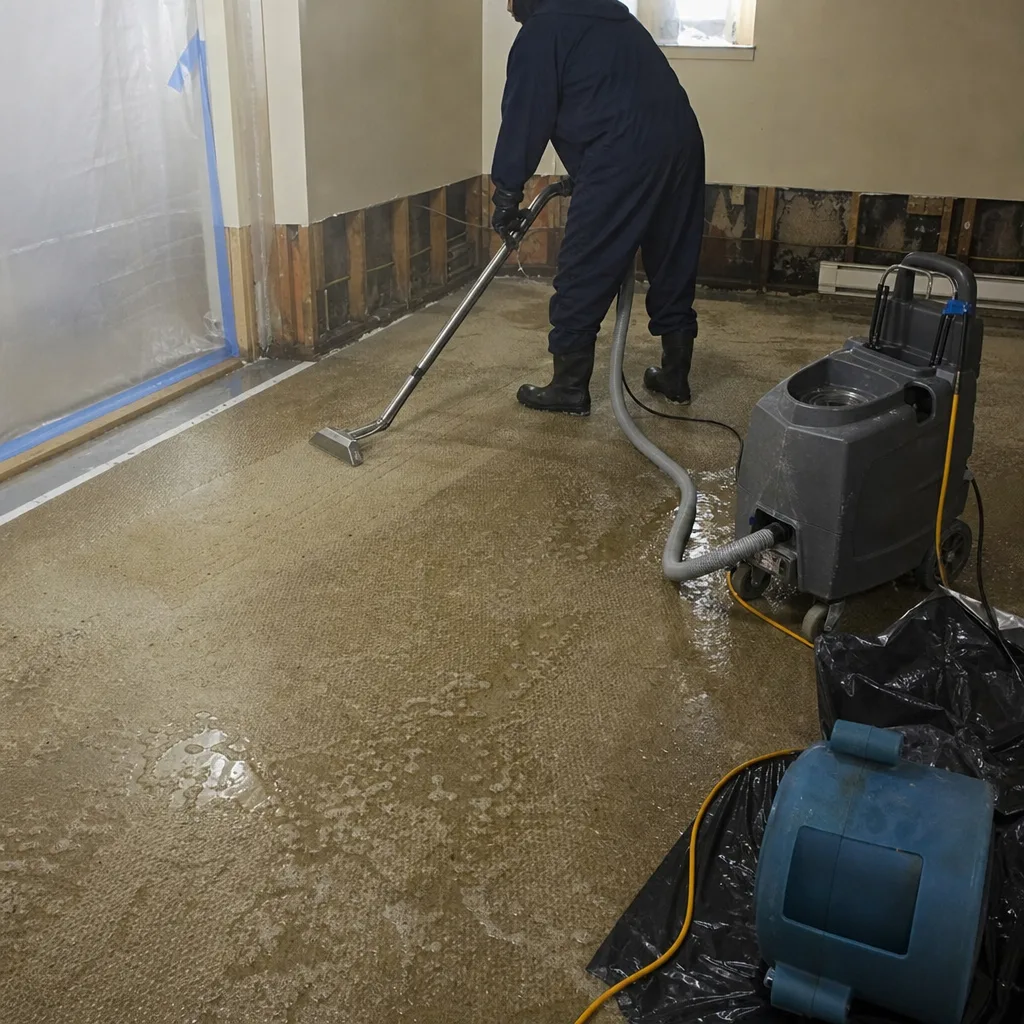
- How Tacoma’s Construction Eras Show Damage Differently
- Water Damage Warning Signs: Observable and Measurable
- Mold Warning Signs: Before You See It
- Fire and Smoke Damage: Hidden Electrical and HVAC Risks
- Storm, Sewage, and Biohazard Indicators
- The Efflorescence Field Test: Cosmetic or Active Intrusion?
- The 30-Day Warning Signs Most Homeowners Miss
- Photo Documentation Protocol for Pre-Loss Records
BeforeAfterHow Tacoma’s Construction Eras Show Damage Differently
Tacoma’s housing stock spans from 1880s Victorians in the Stadium District to post-war ramblers near South Tacoma Way to 2000s infill in Ruston and the North End. Each era presents distinct damage patterns, and recognizing which applies to your home is the first step in reading warning signs accurately.
Pre-1940s homes, Stadium District and North Slope: These structures often have balloon framing, no vapor barrier, and foundations that sit directly on Tacoma’s dense, clay-heavy soils. Water intrusion typically manifests as vertical staining on plaster walls, not the horizontal banding seen in drywall. The critical measurement here is not surface moisture but capillary rise: wicking up from the foundation can elevate moisture readings in base plaster to 20% or higher even when the wall above reads normal. We regularly see homeowners in Proctor and the North End replace drywall repeatedly while missing the actual source, which is groundwater migration through the footing.
1950s-1970s homes, South Tacoma Way and Eastside: This era introduced concrete slab foundations with minimal perimeter drainage, and many remain on original galvanized plumbing. The warning sign we document most often is a moisture gradient: the slab perimeter reads 2-4% higher than the center, indicating either a failing perimeter drain or a slab leak. In our experience, homes in this vintage on the east side of Tacoma show foundation seepage differently than newer construction. The seepage follows cold joints in the slab, producing characteristic “map cracking” in floor tile or linear staining in carpet tack strips. A pin-type moisture meter reading above 18% in the tack strip wood, with the adjacent slab reading above 3.5%, indicates active vapor transmission, not a spill.
1980s-present, Ruston, North End, and Westgate: These homes typically include polyethylene vapor barriers and better perimeter drainage, but they also feature more complex HVAC systems and tighter building envelopes. The risk shifts from groundwater to condensation and ventilation failure. We measure relative humidity in attic spaces during Tacoma’s shoulder seasons, April-May and September-October, when outdoor dew points fluctuate most dramatically. An attic RH above 70% during these months, with sheathing moisture content above 19%, predicts mold colonization within 60 days even if no visible growth exists yet.
Key Tacoma climate factor: The city receives 39 inches of annual precipitation concentrated October through May, with persistent marine layer conditions that keep relative humidity elevated for days after rain stops. This means moisture events dry more slowly than inland markets, and the margin for error in drainage and ventilation is narrower. A gutter overflow in Spokane might dry in 48 hours; in Tacoma, the same event can sustain 80% RH in a soffit cavity for a week.
Water Damage Warning Signs: Observable and Measurable
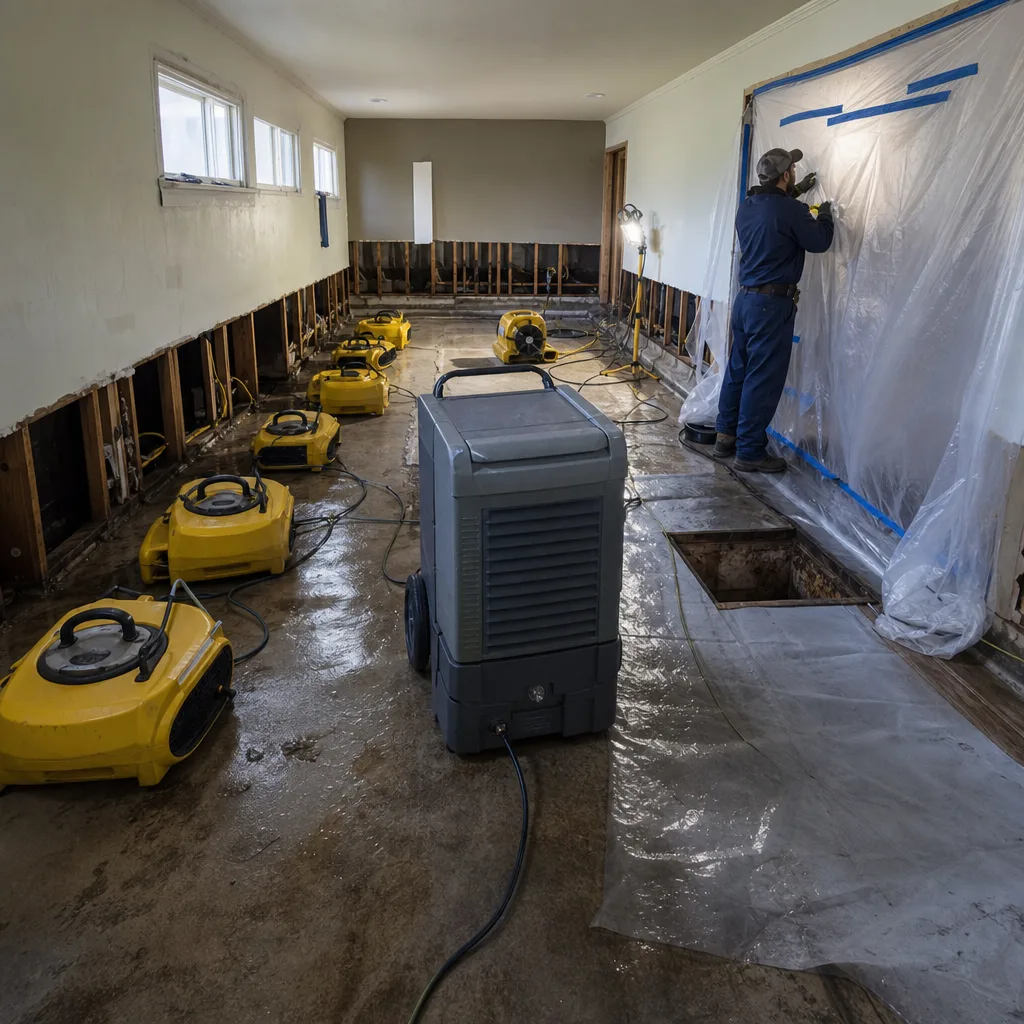
Water damage warning signs fall into two categories: what you can see, and what you can measure. The gap between them is where most homeowners lose money.
Observable indicators that require measurement to interpret:
- Discoloration on ceilings or walls: Brown or yellow staining indicates water contact, but color alone cannot distinguish active from historic. Press a pin-type moisture meter into the center of the stain. Readings below 12% suggest a past event that has dried; readings above 16% indicate active moisture behind the surface. In Tacoma’s climate, a reading of 14-16% in winter may represent seasonal condensation rather than active leak, so compare to a reading from the same wall in summer.
- Bubbling or peeling paint: Latex paint on drywall will bubble when the gypsum core behind it exceeds 17% moisture content. Oil-based paint on plaster behaves differently, alligatoring instead. The measurement that matters is the substrate, not the paint film. Scrape a small area and test the wall material directly.
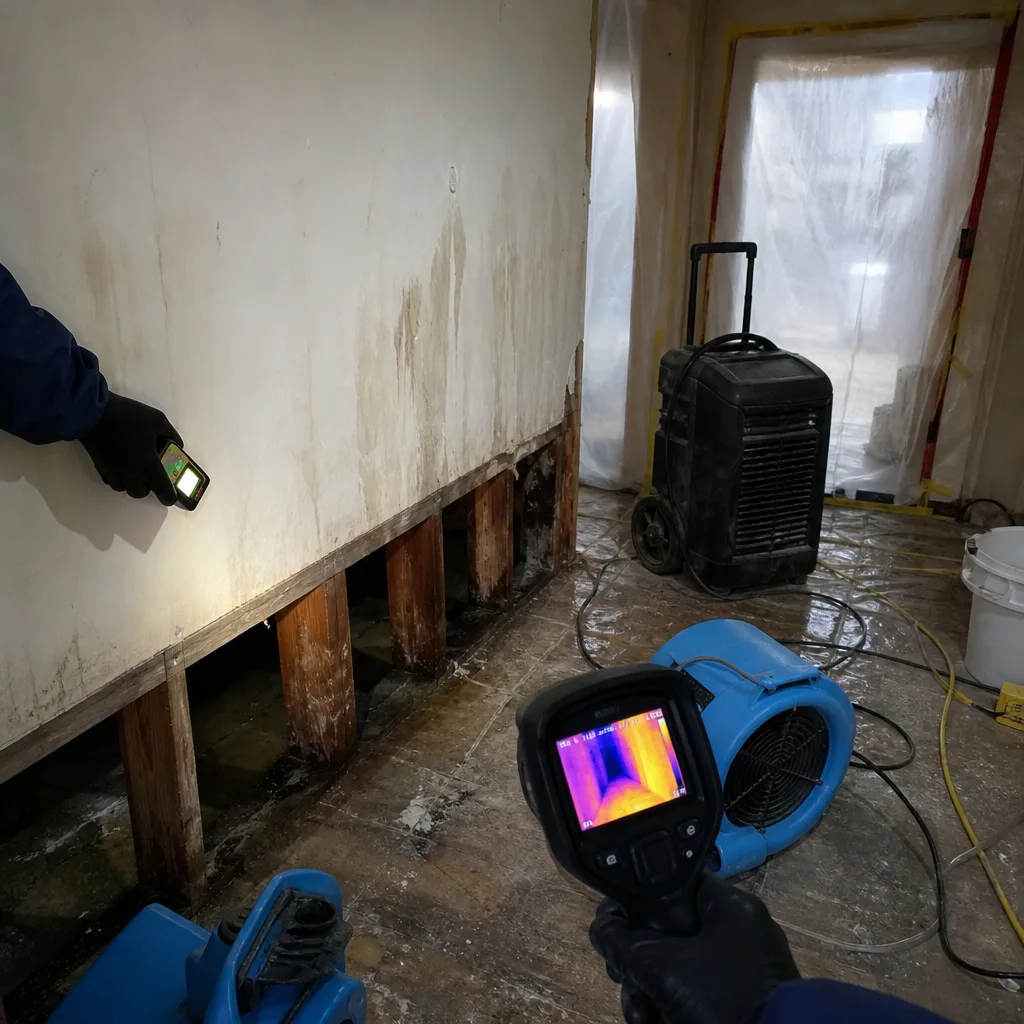
- Sagging drywall: Gypsum board loses structural integrity at approximately 25% moisture content. Sagging indicates this threshold has been reached, but the more important measurement is whether the cavity behind it is still wet. We use thermal imaging to identify evaporative cooling patterns, then confirm with a penetrating meter.
- Floor deformation: Solid wood flooring begins to cup when the underside moisture content exceeds the top surface by 2% or more. This is common in Tacoma homes with crawl spaces where vapor barriers are absent or compromised. The warning sign is not the cupping itself but the moisture differential that causes it.
Measurable indicators without visible symptoms:
These are the conditions we document daily that homeowners typically miss:
- Elevated humidity in closed cavities: A crawl space or basement with relative humidity above 60% sustained over 72 hours will support mold growth on organic materials. We use data loggers in Tacoma crawl spaces during winter; readings above 70% RH with temperatures above 50°F indicate conditions suitable for Aspergillus and Penicillium colonization.
- Negative air pressure: Modern homes with forced-air heating can develop negative pressure relative to outdoors, drawing moisture through slab penetrations and wall cavities. The measurement is simple: with all HVAC running, hold a smoke pencil or thin ribbon at an exterior door. Inward movement indicates negative pressure. In Tacoma’s wet season, this translates directly to moisture loading.
- Condensation on windows: Interior condensation on double-pane windows when outdoor temperatures are above 35°F indicates interior RH above 50% at 70°F room temperature. This is not a window failure; it is a ventilation or moisture source problem.
Our water damage restoration in Tacoma process begins with these measurements, documented to IICRC S500 standards, producing the drying logs that insurers require for claim payment.
Mold Warning Signs: Before You See It
Mold requires four conditions: moisture, organic substrate, suitable temperature, and time. In Tacoma homes, temperature and substrate are almost always present. The controllable variable is moisture, and the warning signs are measurable before any visible growth appears.
The pre-visual indicators we track:
- Musty odor without visible source: Microbial volatile organic compounds (MVOCs) are detectable by human olfaction at concentrations below 1 ng/L. If you smell mustiness, mold is actively metabolizing. The source may be hidden, but the condition is present. We use moisture mapping to locate the wet zone that supports the growth.
- Allergic symptoms that improve away from home: Rhinitis, conjunctivitis, or respiratory irritation that resolves within 48 hours of leaving the structure suggests airborne mold particulate. This is not diagnostic, but it is a warning sign that warrants air sampling and moisture assessment.
- Surface discoloration that wipes away: What appears to be “dirt” on supply registers, window sills, or baseboards may be mold spore deposition. The test: dampen a white paper towel with diluted bleach and wipe the area. If color transfers and lightens, it is likely organic growth, not dust.
Critical moisture thresholds for mold in Tacoma’s climate:
Wood-based materials with moisture content above 20% will support mold growth at temperatures between 40°F and 100°F. Tacoma’s winter crawl spaces often maintain 45-55°F with RH above 80%, producing wood moisture contents of 22-28%. These are not marginal conditions; they are optimal for growth. The warning sign is the moisture reading, not the mold.
We have documented this pattern repeatedly in homes near Point Defiance and the Narrows, where marine air influence is strongest. The 2021-2022 winter was particularly active in our records: prolonged saturated soil conditions elevated crawl space humidity for months, and we responded to mold calls in March and April from homeowners who had no visible growth in December.
Our mold remediation in Tacoma includes full containment, HEPA filtration, and documented clearance sampling, with photo records at each phase.
Fire and Smoke Damage: Hidden Electrical and HVAC Risks
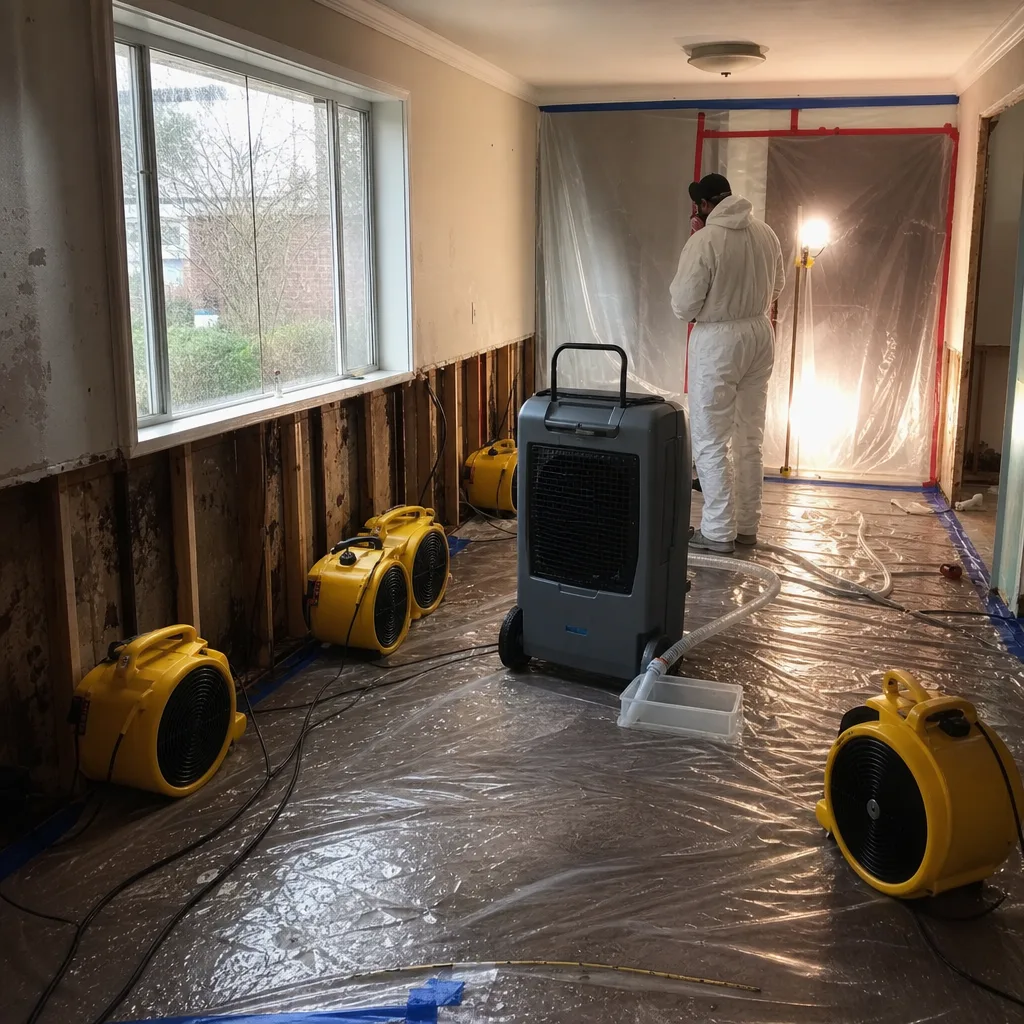
Fire warning signs are less about gradual deterioration and more about conditions that precede ignition or indicate prior unreported events. The documentation priority is different, but no less critical for insurance purposes.
Electrical system indicators:
- Discolored outlet covers or switch plates: Brown or black staining indicates past arcing or overheating. The plate may be warm to touch. This is not cosmetic; it indicates a connection failure that can progress to ignition. We recommend de-energizing the circuit and having an electrician inspect the device and wiring.
- Frequent breaker trips on specific circuits: A breaker that trips repeatedly under normal load indicates either overload or ground fault. In homes with aluminum branch circuit wiring, common in 1965-1973 construction in Tacoma’s Eastside and Lakewood-adjacent areas, this is a fire warning sign requiring immediate professional assessment.
- Buzzing or sizzling sounds from panels or devices: These are audible arcing. They require immediate de-energization.
HVAC system indicators:
Forced-air furnaces in Tacoma homes accumulate combustion byproducts and dust that create fire risk when combined with specific failures. The warning signs include:
- Soot deposition around supply registers: Indicates incomplete combustion or cracked heat exchanger. The black material is carbon, and its presence in the airstream means combustion gases are mixing with conditioned air.
- Hot or vibrating ductwork near the furnace: Indicates restricted airflow, which elevates furnace cabinet temperature. We have documented furnace fires in Tacoma homes where return air filters were not changed for multiple heating seasons, causing heat exchanger failure.
- Odor of burning dust that persists beyond the first heating cycle of the season: Normal for 10-15 minutes; concerning if it returns during operation or includes an electrical odor.
After any fire, even a small kitchen event, the fire and smoke damage restoration in Tacoma process must include HVAC inspection. Smoke particulate is acidic and will corrode metal components; thermal degradation of wiring insulation may not show immediately but creates latent fire risk.
Storm, Sewage, and Biohazard Indicators
Storm damage in Tacoma presents distinct seasonal patterns. The Nisqually earthquake of 2001 established the region’s seismic awareness, but water-driven damage is far more common. For a complete maintenance calendar, see our Seasonal Damage Restoration Care for Tacoma: Year-Round Homeowner’s Guide.
Storm-specific warning signs:
- Foundation perimeter saturation during rain events: Standing water within 6 feet of the foundation for more than 4 hours indicates grading or drainage failure. In Tacoma’s clay soils, this saturation creates hydrostatic pressure that drives water through slab cracks and cold joints.
- Gutter overflow at corners: Indicates downspout blockage or insufficient capacity. Each overflow deposits water at the foundation corner, the structurally most vulnerable point.
- Wind-driven rain penetration at window and door headers: Common in homes with original single-pane windows or deteriorated flashing. The warning sign is interior staining at the top of the window frame, not the sill.
Sewage and biohazard indicators:
Sewage backup presents immediate health risk and requires professional response. The warning signs include:
- Gurgling drains or toilet bubbles when fixtures elsewhere run: Indicates main line restriction or vent blockage. The condition can progress to backup without additional warning.
- Multiple slow drains simultaneously: A single slow drain is a localized blockage. Multiple slow drains indicate main line failure.
- Black water appearance or sulfurous odor from any drain: Confirms sewage presence. Do not attempt to clear with consumer equipment.
We do not recommend homeowner investigation of suspected biohazard or sewage conditions. The pathogens involved, including E. coli, Salmonella, and hepatitis viruses, require PPE and containment protocols that exceed consumer availability.
The Efflorescence Field Test: Cosmetic or Active Intrusion?
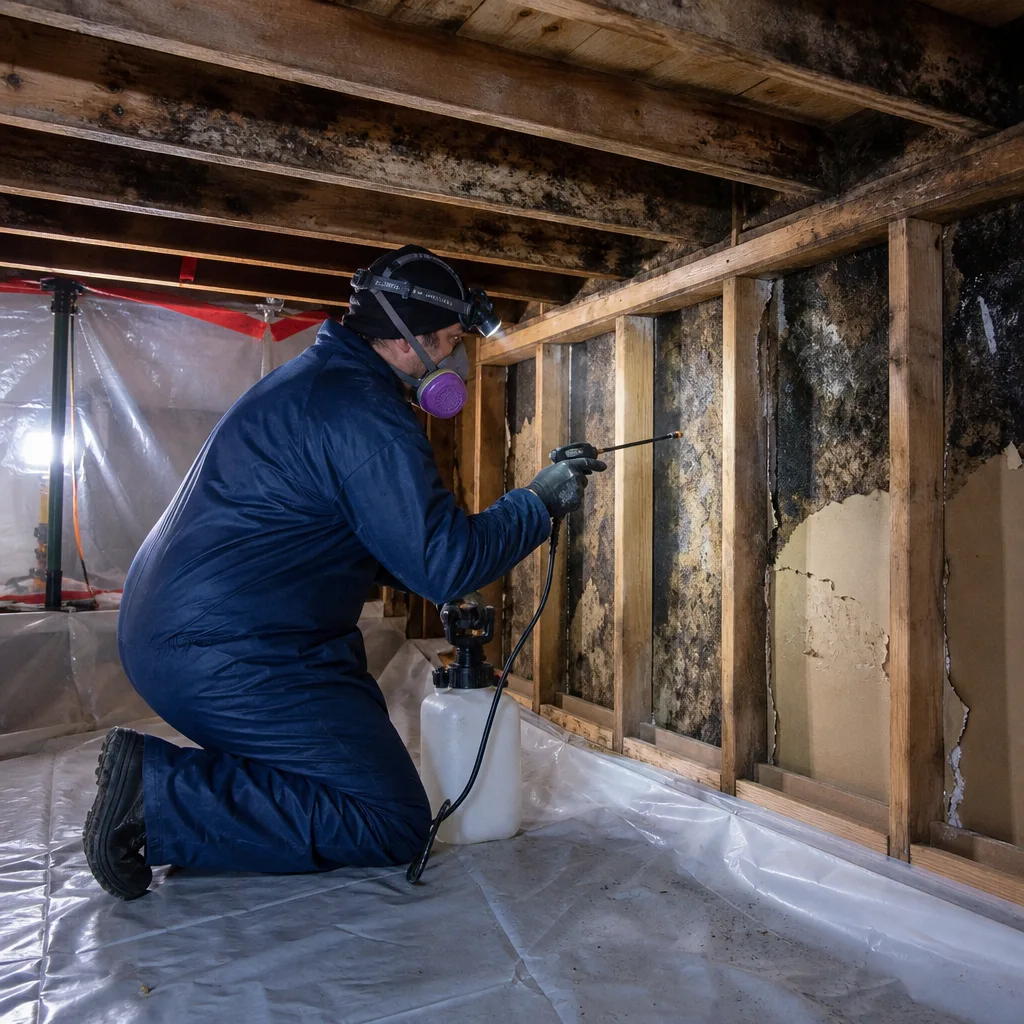
Efflorescence, the white powdery deposit on concrete and masonry surfaces, is one of the most misread warning signs in Tacoma homes. It is not mold. It is not necessarily harmless. The distinction matters for both repair scope and insurance coverage.
What efflorescence actually is: Water moving through concrete or mortar dissolves soluble salts, primarily calcium hydroxide. When the water evaporates at the surface, the salts crystallize. The presence of efflorescence proves water is moving through the material. The question is whether that movement is ongoing.
The field test any homeowner can perform:
- Photograph the deposit in natural light with a ruler or coin for scale. Note date and time.
- Brush the surface firmly with a dry nylon brush. If the deposit removes easily and the surface beneath is sound concrete, proceed to step 3.
- Apply 3-4 drops of distilled white vinegar to the cleaned area. Efflorescence will fizz mildly due to its alkaline composition; this confirms identification.
- Cover the tested area with a 6-inch square of aluminum foil, taped at edges, for 48 hours. This prevents evaporation and forces any continuing moisture to accumulate.
- Remove the foil and immediately test the surface with the back of your hand. Coolness indicates evaporative moisture, meaning water is still moving through the material. A moisture meter reading above 4% in the concrete confirms active intrusion.
Interpretation: Dry, non-cooling concrete with efflorescence that brushes away and does not return within 30 days indicates a past event, now resolved. Cooling concrete with recurring efflorescence indicates active hydrostatic pressure or ongoing moisture migration. In Tacoma’s wet season, even “historic” efflorescence can reactivate when soil moisture rises.
We perform this test routinely in basement and crawl space assessments, and we document results with dated photos for the homeowner’s records. The distinction between active and historic conditions often determines whether remediation is covered under a standard policy or requires specific water damage coverage.
The 30-Day Warning Signs Most Homeowners Miss
Major structural moisture failures in Tacoma homes typically present a sequence of minor indicators 30-60 days before visible damage appears. These are the conditions we identify in retrospect when called to remediate, and they are consistently misread as minor or cosmetic.
Week 1-2: Environmental shifts
- Increased condensation on windows, especially in mornings: Indicates a new moisture source has elevated interior humidity. The source may be a small leak, increased groundwater, or ventilation failure.
- HVAC runtime increase without temperature change: Wet materials have higher thermal mass and require more energy to condition. A 15% increase in heating or cooling runtime, with no thermostat change, suggests moisture loading.
Week 2-3: Material responses
- Door and window operation changes: Wood frame swelling from moisture absorption causes binding. A door that “used to close fine” and now requires force has absorbed 2-3% moisture.
- Floor sounds change: Subfloor moisture elevation causes fastener withdrawal and movement. The “new squeak” in a hallway is often the first audible indicator of a slab or plumbing leak below.
Week 3-4: Olfactory and air quality indicators
- “Basement smell” that appears in previously dry areas: MVOC production begins before visible mold. The odor threshold for humans is below instrument detection for many compounds.
- Increased dust accumulation on horizontal surfaces: Moisture causes paint and material surfaces to chalk; the airborne particulate settles more visibly than dry dust.
Day 30+: Visible failure
By this point, drywall staining, visible mold, or structural deformation appears. The remediation cost at this stage is typically 3-5x the cost of addressing the condition at week 2.
In our records from Tacoma’s 2019-2020 winter, we documented this progression in 23 homes in the North End and Proctor areas following a period of sustained rain and freeze-thaw cycling. The homeowners who called at the condensation-and-squeak stage averaged $2,400 in mitigation. Those who waited for visible staining averaged $11,700. The difference was not the severity of the initial condition; it was the response time.
Photo Documentation Protocol for Pre-Loss Records
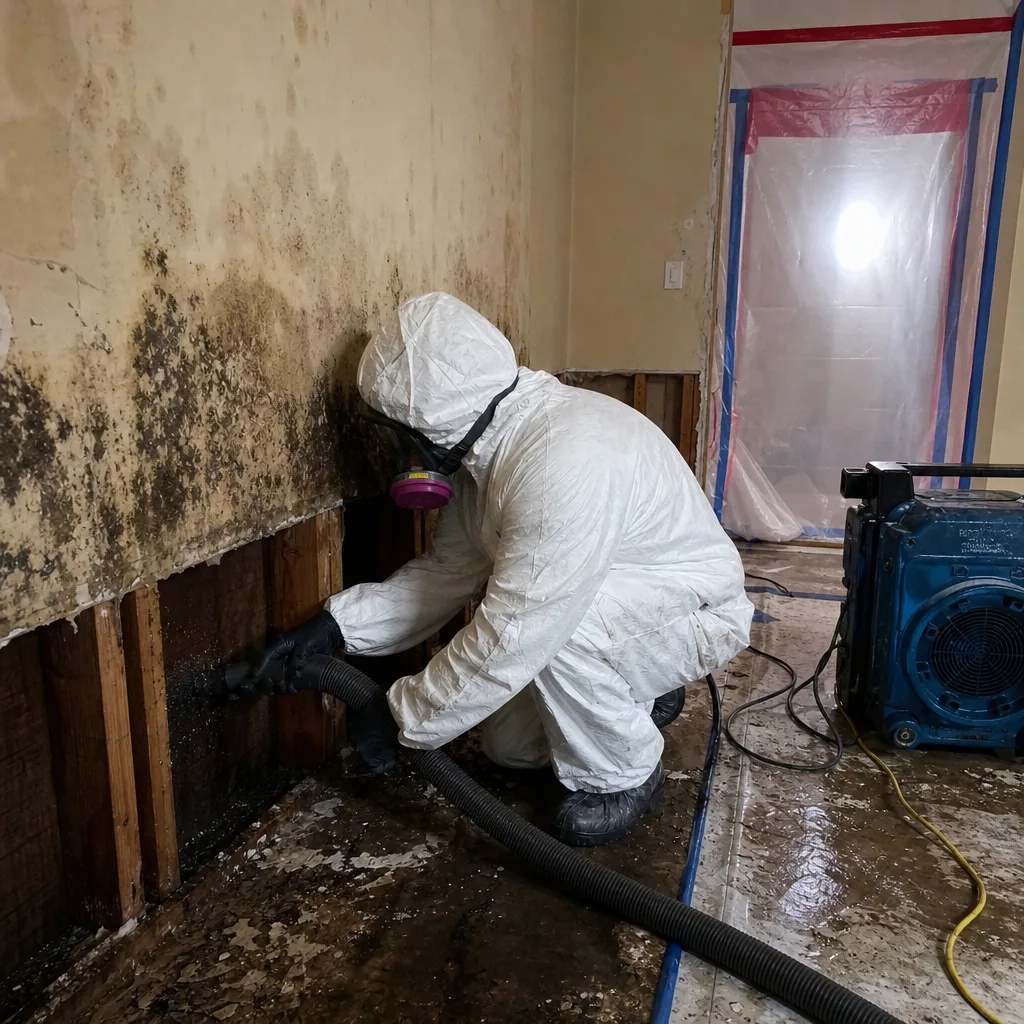
The documentation you create before damage occurs is often more valuable for insurance purposes than documentation after. Pre-loss records establish the condition of your home and its contents, eliminating disputes about whether damage was present before a claimed event.
Equipment: Any smartphone camera is sufficient. The critical elements are date stamp, scale reference, and systematic coverage.
The protocol:
- Exterior, four elevations: Stand at each corner and photograph the full elevation, then walk the perimeter photographing foundation line, grade slope away from structure, downspout terminations, and any visible cracks or stains. Include a dated newspaper or phone showing date in at least one frame per elevation.
- Roof and attic: From ground level, photograph roof condition, gutter alignment, and visible flashing. In attic, photograph sheathing condition, insulation type and depth, and any existing stains. Use flashlight; dark photos are unusable.
- Basement or crawl space: Photograph full perimeter, floor condition, any existing efflorescence or stains, sump pump if present, and vapor barrier condition. Include ruler or coin for scale on any anomaly.
- Interior, room by room: Photograph each wall from corner to corner, ceiling, floor, and any built-in features. Open closets and photograph interior walls. These establish finish quality and pre-existing condition.
- Mechanical systems: Photograph water heater data plate, HVAC equipment data plate, electrical panel with door open showing breakers, and any visible plumbing manifold.
- Contents documentation: For high-value items, photograph with model or serial visible. For general contents, room-wide photos with date stamp are sufficient for most claims.
Storage and update: Store in cloud service with automatic date retention. Update annually, or after any renovation. Send a copy to your insurance agent with a request for acknowledgment; this creates a third-party timestamp.
This protocol produces the same documentation standard we apply on every job: dated, scaled, comprehensive. When a homeowner has pre-loss records, our DryMark Restoration Tacoma home assessment can focus on change detection rather than baseline establishment, accelerating both scope development and claim resolution.
Common Mistakes to Avoid
- Treating visible mold as the problem rather than the moisture source: Bleach or paint over mold without addressing the moisture condition that produced it, and the mold returns. The moisture reading is the target; mold removal is the consequence.
- Assuming new construction is immune: We have documented moisture failures in Tacoma homes less than five years old, typically from improper flashing at deck-to-wall connections or missing vapor barriers in crawl spaces. Building code compliance does not guarantee performance.
- Using consumer moisture meters without calibration verification: Pin-type meters require annual calibration against known standards. A meter reading 2% low will miss active moisture; 2% high will drive unnecessary demolition. We verify calibration of our meters quarterly against NIST-traceable standards.
- Ignoring seasonal baselines: A moisture reading of 15% in Tacoma drywall during January may be normal; the same reading in July indicates active intrusion. Compare to seasonal history, not absolute thresholds alone.
- Documenting only damage, not conditions: Insurance adjusters evaluate cause and progression. A photo of a wet wall proves damage; a series of dated moisture readings proves when the condition began and how it progressed.
- Delaying assessment to “see if it dries out”: In Tacoma’s climate, materials that remain above 20% moisture content for 48 hours will support mold. The decision to wait is itself a risk calculation, and most homeowners underestimate the drying time.
When to Call a Professional
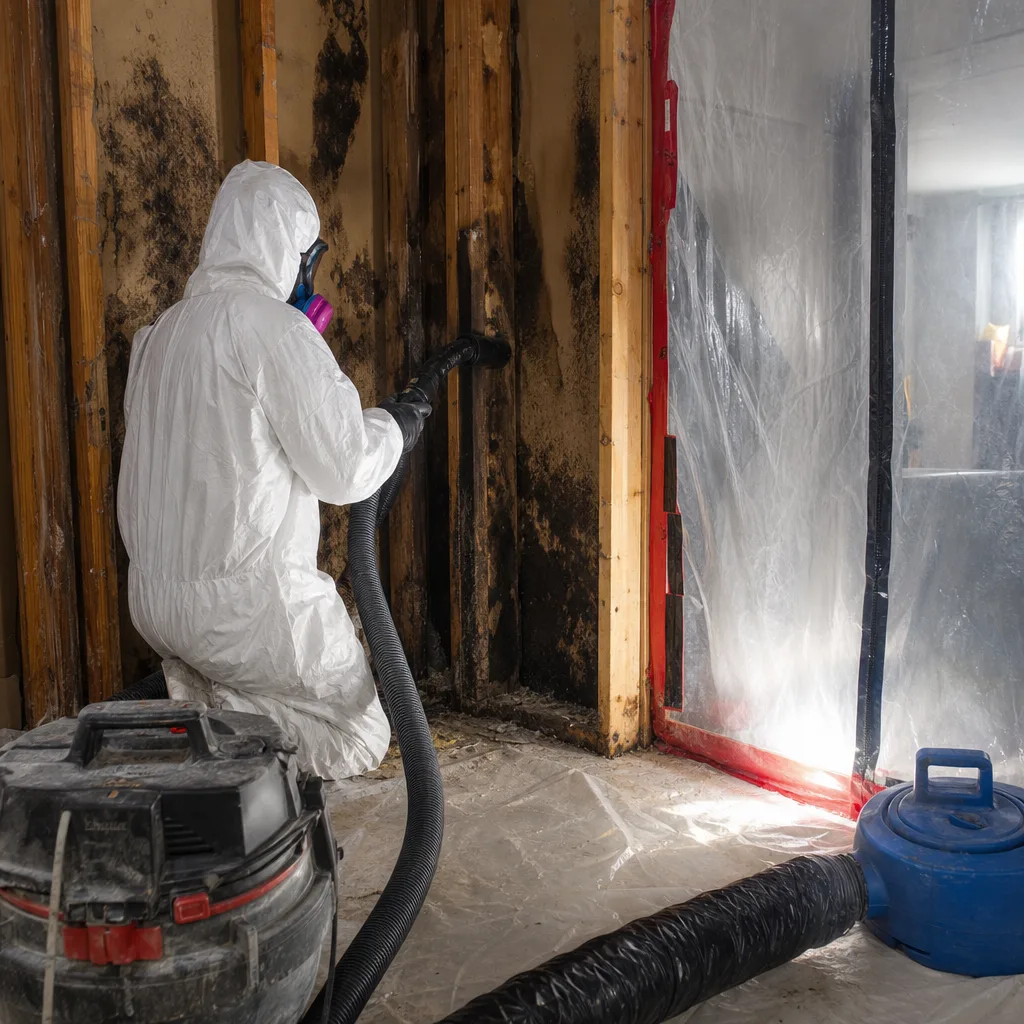
Call for professional assessment when any of the following apply: moisture meter readings exceed 16% in drywall or 20% in wood framing; you detect musty odor without identified source; you observe electrical arcing, overheating, or repeated breaker trips; sewage backup is suspected or confirmed; or any water intrusion involves Category 2 (gray water) or Category 3 (black water) sources as defined by IICRC S500. For help selecting a qualified contractor, see How to Hire a Damage Restoration Contractor in Tacoma: A Step-by-Step Guide.
For conditions that do not require immediate emergency response but need documented evaluation, DryMark Restoration Tacoma offers free estimates in Tacoma. We provide a written scope and price before any work begins, per Haven Standard, Clause 1, with photo documentation of our findings. Call (253) 265-9692 to schedule.
Frequently Asked Questions
A pin-type moisture meter reading above 16% in drywall or 20% in wood framing indicates active moisture that requires professional assessment. In Tacoma’s climate, compare seasonal baselines: readings 4% above your home’s established winter average suggest new moisture intrusion, not normal humidity. Call (253) 265-9692 for a documented evaluation with exact readings.
Test the center of the stain with a pin-type moisture meter. Readings below 12% indicate a dried, historic event. Readings above 16% indicate active moisture behind the surface. Between 12-16%, compare to a reading from an unaffected area of the same wall; a differential above 3% suggests ongoing, slow moisture movement. We document this comparison on every assessment.
Coverage depends on policy language and documentation. Most standard policies cover sudden and accidental discharge but exclude gradual damage. However, if you documented warning signs with dated photos and moisture readings, you may establish that the damage was not discoverable earlier, which affects the timeline for claim filing. We coordinate directly with adjusters and provide the drying logs and photo records that support claim validity.
Live phone coverage is available 24 hours a day, 7 days a week with no voicemail on emergency lines. For active water damage, we deploy background-checked, uniformed technicians with license verification available, equipped with Phoenix and XPOWER drying systems, Injectidry cavity drying equipment, and B-Air air movers. Response time varies by call volume and location within Tacoma; call (253) 265-9692 for current availability.
Surface cleaning of mold growth smaller than 10 square feet on non-porous materials may be appropriate for homeowners with proper PPE. However, visible growth almost always indicates hidden growth and an unresolved moisture source. Without moisture mapping and air quality assessment, you cannot determine the full extent. Our mold remediation includes containment, HEPA filtration, documented clearance sampling, and identification of the moisture source that caused the growth.
Every job includes: a written price before work begins (Haven Standard, Clause 1); a documented photo record on every visit; daily drying logs with psychrometric data including temperature, relative humidity, and moisture content readings; and a signed 365-Day Done Right Promise under The Haven Standard. These documents are delivered in formats suitable for insurance submission and personal records.
The Bottom Line
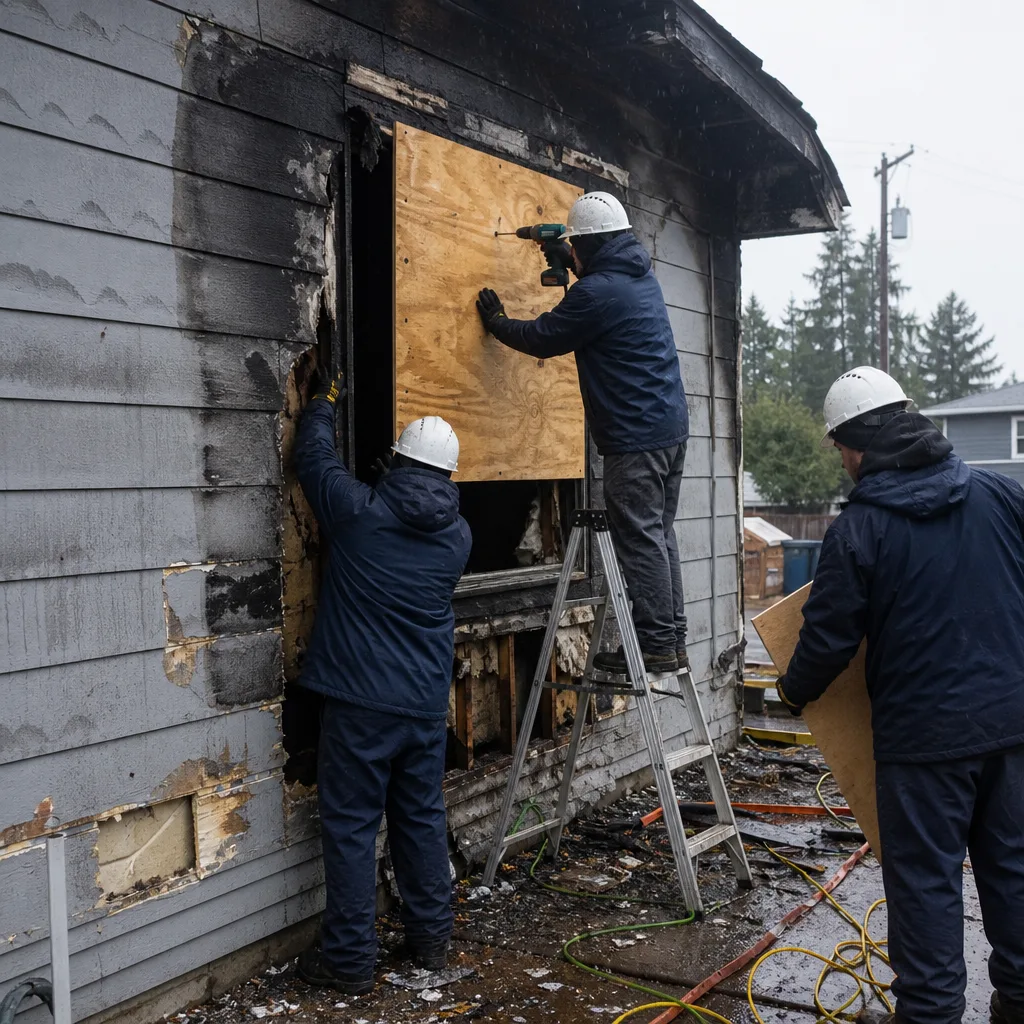
Warning signs are measurable conditions, not just visible symptoms. The homeowner who can read a moisture meter, perform a simple efflorescence test, and maintain dated photo records has transformed from a passive observer to an informed participant in their home’s maintenance and any future restoration. In Tacoma’s wet climate, this capability is not optional; it is cost protection. The 30-day window between environmental warning and visible damage is where money is saved or lost. Document what you find, measure what you suspect, and call for assessment when numbers exceed thresholds rather than when walls fail.
Written by Alicia Brennan, Owner at DryMark Restoration Tacoma, serving Tacoma since 2011.