
Last updated September 23, 2026
Free visual inspection and a written scope of work before any mitigation begins - photos, moisture readings, and drying logs go in your claim file
The scope we write is the scope we bill. Anything new gets shown to you, in writing, before we touch it.
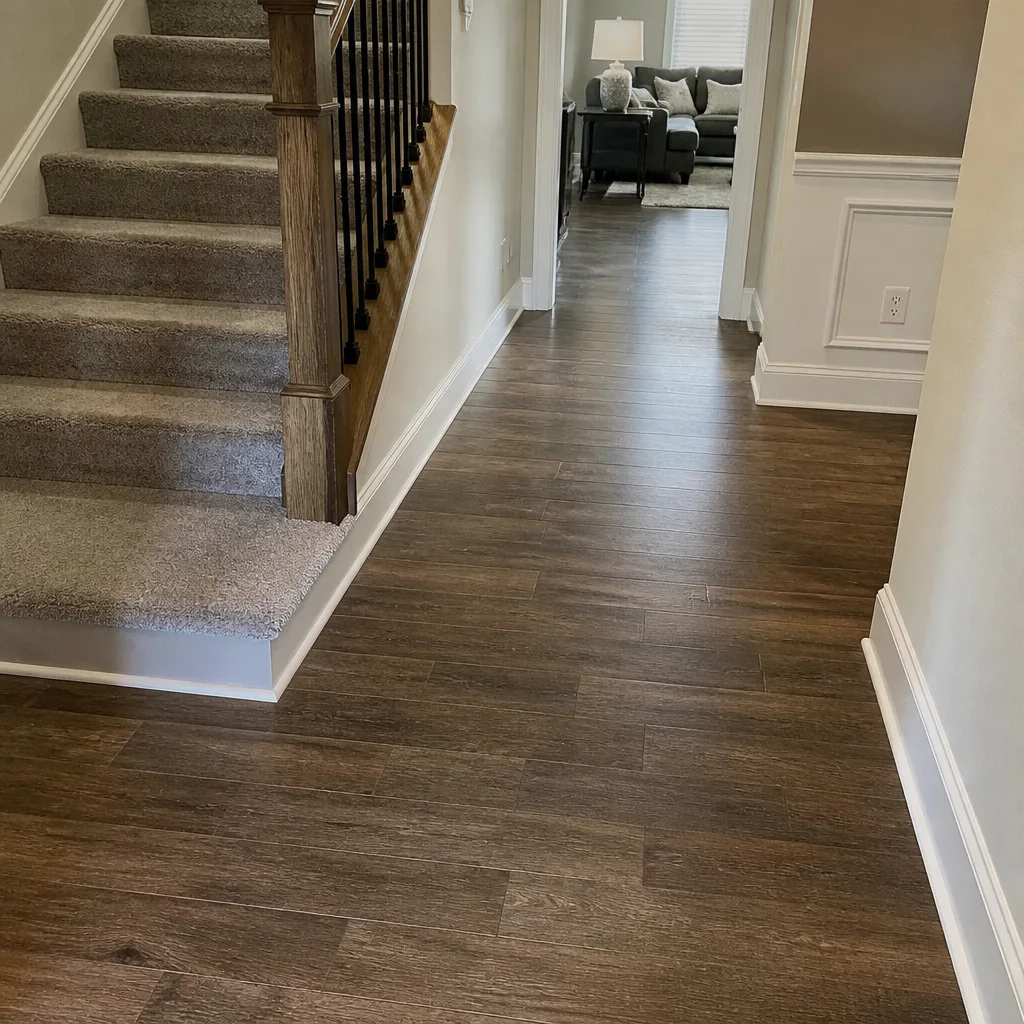
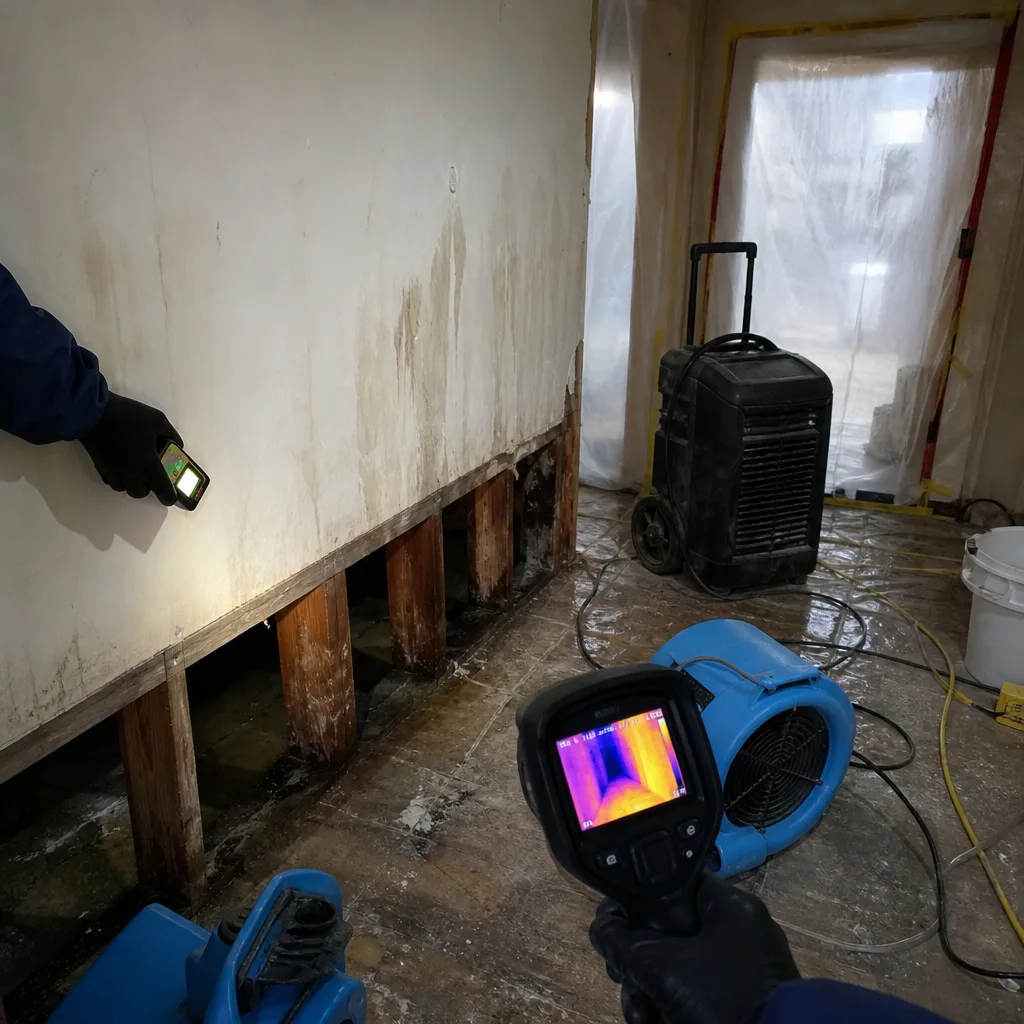 Before
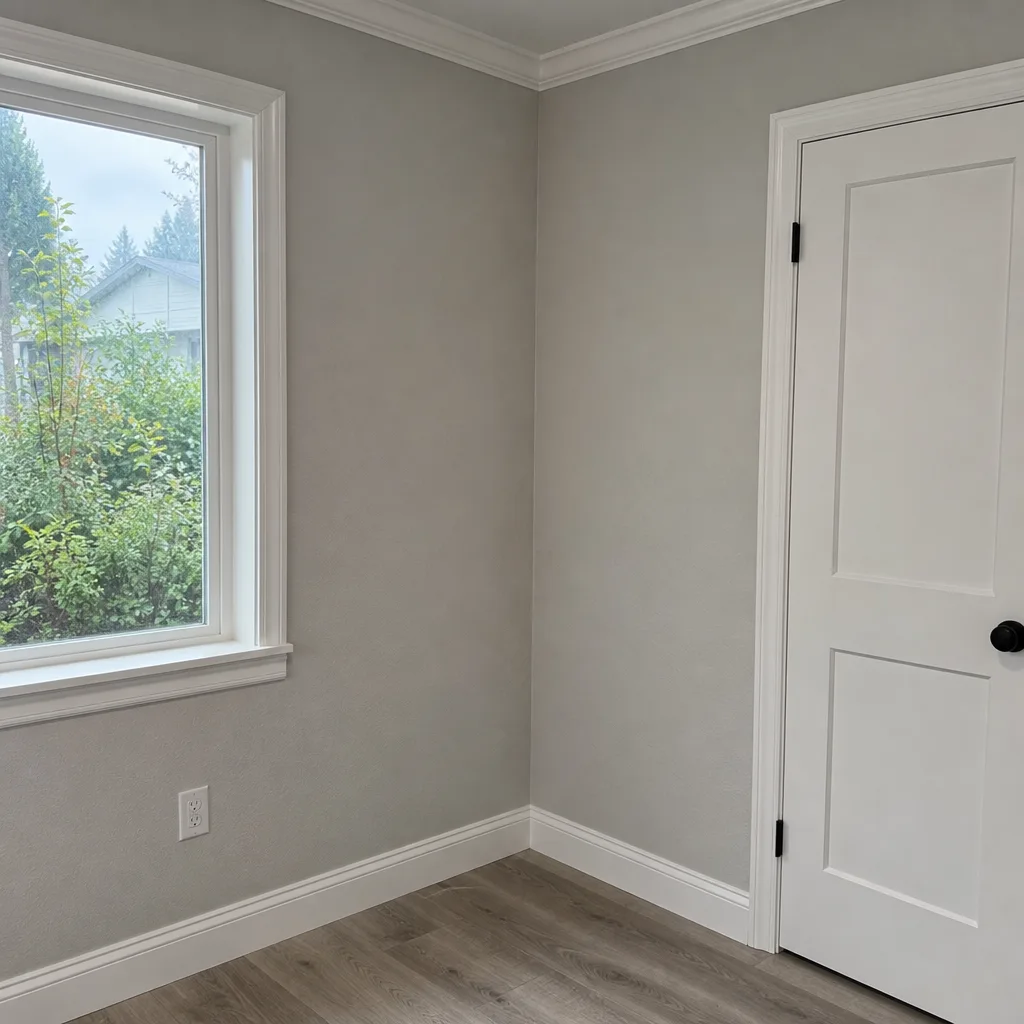 After
After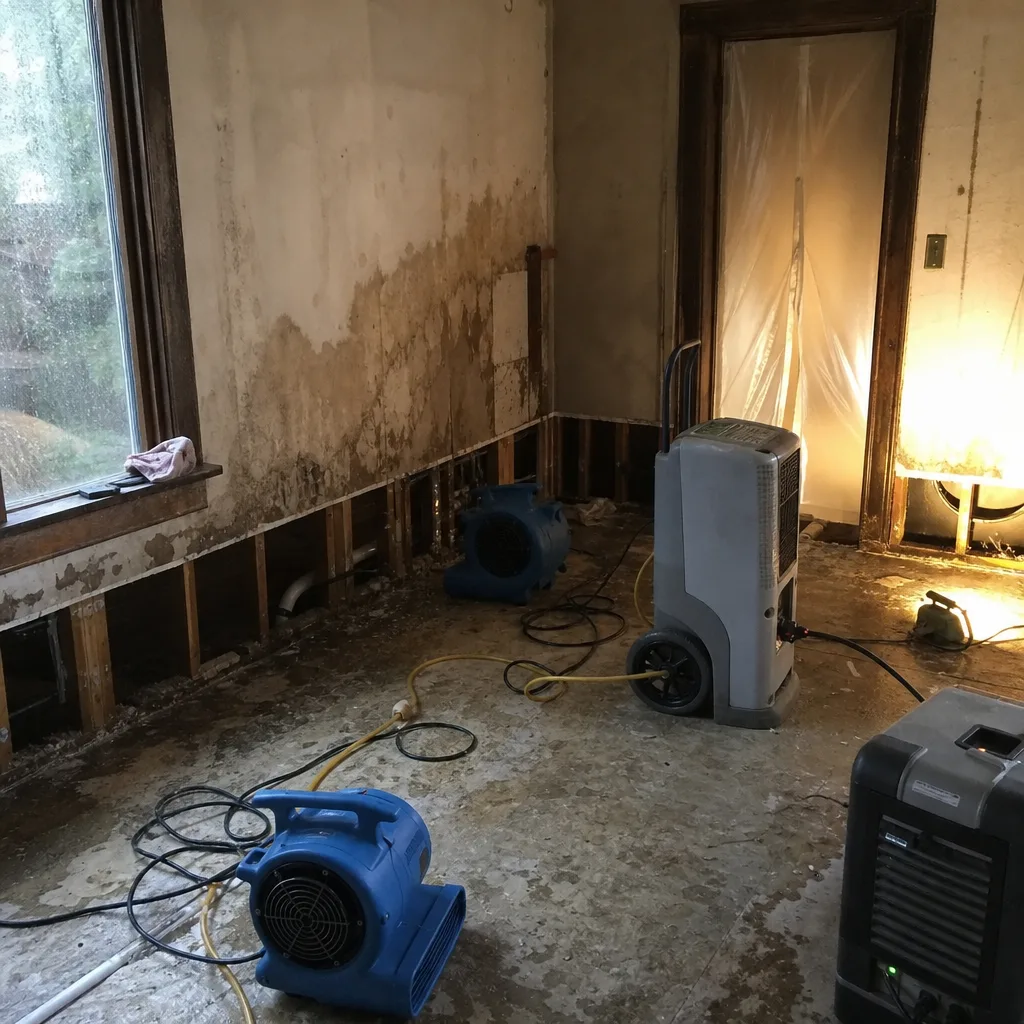 Before
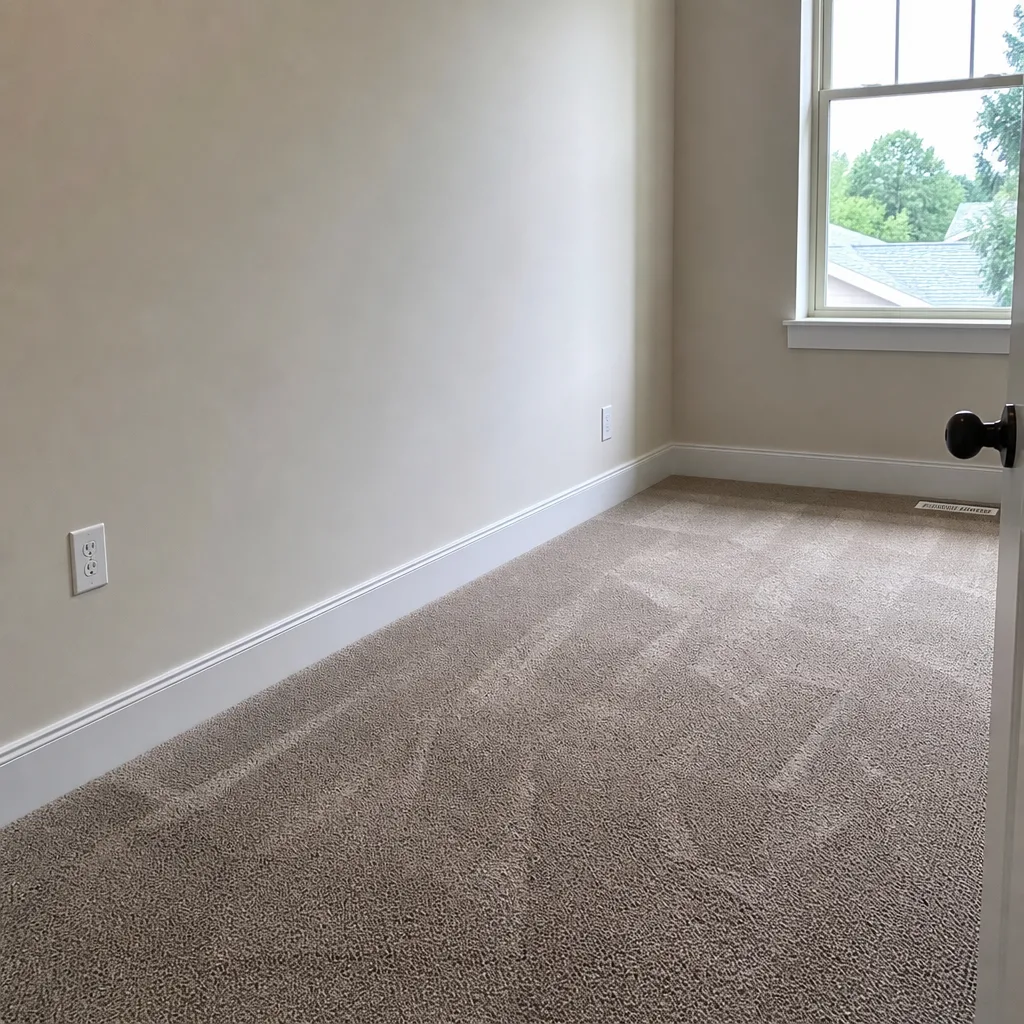 After
After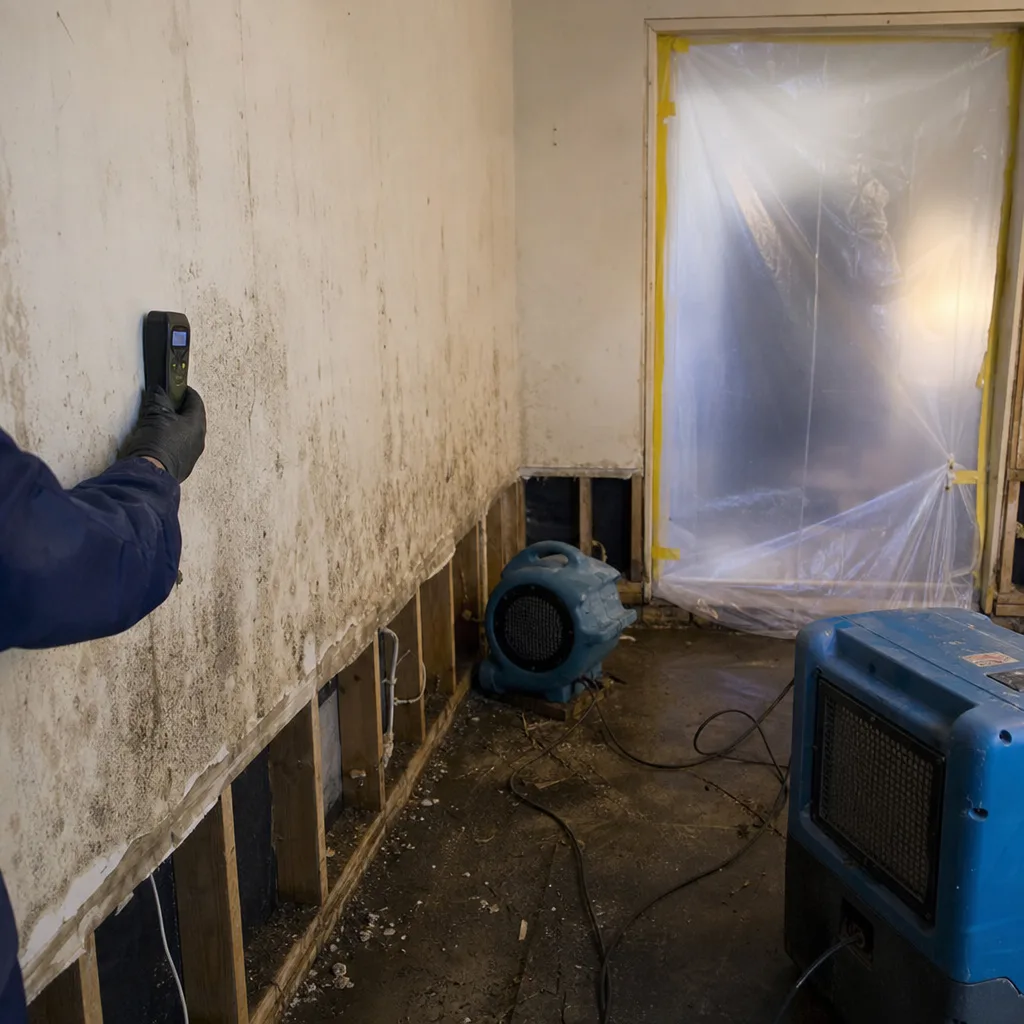 Before
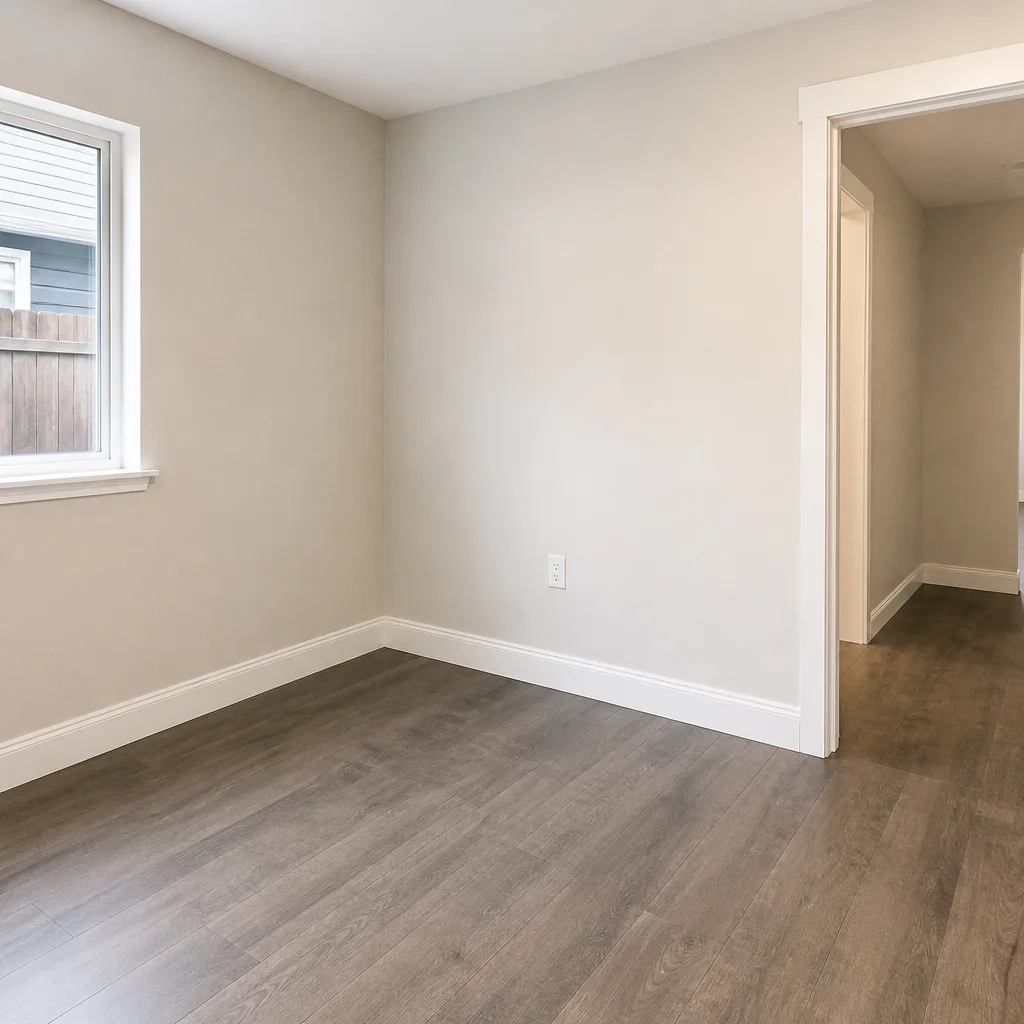 After
AfterHow to Hire a Damage Restoration Contractor in Tacoma: A Step-by-Step Guide
Most Tacoma homeowners start their search with a question that barely matters: “Are you licensed and insured?” Every contractor who wants your business will say yes. In our experience restoring more than 12,000 homes since 2011, the question that actually predicts whether your insurance claim gets paid is the one almost nobody asks: “What does your documentation process look like on day one?” A contractor who cannot produce a sample drying log before you sign anything is telling you exactly how your claim file will look when the adjuster opens it. This guide walks you through the hiring process we wish every homeowner followed before water started moving through their walls, and you can find The Complete Guide to Damage Restoration in Tacoma for more in-depth coverage.
Quick Answer
To hire a damage restoration contractor in Tacoma, verify five specific documents before work begins: a written scope of work, an itemized estimate with line-item pricing, an equipment placement plan, a daily drying log template, and a certificate of insurance naming you as additional insured. Interview at least two contractors, and choose the one whose documentation process matches what your adjuster will need to approve the claim, not the one who promises to “handle everything with insurance” while keeping you out of the loop.
Table of Contents
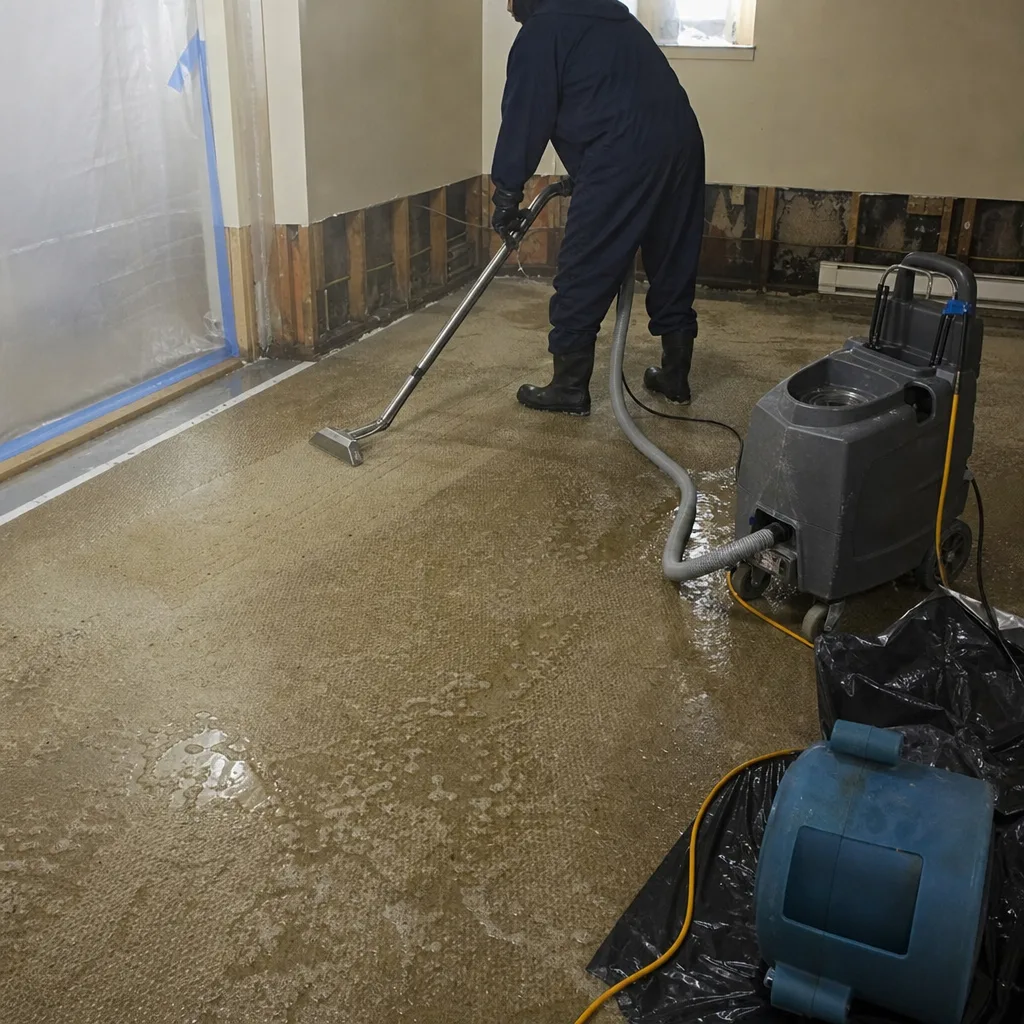
- Why “Licensed and Insured” Is the Wrong Starting Point
- The Five Documents Every Tacoma Contractor Should Hand You
- The “We Work With Your Insurance” Red Flag
- How to Verify IICRC Certification in Washington State
- Binding Written Price vs. Verbal Estimate
- The Interview Questions That Separate Competent Contractors
- Tacoma-Specific Considerations: Climate, Codes, and Common Loss Types
- Common Mistakes to Avoid
- When to Call a Professional
- Frequently Asked Questions
- The Bottom Line
BeforeAfterWhy “Licensed and Insured” Is the Wrong Starting Point
We get it. You’ve just found water in your crawl space or smelled smoke in your hallway. You want fast help from someone legitimate. So you ask if they’re licensed and insured, hear yes, and move on to scheduling.
Here’s the problem: Washington State requires a contractor registration, not a restoration-specific license. A handyman with a $12,000 bond and general liability policy can legally take your water damage job. That registration number proves almost nothing about whether your drying will be documented to IICRC standards or whether your insurer will accept the invoice.
What actually separates contractors who get claims paid from those who don’t is their documentation infrastructure. In Tacoma’s insurance market, where many homeowners carry policies written through regional carriers familiar with Pacific Northwest moisture patterns, adjusters look for specific evidence: psychrometric data showing vapor pressure differential, daily moisture content readings taken with calibrated pin meters, and photo documentation with timestamps. Psychrometric data, if you’re unfamiliar, is simply the measurement of temperature and relative humidity that tells a technician whether the air in your home can still absorb moisture from wet materials. Vapor pressure differential is the force that actually moves water molecules from wet drywall into the drier air; without tracking it, drying is guesswork.
We’ve reviewed competitor files where the “licensed and insured” contractor delivered a two-page invoice with no moisture readings, no equipment serial numbers, and no drying log. The homeowner paid $4,200 out of pocket because the adjuster couldn’t verify that drying had occurred. The contractor was fully compliant with state law. The homeowner was still not made whole.
Start your hiring process differently. Ask for documentation samples before you ask for a license number. A competent contractor keeps example drying logs and photo reports ready to show. A contractor who stalls, deflects, or claims “we’ll handle all that with insurance” is revealing their process in advance.
The Five Documents Every Tacoma Contractor Should Hand You
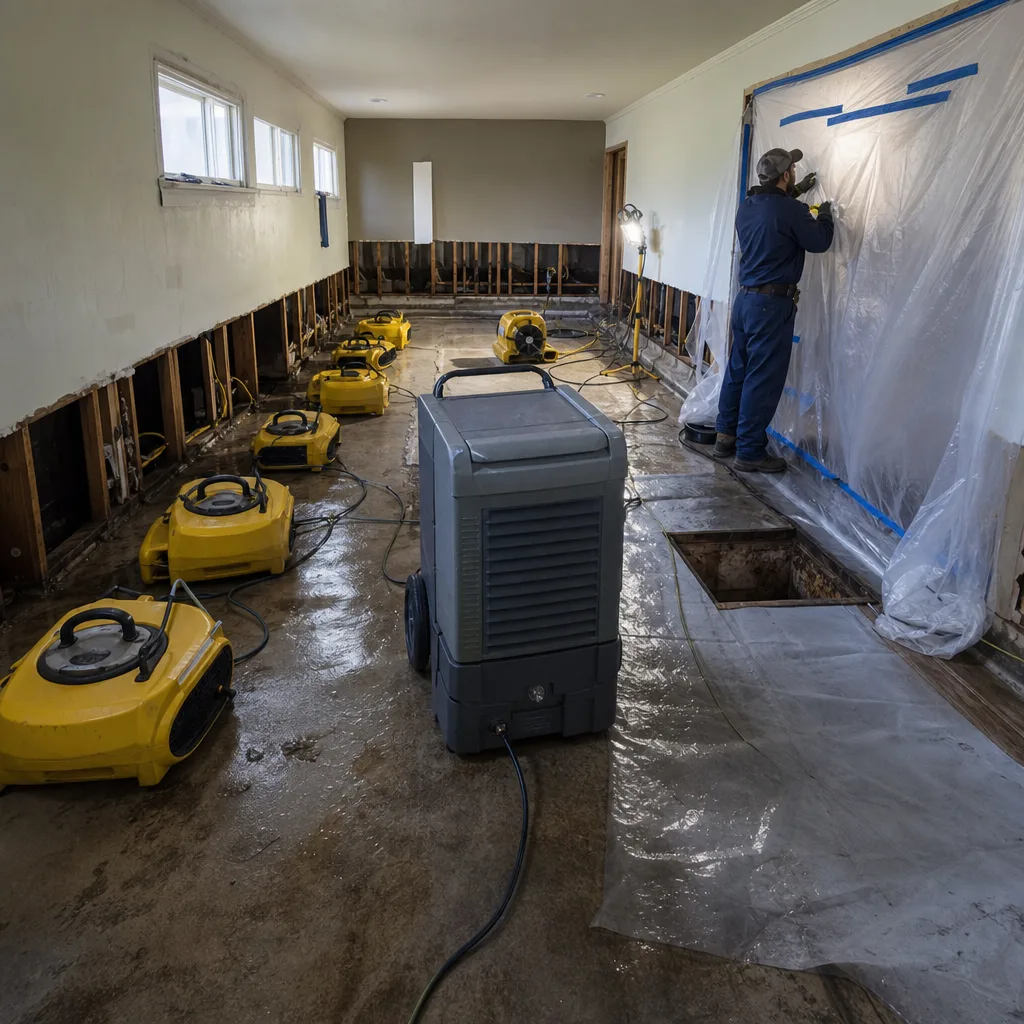
Before anyone opens your wall or places a fan, you should hold five documents. Not promises. Not website claims. Physical or digital documents you can review and keep.
1. Written Scope of Work
This defines exactly what areas are affected, what materials are classified (Category 1, 2, or 3 water; Class 1, 2, 3, or 4 drying scenario), and what steps the contractor will take. In Tacoma’s older neighborhoods like North End and Proctor, homes built before 1970 often contain plaster and lath rather than drywall, which changes the drying approach entirely; our Water Damage Restoration Maintenance Checklist for Tacoma Homeowners details how to assess these materials. Your scope should name the specific rooms, the square footage affected, and the material classifications by trade name.
2. Itemized Estimate with Line-Item Pricing
Haven Standard, Clause 1: written price before work begins. Every time, with no exceptions. The estimate should break out labor, equipment, and materials separately. You should see daily equipment rates for dehumidifiers and air movers, not lump-sum “drying” charges. Typical water damage restoration in Tacoma runs $3,500-$8,500 for moderate residential losses, with severe Category 3 flooding in multi-level homes reaching $15,000-$25,000 before reconstruction. Mold remediation in Tacoma’s humid crawl spaces typically ranges $2,000-$6,000 for contained areas, with whole-house remediation starting around $8,000. Fire and smoke damage restoration generally falls between $4,500 and $15,000 depending on square footage and whether structural cleaning or full reconstruction is needed. These ranges vary by neighborhood, home age, and the specific materials affected.
3. Equipment Placement Plan
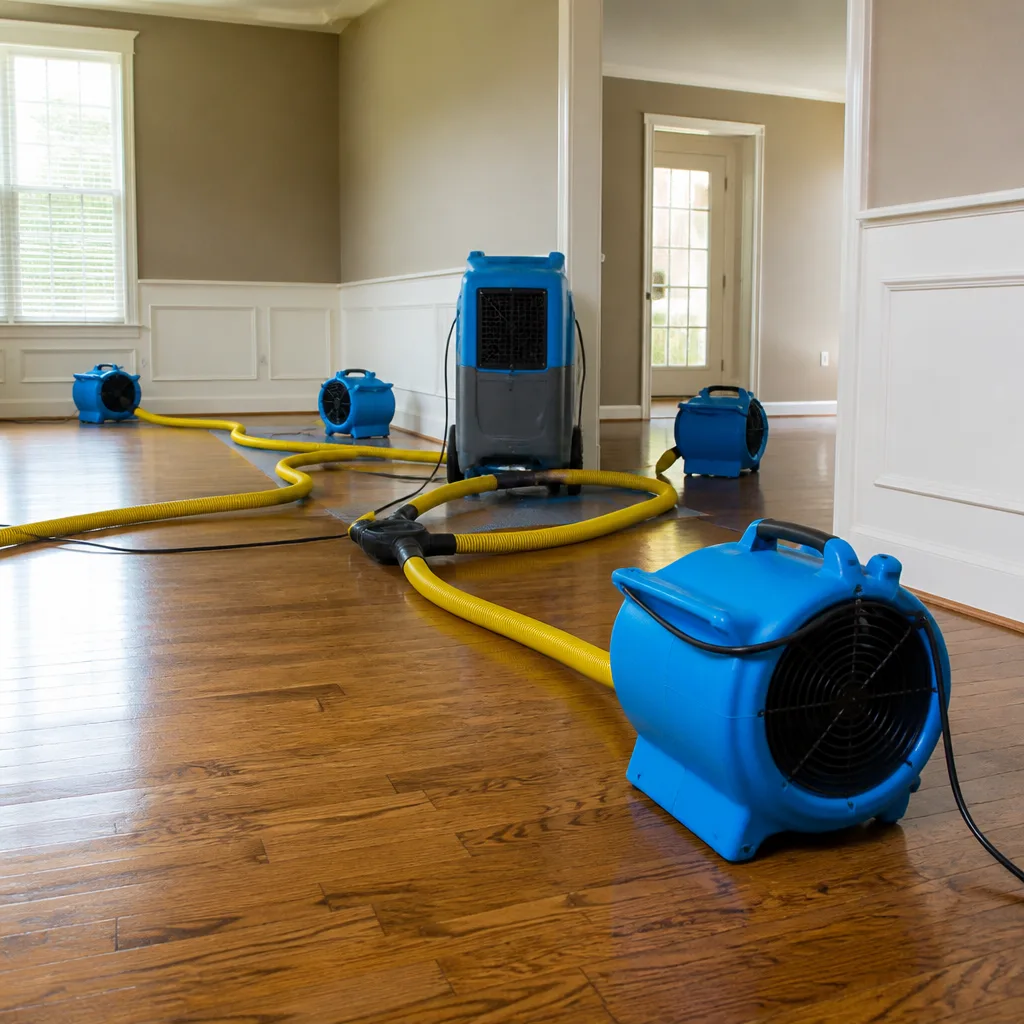
This document shows where each piece of equipment will sit, how many units, and why. For a standard Tacoma ranch home with a flooded basement, you might see two LGR dehumidifiers (low-grain refrigerant units that pull moisture below 40 grains per pound) and six axial air movers positioned for airflow pattern optimization. The plan should reference the drying goal: typically 12-16% moisture content for wood framing, verified with a pin-type meter.
4. Daily Drying Log Template
This is the document that wins or loses insurance disputes. A proper log records: date and time of each visit, ambient temperature and relative humidity, specific moisture readings for each affected material (drywall, subfloor, framing), equipment running hours, and any adjustments made. Ask to see a completed sample from a previous job. If the contractor won’t share one, they don’t have a standardized process.
5. Certificate of Insurance Naming You as Additional Insured
Not just “we have insurance.” A certificate that names you specifically, with coverage dates that span your project. This protects you if a technician is injured on your property or if their work causes secondary damage to a neighbor’s home. In Tacoma’s dense hillside neighborhoods like Stadium District, where homes share retaining walls and drainage systems, this matters more than in suburban developments.
The “We Work With Your Insurance” Red Flag
This phrase sounds helpful. It often isn’t.
When a contractor says they “work directly with your insurance” or “handle everything so you don’t have to worry,” ask a follow-up question: “Will I receive copies of all documentation you submit to the adjuster, and will I approve the scope before you submit it?”
If the answer is no, or if the contractor explains that they’ll “streamline the process” by communicating directly while keeping you informed at “key milestones,” you’re being removed from your own claim file. This is where disputes begin.
Here’s what happens in our experience: the contractor submits an estimate, the adjuster requests documentation, the contractor provides incomplete records, the adjuster denies a portion of the claim, and the homeowner first learns of the shortfall when they receive a bill for the gap. Because the homeowner wasn’t copied on submissions, they can’t verify what was sent or correct errors.
The alternative is simple and protects you: you receive every document the contractor sends to insurance, you review and approve the scope before submission, and you maintain your own file. A documentation-competent contractor will welcome this. It demonstrates their confidence in their records. A contractor who resists is revealing that their documentation won’t withstand scrutiny.
At DryMark Restoration Tacoma home, we provide homeowners their complete file, including photo records and drying logs, as a standard deliverable. Not because it’s generous, but because it’s the only way the claim process works correctly.
How to Verify IICRC Certification in Washington State
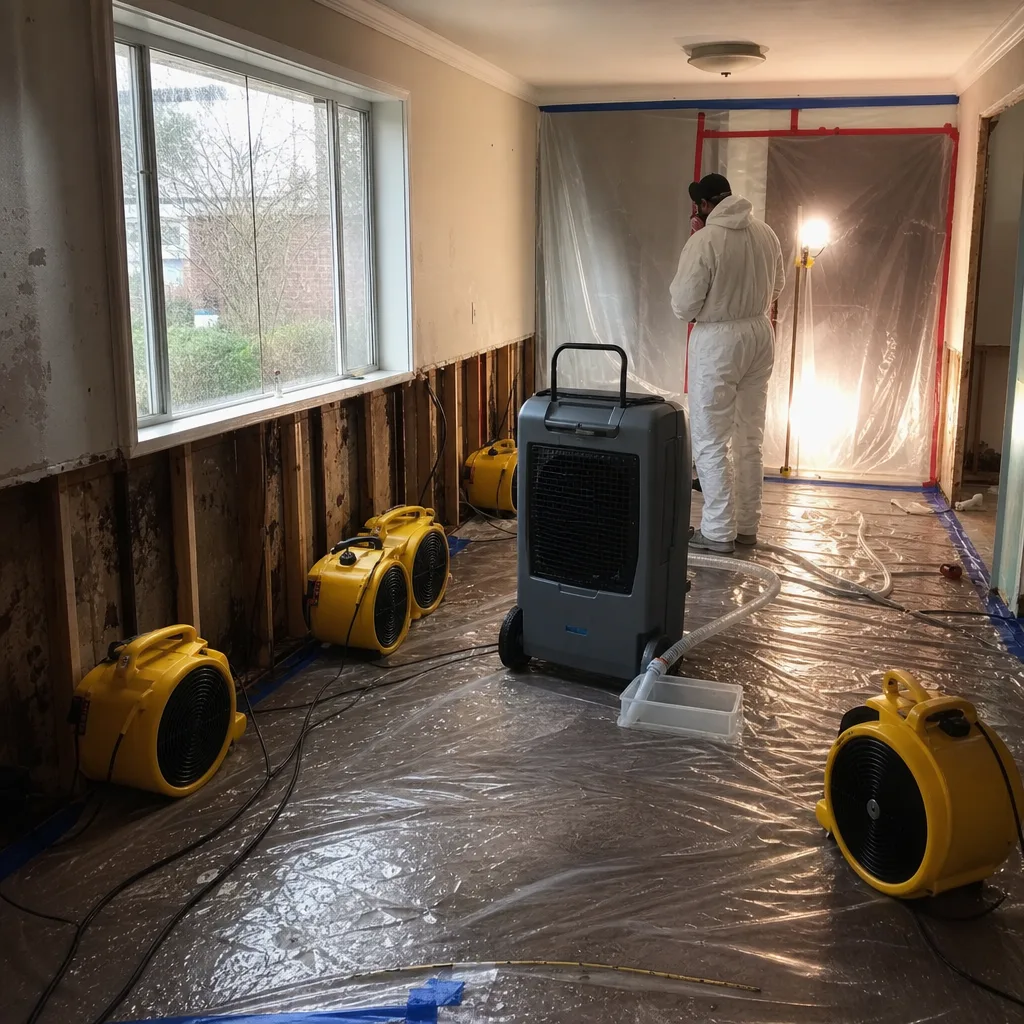
IICRC, the Institute of Inspection, Cleaning and Restoration Certification, sets the industry standard for water damage restoration (WRT), applied structural drying (ASD), and mold remediation (AMRT). But certification alone doesn’t guarantee documentation quality. Here’s what to verify and what it actually means.
Step-by-Step Verification
- Ask for the technician’s IICRC certification number. Legitimate technicians carry cards with their name, certification type, and expiration date.
- Verify online at iicrc.org. The registry confirms active status. Expired certifications are common in this industry; don’t assume current.
- Confirm certification type matches your loss. WRT (Water Damage Restoration Technician) is entry-level. ASD (Applied Structural Drying) indicates advanced training in building science and drying strategy. AMRT (Applied Microbial Remediation Technician) is required for mold work. A technician with only WRT should not be designing your mold remediation protocol.
- Ask what the certification obligates them to document. IICRC S500, the water damage standard, requires moisture mapping, psychrometric monitoring, and daily documentation. But the standard doesn’t specify format, frequency, or whether you receive copies. That’s where contractor process matters more than certification.
What IICRC certification does not cover: reconstruction quality, billing practices, or customer communication protocols. A certified technician can still deliver a file your adjuster disputes. Certification is necessary, not sufficient.
In Tacoma’s restoration market, we’ve encountered contractors who display IICRC logos on their trucks while employing uncertified technicians to perform the actual work. Ask specifically: “Who will be on-site, and what are their certifications?” The answer should name individuals, not reference a company-level credential.
Binding Written Price vs. Verbal Estimate
The difference between these two documents is the difference between a predictable claim and a financial surprise.
A verbal estimate, even if detailed in conversation, can be revised after demolition begins. The contractor discovers “hidden damage,” the scope expands, and your out-of-pocket cost grows. Without written documentation of what was visible and priced before work started, you have no basis to dispute additions.
A binding written price, what Haven Standard, Clause 1 requires, specifies: the exact work to be performed, the price for that work, the conditions under which additional work would be authorized, and the process for authorization. It should include language like: “Additional work beyond this scope requires written homeowner approval before commencement.”
Here’s what to look for in the contractual language:
- Fixed price vs. time-and-materials: Time-and-materials contracts shift all risk to you. Fixed prices with defined scope boundaries protect you.
- Demolition contingencies: The contract should state whether demolition is included in the fixed price or priced separately, and what triggers additional demolition.
- Equipment daily rates: These should be specified with maximum rental periods. We’ve seen invoices where equipment remained on-site 11 days past achieving drying goals because the contract lacked termination language.
- Reconstruction phase: Water damage restoration in Tacoma often requires reconstruction after drying. This should be a separate written scope, not an open-ended addition to the mitigation contract.
In Tacoma’s competitive market, some contractors offer low initial estimates to win the job, then rely on scope expansion for profitability. A written price with no-expansion language prevents this. If a contractor won’t commit to that language, the low estimate isn’t a deal; it’s a strategy.
The Interview Questions That Separate Competent Contractors
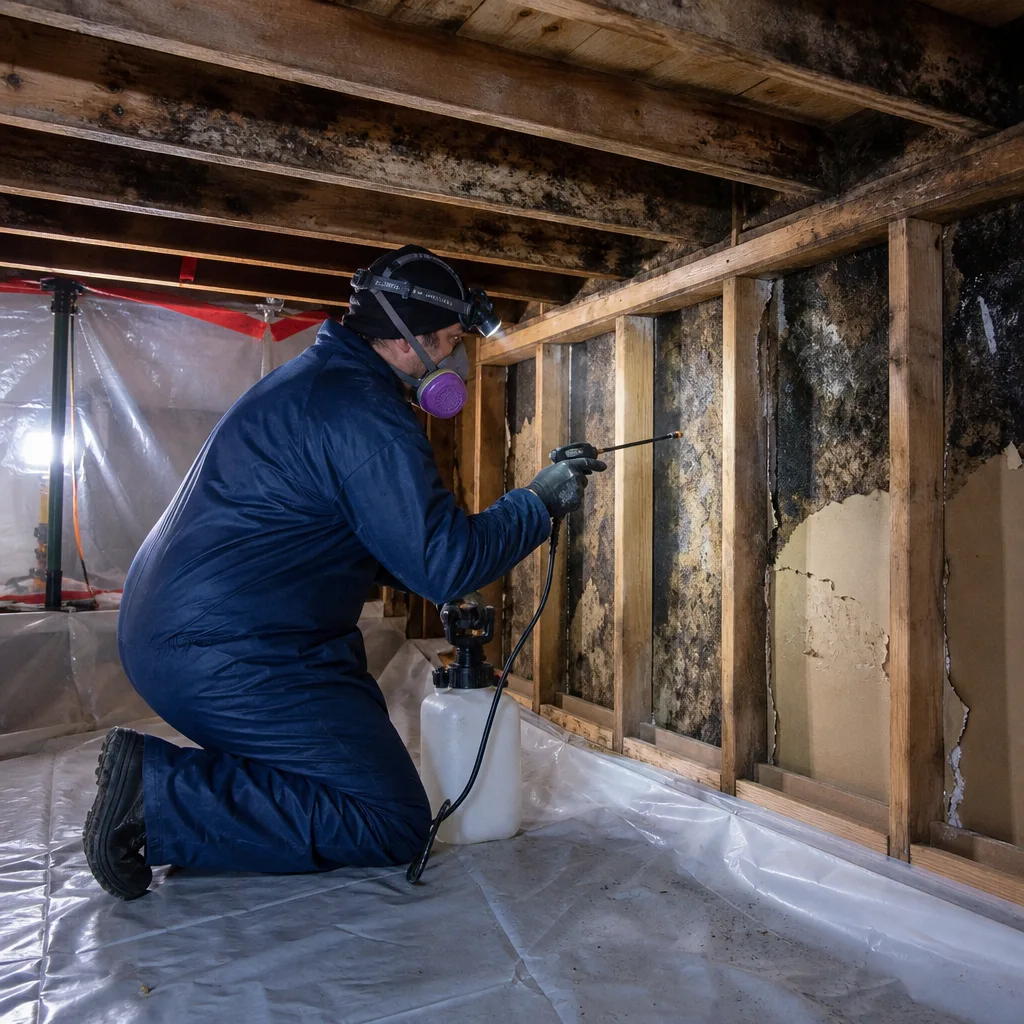
Ask these questions. The specific answers reveal documentation competence.
Question 1: “Walk me through what documentation I receive on day one, day three, and job completion.”
Good answer: “Day one, you get a moisture map with readings for each affected material, a photo record with timestamps, and your written scope with fixed price. Day three, we update the drying log with new readings and adjust equipment if vapor pressure differential has shifted. At completion, you receive the complete file: all logs, all photos, equipment removal confirmation, and a certificate of dryness with final moisture percentages.”
Concerning answer: “We’ll keep you updated throughout, and you’ll get a final invoice.”
Question 2: “What happens if my adjuster requests additional documentation?”
Good answer: “We provide it directly to you for your submission, or with your written permission, to the adjuster with you copied. We maintain records for seven years.”
Concerning answer: “We handle all that with insurance so you don’t have to worry about it.”
Question 3: “Show me a sample drying log from a recent job.”
Good answer: The contractor produces a document with dates, times, specific moisture readings by location, equipment serial numbers, and technician initials.
Concerning answer: Any hesitation, claim of confidentiality, or offer to “put something together” for you. Completed logs from anonymized jobs are standard marketing materials for documentation-competent contractors.
Question 4: “What equipment will you use, and why that brand?”
Good answer: Specific brands with technical rationale. “We’re deploying Phoenix 200 HT LGR dehumidifiers because your basement humidity is at 78% and we need to reach 30% relative humidity to hit our drying goal. The 200 HT performs at low temperatures, which matters in your unheated Tacoma crawl space.” Or: “XPOWER axial air movers for this open floor plan because we need 1,800 CFM with low amp draw to avoid overloading your circuits.”
Concerning answer: “Professional-grade equipment” with no specifics. Every contractor claims professional-grade equipment. Documentation-competent contractors can name the model and explain the selection.
Question 5: “What is your process if moisture readings don’t improve after 24 hours?”
Good answer: “We investigate: check vapor barrier integrity, evaluate whether we’re dealing with bound water versus free water, consider whether we need to switch to desiccant dehumidification or introduce heat. We document the change in strategy and why, and we communicate with you before changing equipment.”
Concerning answer: “We just let it run longer.” Extended drying without diagnostic adjustment wastes your money and risks secondary damage.
Question 6: “What does your warranty cover, and what documentation proves it?”
Good answer: “Our 365-Day Done Right Promise under The Haven Standard covers any return of moisture or mold in treated areas. The warranty is written and signed, not verbal. It’s supported by your complete file, which proves what conditions existed and what we achieved.”
Concerning answer: “We guarantee our work” with no written document. Verbal guarantees are unenforceable and often forgotten by the time problems emerge.
Tacoma-Specific Considerations: Climate, Codes, and Common Loss Types
Tacoma’s restoration market has characteristics that should inform your contractor selection.
Climate and Seasonal Patterns
Tacoma receives 39 inches of annual rainfall, concentrated October through May. The persistent marine layer keeps relative humidity elevated even during dry spells, which means materials that get wet stay wet longer without aggressive drying. In our experience, a water loss in July dries faster than an identical loss in January because ambient vapor pressure is lower in summer. Your contractor should account for seasonal conditions in equipment selection and drying timeline, not apply a standard protocol year-round-see our Seasonal Damage Restoration Care for Tacoma: Year-Round Homeowner’s Guide for specifics.
Common Loss Types by Neighborhood
In Tacoma’s hillside neighborhoods, including Stadium District and parts of North End, we regularly see water intrusion from failed perimeter drainage and saturated retaining walls. The solution isn’t just drying the basement; it’s documenting the drainage failure for insurance and often coordinating with a geotechnical contractor. A restoration contractor who treats this as standard water damage without addressing the source will leave you with a recurring problem. For more guides & resources on navigating these scenarios, visit our blog.
In New Tacoma and the waterfront areas, older commercial-to-residential conversions present unique challenges: mixed construction eras, unventilated crawl spaces, and previous renovation layers that trap moisture. Documentation here requires understanding what materials exist beneath visible surfaces.
In Eastside and South End neighborhoods with 1950s-1970s construction, galvanized plumbing failures are common. When a pressurized line ruptures, the Category 1 loss can become Category 2 or 3 if not addressed within 24-48 hours. Your contractor’s response speed and initial documentation of water category matter for coverage determination.
Permit and Code Considerations
Tacoma requires permits for reconstruction work exceeding specific thresholds, including electrical, plumbing, and structural repairs. A contractor who performs reconstruction without pulling required permits leaves you with uninsurable work and potential resale complications. Ask specifically: “Will you pull permits for reconstruction, and will permit costs appear as a line item?” The answer should be yes to both.
Equipment Selection for Tacoma Conditions
Marine climate drying requires equipment that performs at lower temperatures and higher humidity. We deploy Dri-Eaz and Phoenix LGR dehumidifiers specifically because they maintain grain depression (the difference between incoming and outgoing air moisture content) when conventional refrigerant units become inefficient. For confined spaces like Tacoma’s common crawl spaces, Injectidry systems allow targeted drying without full access. B-Air air movers provide the CFM needed for open-area drying with energy efficiency that keeps your electrical bill manageable during extended drying.
Common Mistakes to Avoid
- Hiring based on arrival speed alone. In Tacoma’s emergency restoration market, the contractor who arrives fastest is often the one with the most marketing spend and the least documentation infrastructure. A two-hour delay for a contractor who delivers a complete file is preferable to immediate arrival with no records.
- Accepting “insurance will cover it” as a pricing discussion. Your policy has limits, deductibles, and exclusions. The contractor’s job is to document the loss comprehensively; your job is to understand your coverage. Never authorize work based on a contractor’s insurance prediction.
- Neglecting to photograph the loss yourself. Even with a documentation-competent contractor, your own photos from immediately after discovery establish the baseline. Photograph standing water levels, affected materials, and the apparent source before anyone moves anything.
- Signing a contract with open-ended authorization language. Phrases like “contractor authorized to perform necessary additional work” without dollar limits or homeowner notification requirements have led to $20,000+ surprises. Haven Standard, Clause 1 exists to prevent exactly this.
- Assuming IICRC certification means standardized quality. Certification verifies training completion, not ongoing competence or documentation rigor. Verify, don’t assume.
- Failing to get a second opinion on large losses. For estimates exceeding $10,000, a second opinion costs nothing and often reveals scope differences. Mold remediation in Tacoma estimates in particular vary widely because contractors differ in their containment and air-scrubbing approaches.
- Ignoring the reconstruction phase in initial hiring. Some contractors specialize in mitigation only, leaving you to find a separate contractor for rebuild. Others perform both but subcontract reconstruction without disclosing it. Clarify who performs reconstruction, under what contract, and with what warranty.
When to Call a Professional
Some situations require immediate professional response regardless of your DIY capabilities. Call a restoration contractor when: water has affected drywall or insulation (these materials wick moisture vertically and require professional drying); you smell musty odors after any water event (this indicates microbial growth that Fire & Smoke Damage Restoration in Tacoma professionals address with containment protocols); sewage or gray water is involved (Category 2 and 3 water carries health risks and requires specific documentation for insurance); fire damage has occurred even if flames were contained (smoke residues are acidic and cause progressive damage); or mold is visible covering more than 10 square feet (EPA guidelines recommend professional remediation for larger areas).
DryMark Restoration Tacoma offers free estimates in Tacoma. For documentation-competent response, call (253) 265-9692. A live person answers every call, 24 hours a day, 7 days a week, with no voicemail on emergency lines.
Frequently Asked Questions
Typical residential water damage restoration in Tacoma ranges from $3,500 to $8,500 for moderate losses involving multiple rooms, with severe Category 3 flooding in multi-level homes reaching $15,000 to $25,000 before reconstruction. The final cost depends on water category, affected square footage, materials involved, and drying duration. Call (253) 265-9692 for a written estimate specific to your situation - estimates are free.
Coverage depends on your policy type, the cause of loss, and the documentation quality your contractor provides. Sudden and accidental water damage is typically covered; gradual leaks often are not. The key variable is whether your contractor’s documentation proves the loss was sudden and establishes the scope of necessary work. A file with moisture logs, photos, and written scope gets approved more reliably than an invoice alone. We coordinate directly with adjusters while keeping you fully informed, and we provide photo-documented assessments that support your claim.
For emergency water and fire damage, DryMark Restoration Tacoma dispatches immediately with live phone coverage 24 hours a day, 7 days a week. Response time varies by current call volume and your location within Tacoma, but emergency dispatch is prioritized for active water flow, sewage backup, and fire damage with ongoing smoke production. Reconstruction work is different; it’s scheduled after scoping and written pricing, not dispatched as emergency response.
For mold covering less than 10 square feet on a hard surface with no HVAC involvement, DIY cleaning with appropriate PPE may be adequate. For larger areas, porous materials affected, HVAC system involvement, or if occupants have respiratory conditions, professional remediation with containment and negative air pressure is necessary. The documentation of professional remediation also matters for property disclosure if you sell. We offer free second opinions on competitor mold estimates if you’re uncertain about recommended scope.
You do, with professional support. The contractor’s role is to document the loss thoroughly and communicate that documentation clearly. Your role is to maintain your own file, review all submissions, and make coverage decisions. Any contractor who suggests you “don’t need to deal with insurance” is removing you from a process that affects your financial outcome. We provide complete documentation for your direct use or, with your permission, submit to your adjuster with you copied on everything.
Mitigation is emergency stabilization: water extraction, drying, smoke removal, mold containment. It’s time-sensitive and often covered by insurance. Reconstruction is rebuilding: drywall, flooring, painting, electrical. It’s scheduled work, requires permits, and may involve different contractors with different warranties. Some companies do both; some subcontract. Ask explicitly who performs each phase and under what contract terms. At DryMark Restoration Tacoma, we perform both under The Haven Standard with consistent documentation and warranty coverage.
The Bottom Line
Hiring a damage restoration contractor in Tacoma is not about finding the fastest responder or the lowest bidder. It’s about finding a contractor whose documentation process produces a claim file your adjuster can approve without dispute. Verify five documents before work begins. Ask interview questions that reveal process, not just credentials. Insist on remaining in your own insurance loop. And choose the contractor who treats documentation as the product, not an afterthought. The file they build on day one determines whether you’re made whole or left arguing over unpaid invoices.
Written by Alicia Brennan, Owner at DryMark Restoration Tacoma, serving Tacoma since 2011.