
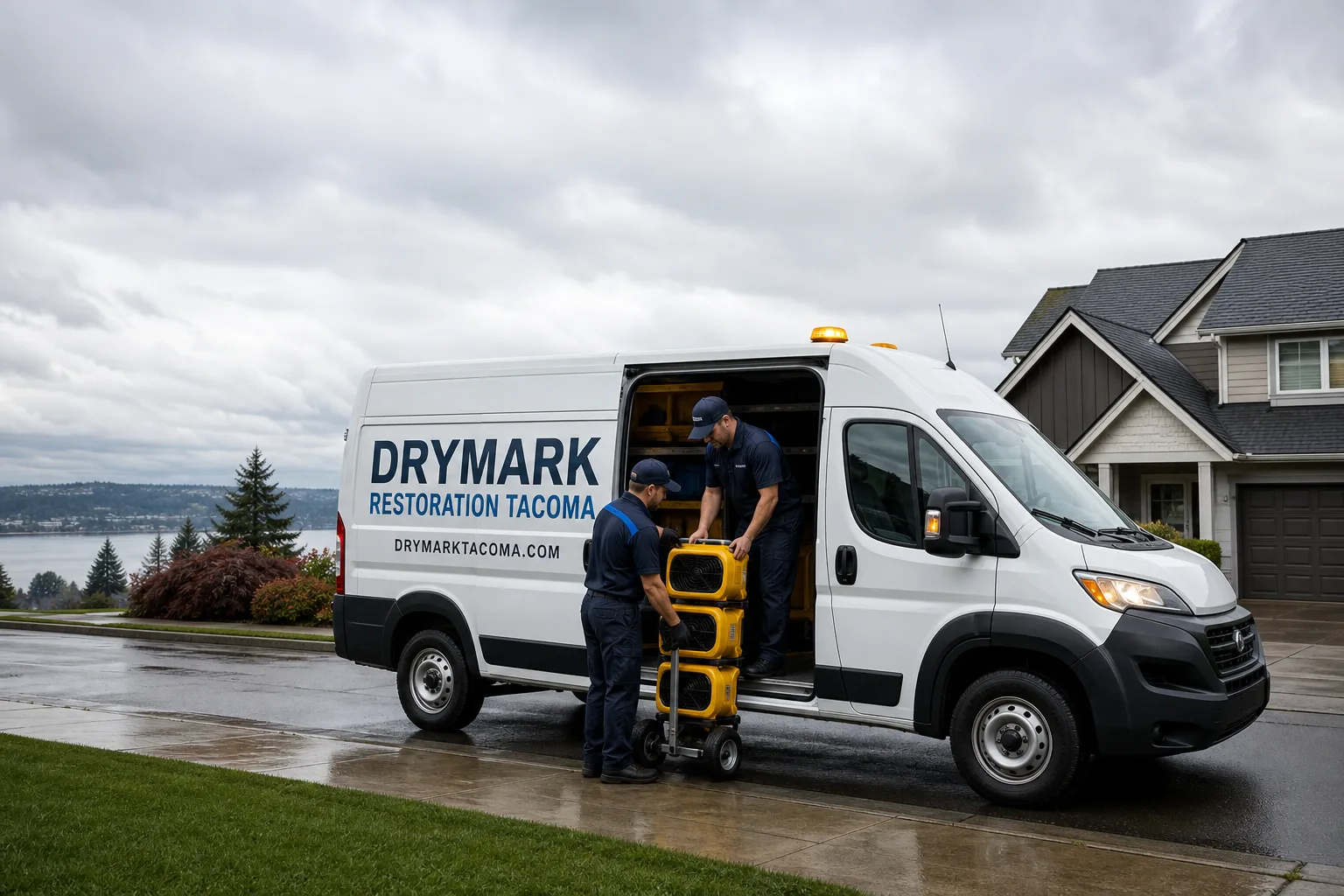
Free visual inspection and a written scope of work before any mitigation begins - photos, moisture readings, and drying logs go in your claim file
The scope we write is the scope we bill. Anything new gets shown to you, in writing, before we touch it.
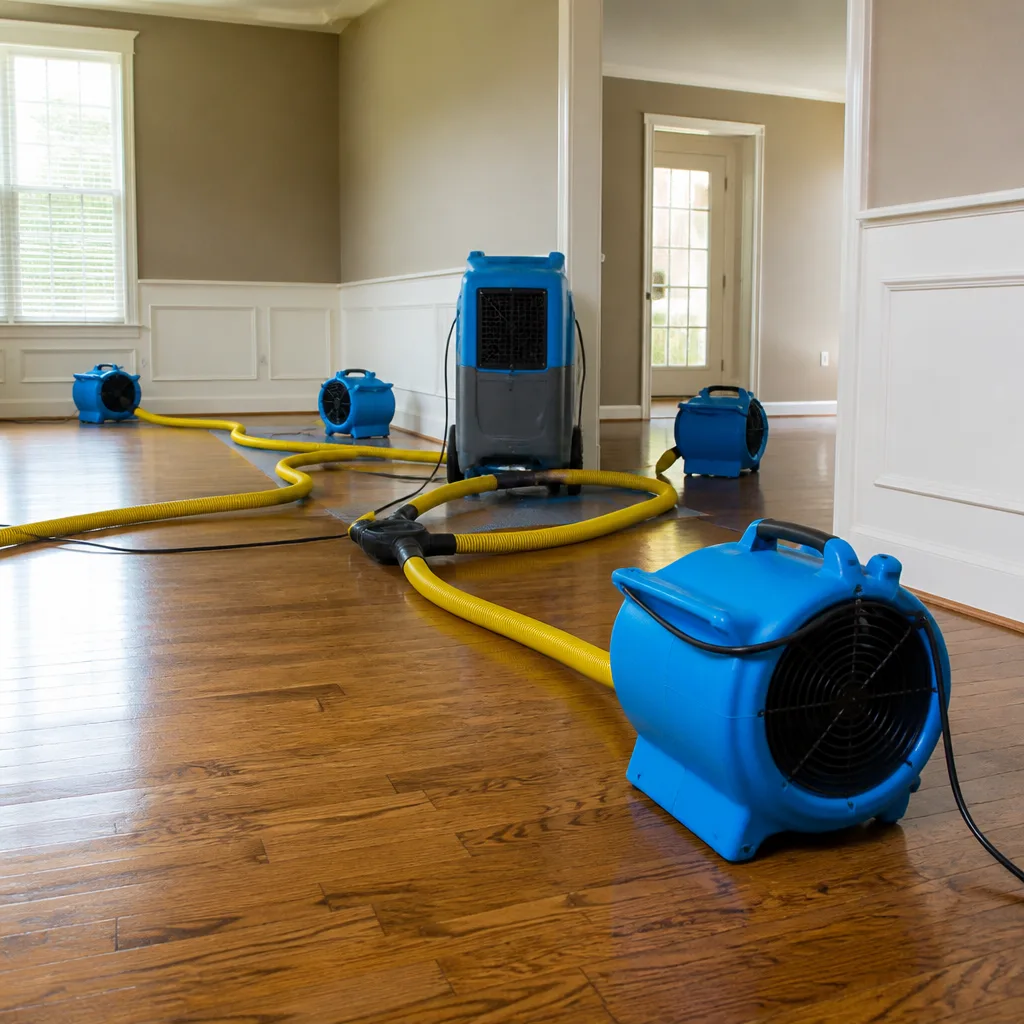
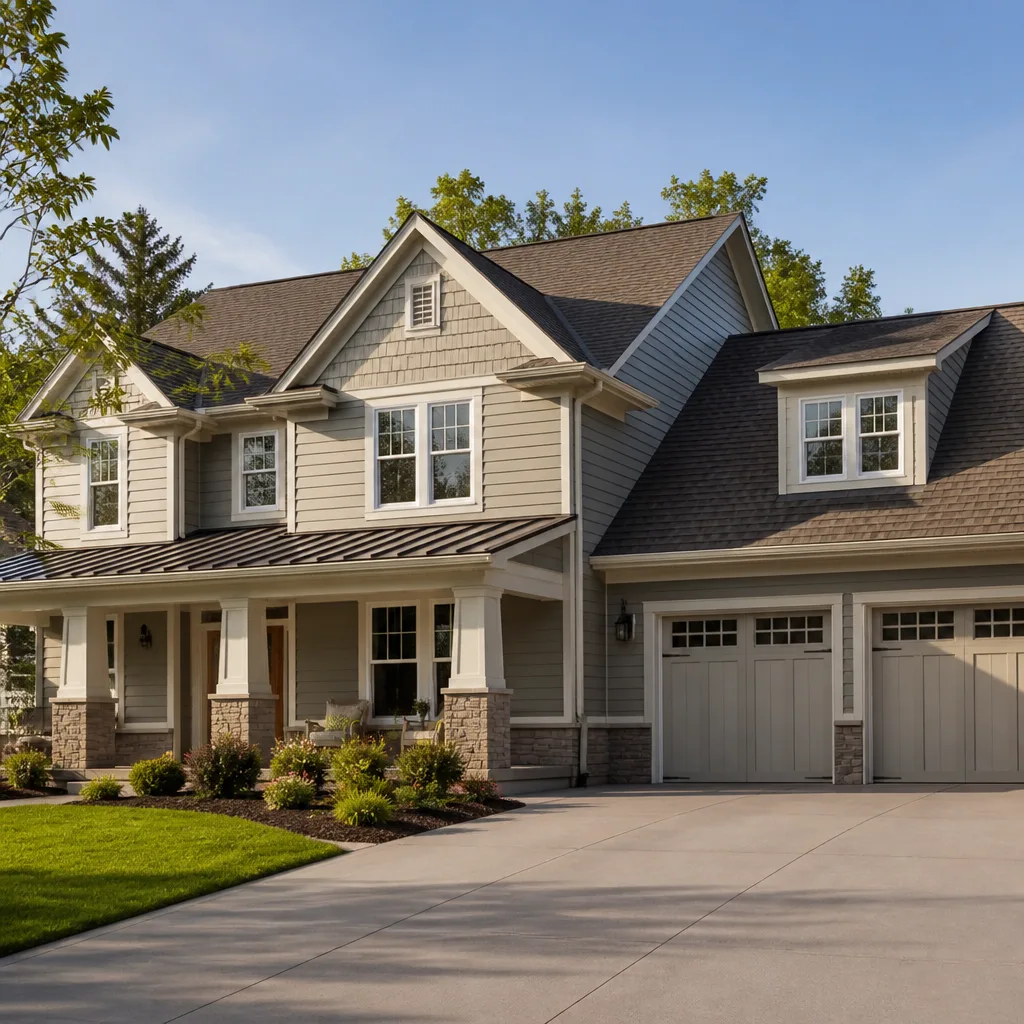
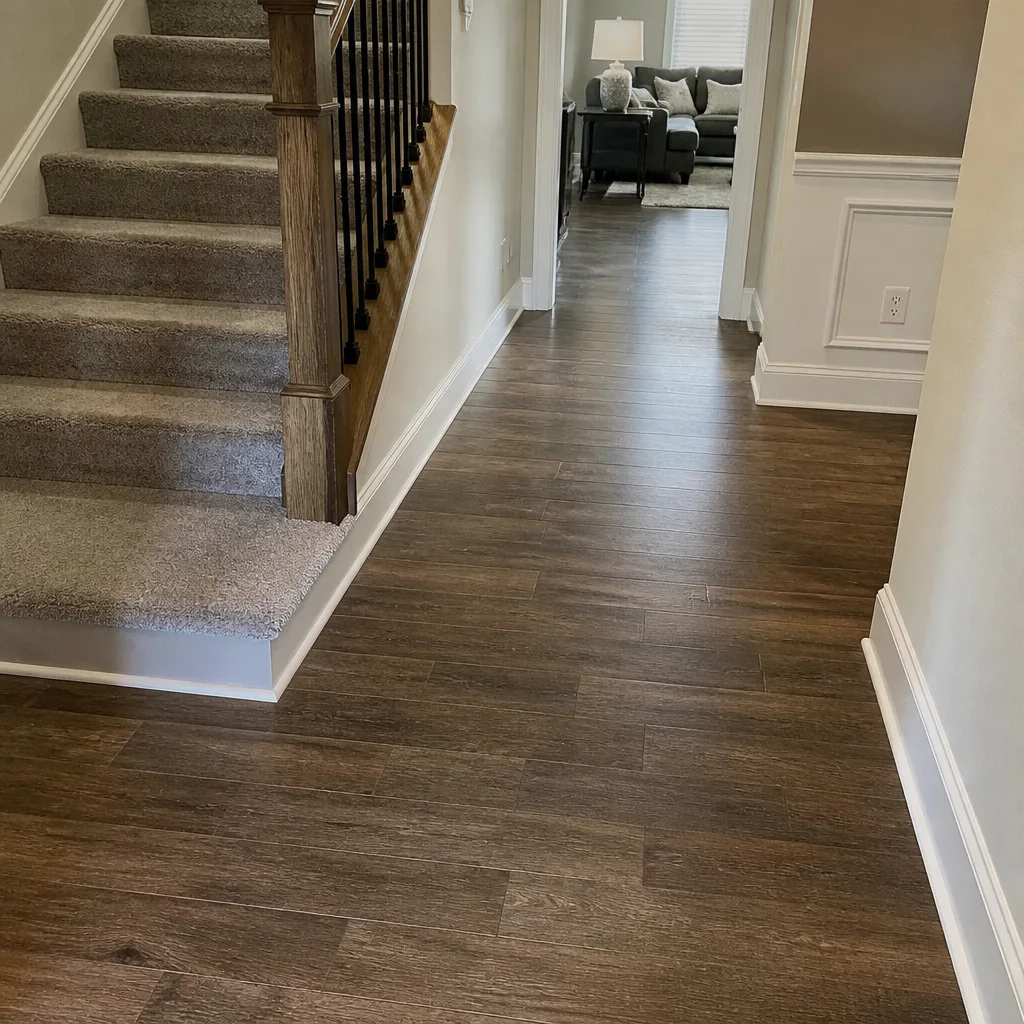
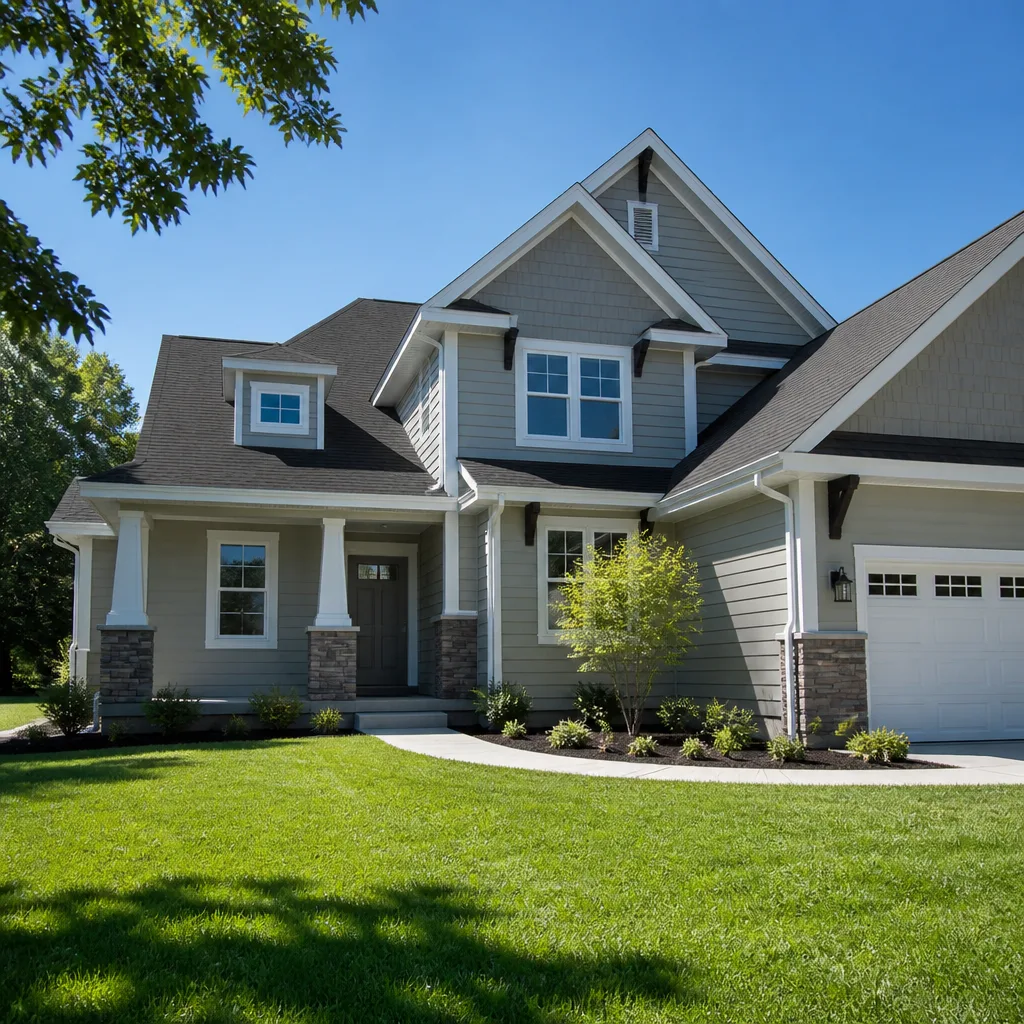
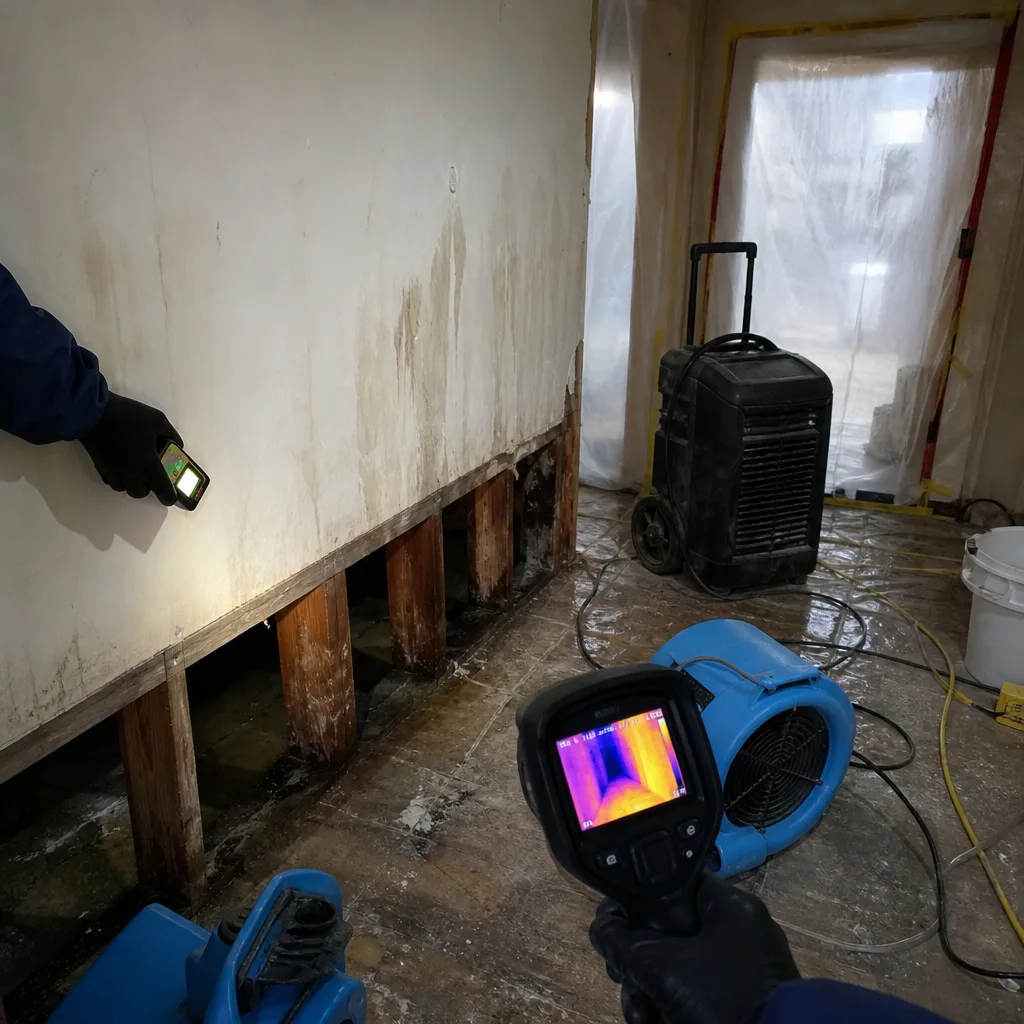 Before
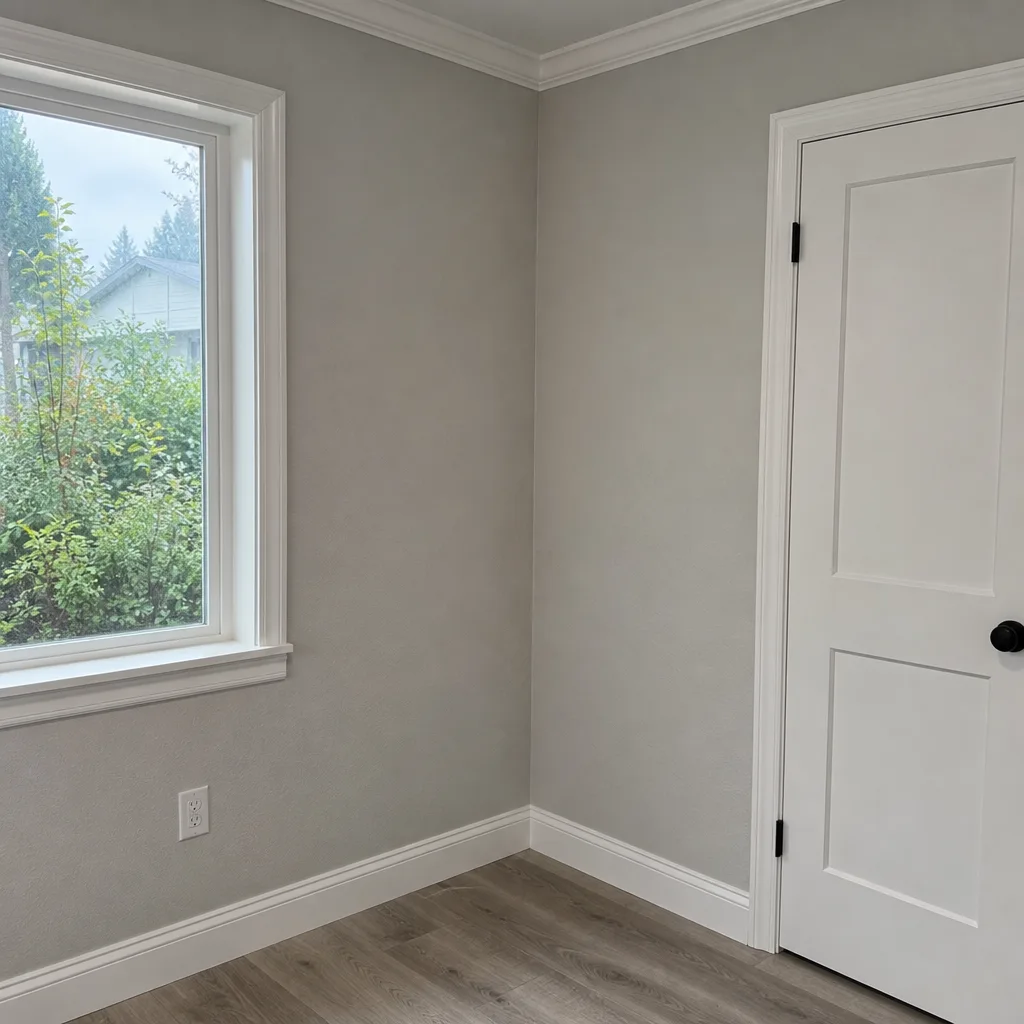 After
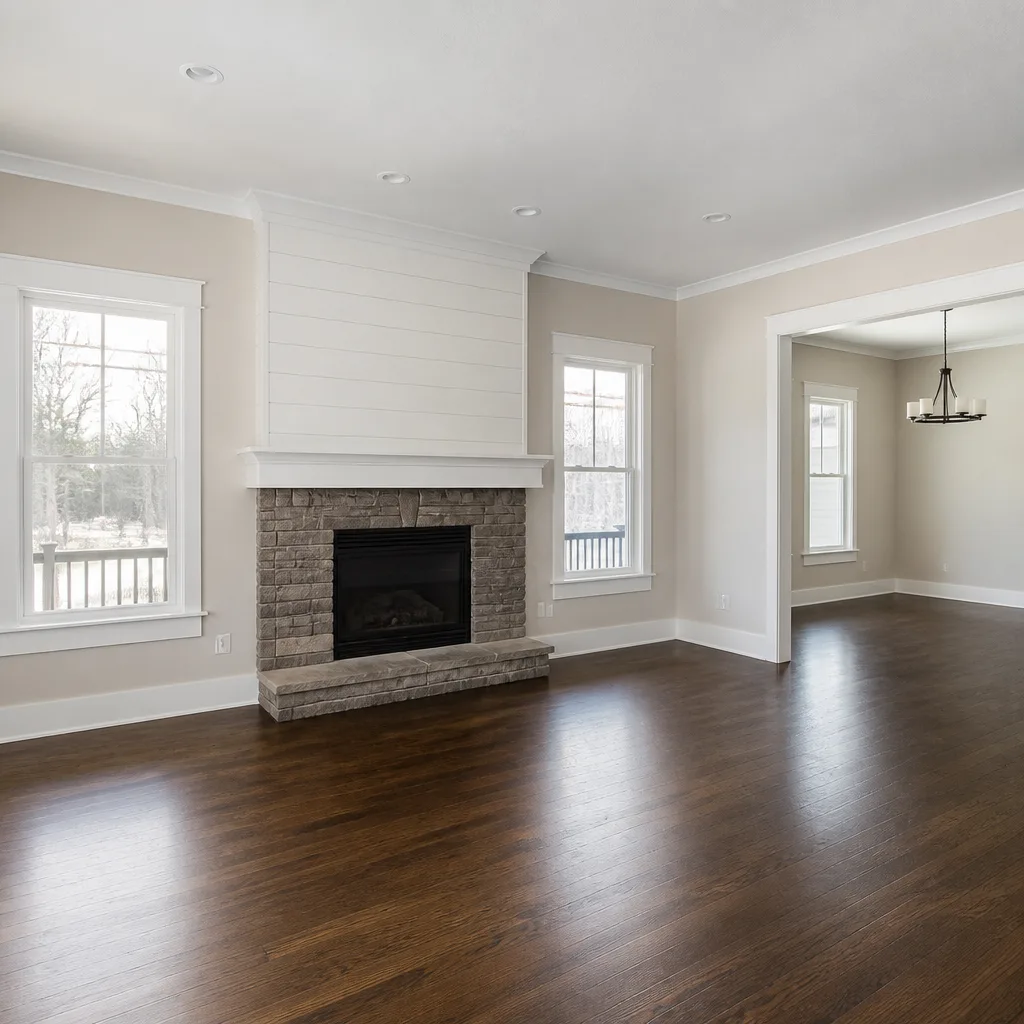
After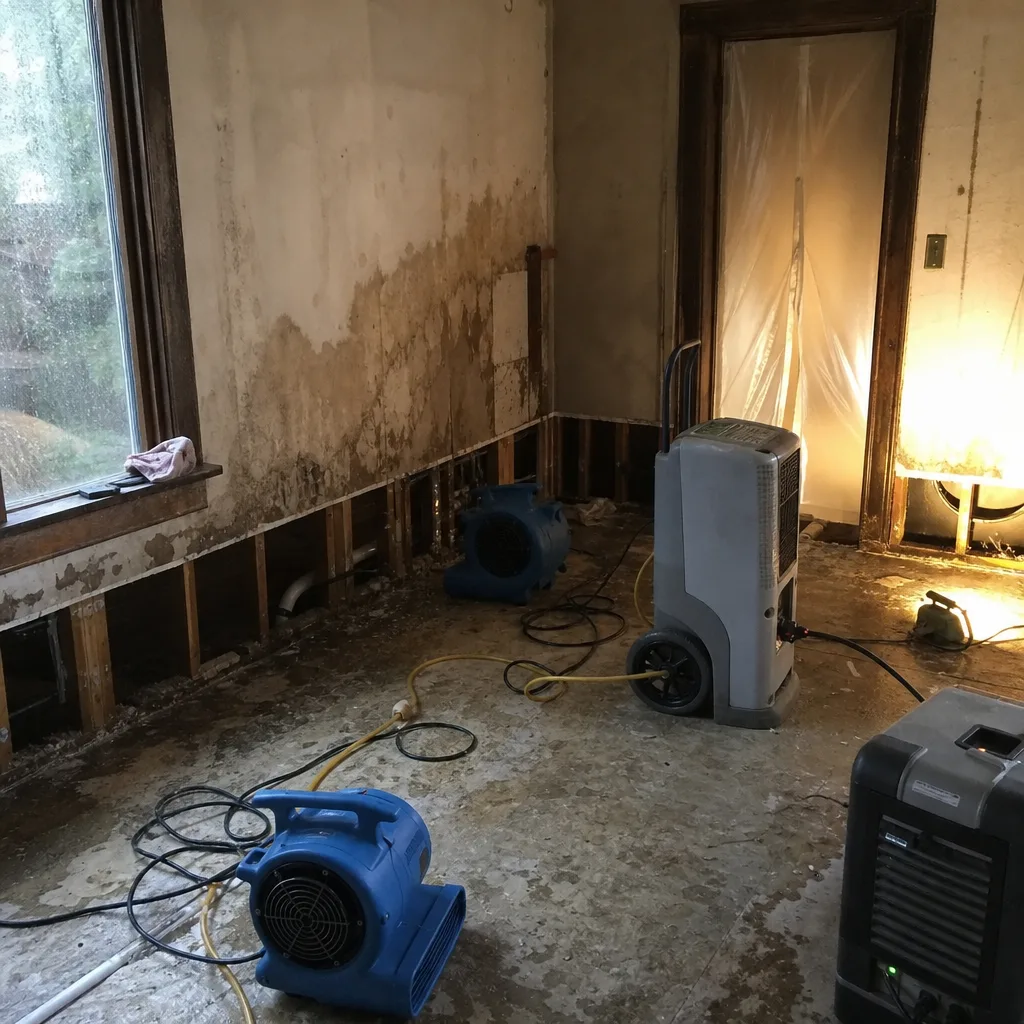 Before
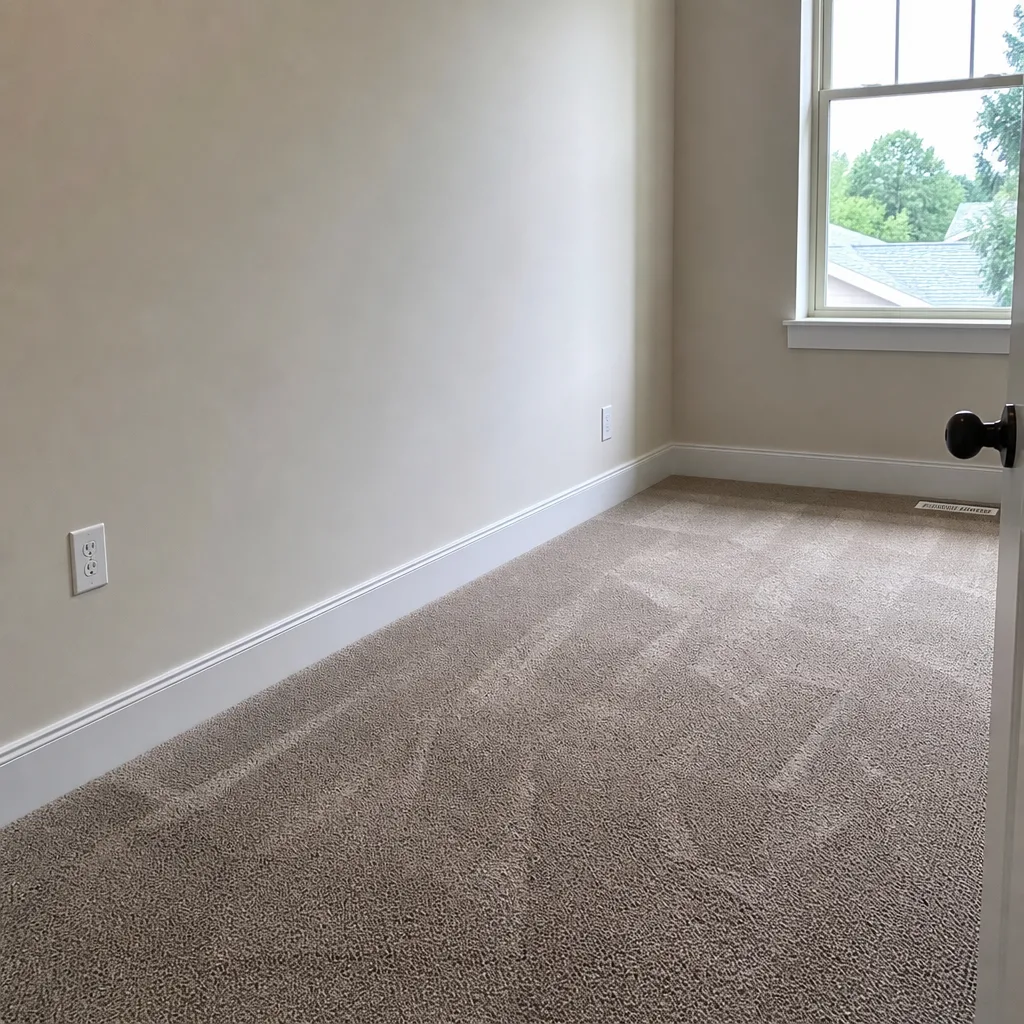 After
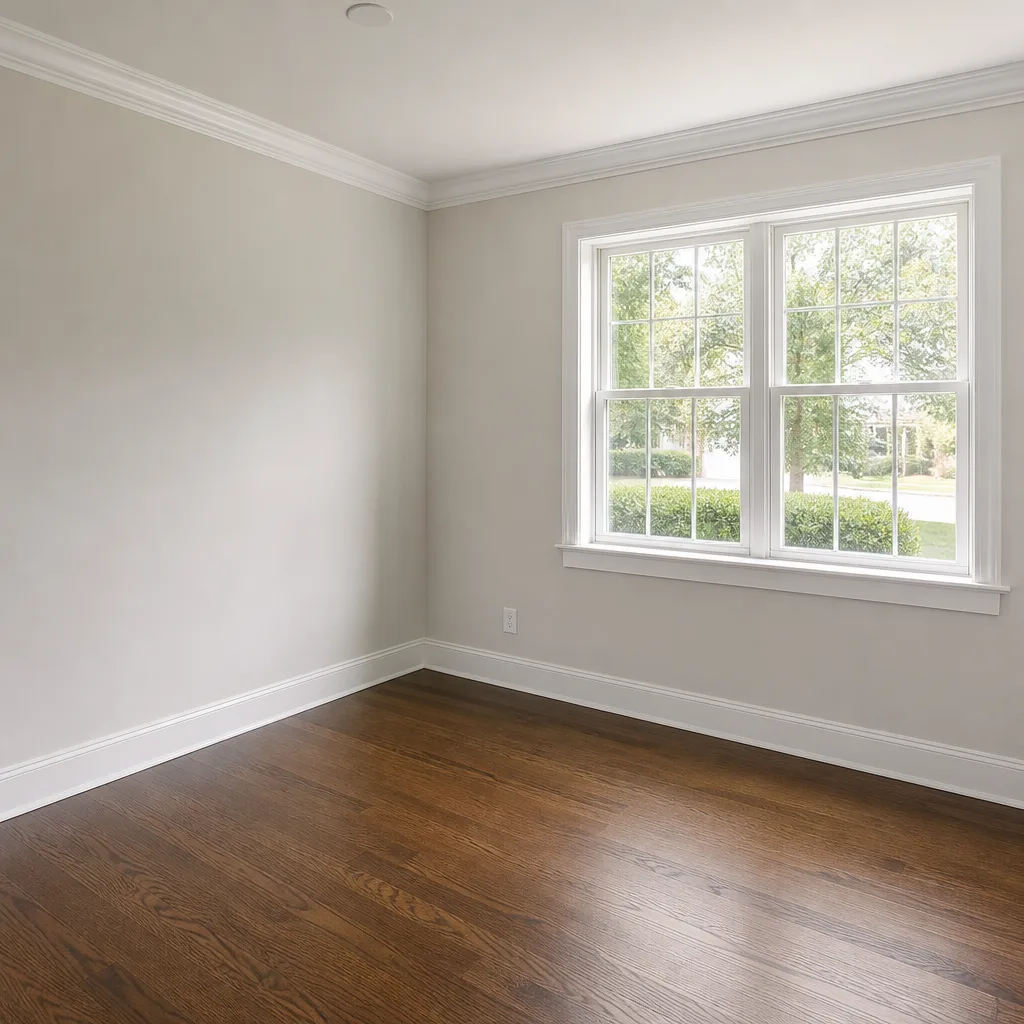
After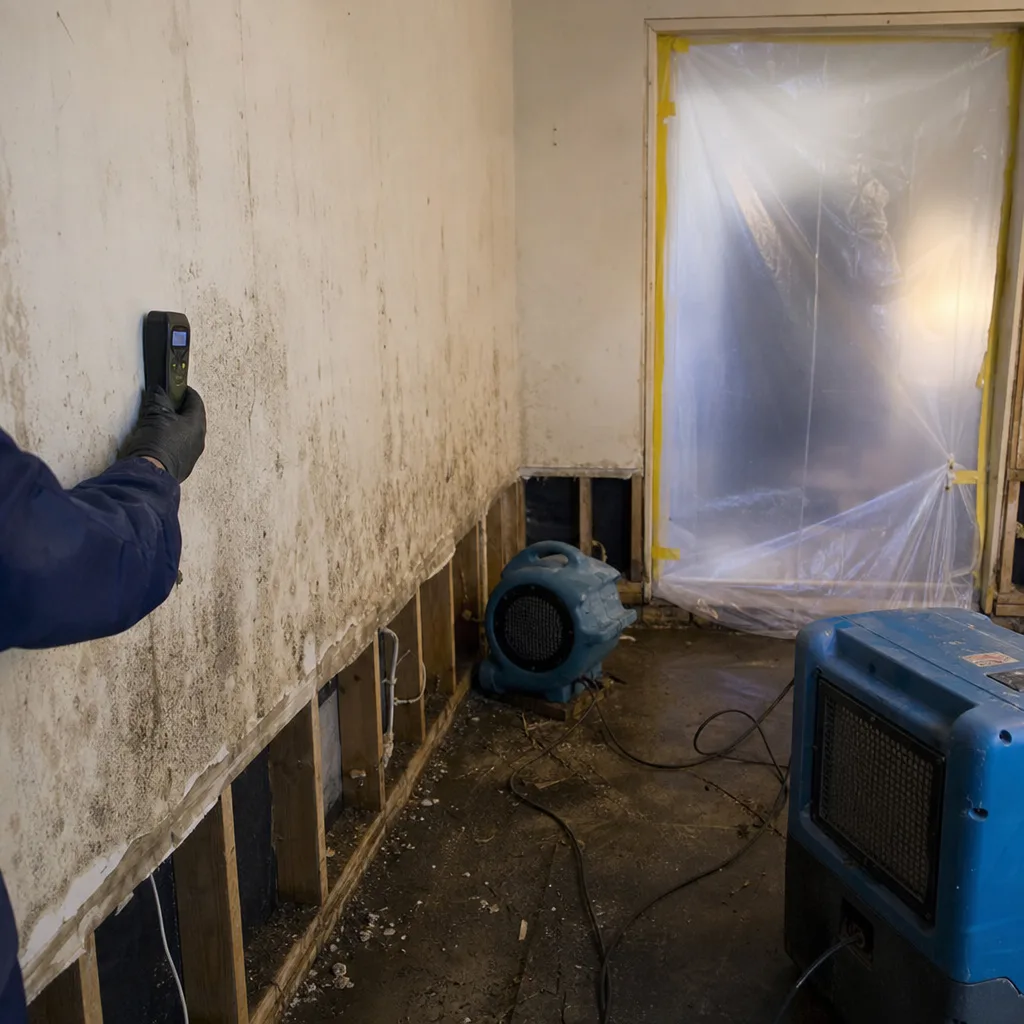 Before
 After
AfterFast, Reliable Mold Remediation Across Des Moines
Mold remediation in Des Moines, WA typically costs $1,800-$4,500 for crawl space and stem-wall colonization, with full inspection and written scope completed within 24 hours of your call. Our crews serve the mid-slope neighborhoods between the bluff top and the marina, from the Des Moines Creek corridor to the waterfront properties along Puget Sound. Dispatch and scheduling are coordinated from our Seattle office, but the technicians who arrive at your door know this city’s groundwater patterns and housing stock. Call (253) 265-9692 for a free written estimate, or bring us a competitor’s quote for a free second opinion under The Haven Standard.
Why DryMark Restoration Tacoma Is Des Moines’s Preferred Mold Remediation Company
We’ve restored more than 12,000 homes since 2011, and a significant share of them sit in Des Moines’s 1950s-70s ranch and split-level stock with the exact crawl-space problems this page describes. Our founder built Back to Dry Restoration around the documentation gap that costs homeowners their insurance claims, and that origin shows in every Des Moines job we take: a written price before work starts, a photo record on every visit, and daily moisture logs that turn restoration invoices into payable claims.
Des Moines homeowners find us because they read the three-star reviews. They want to know whether a company shows up with paperwork or promises. We show up with both. Our technicians are background-checked, uniformed, and licensed, with license numbers available on request. A live person answers every call, 24 hours a day, 7 days a week. No voicemail trees while water is still moving under your slab.
Our response time to Des Moines is typically under 90 minutes for active water or mold emergencies. For scheduled inspections, we book within 24 hours. The difference matters: stem-wall mold doesn’t spread like a flood, but it compounds silently while homeowners run dehumidifiers upstairs that never reach the actual colonization zone.
Our Mold Remediation Services in Des Moines
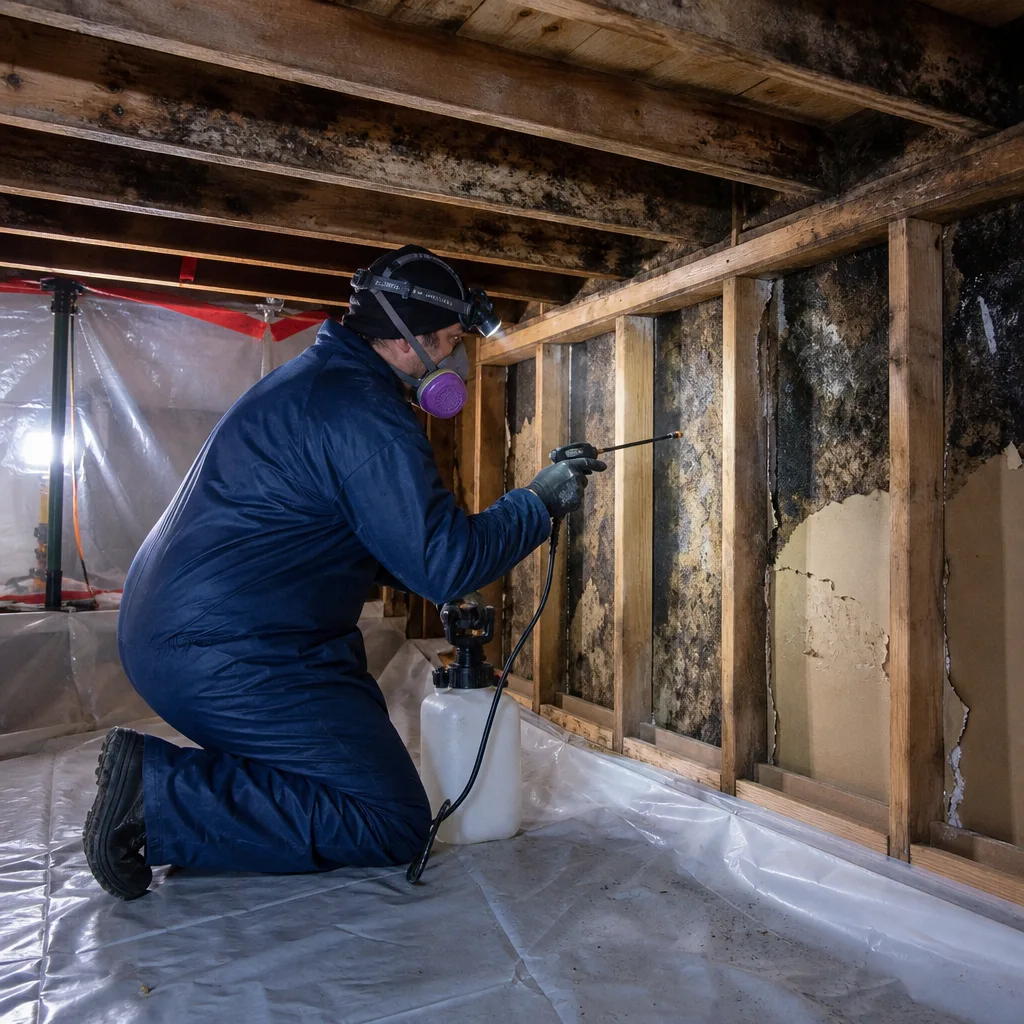
Mold Inspection & Testing
Every Des Moines inspection starts with moisture mapping, not a visual scan. We use professional-grade detection to find where Pacific marine humidity and hillside groundwater have combined in your crawl space. In the mid-slope neighborhoods above the marina, we specifically check the interior faces of foundation stem walls, where lateral groundwater migration creates colonies that never touch the floor joists above. Our inspection report includes documented photos, moisture readings by location, and a written scope with a fixed price before any work begins. Haven Standard, Clause 1.
Mold Removal
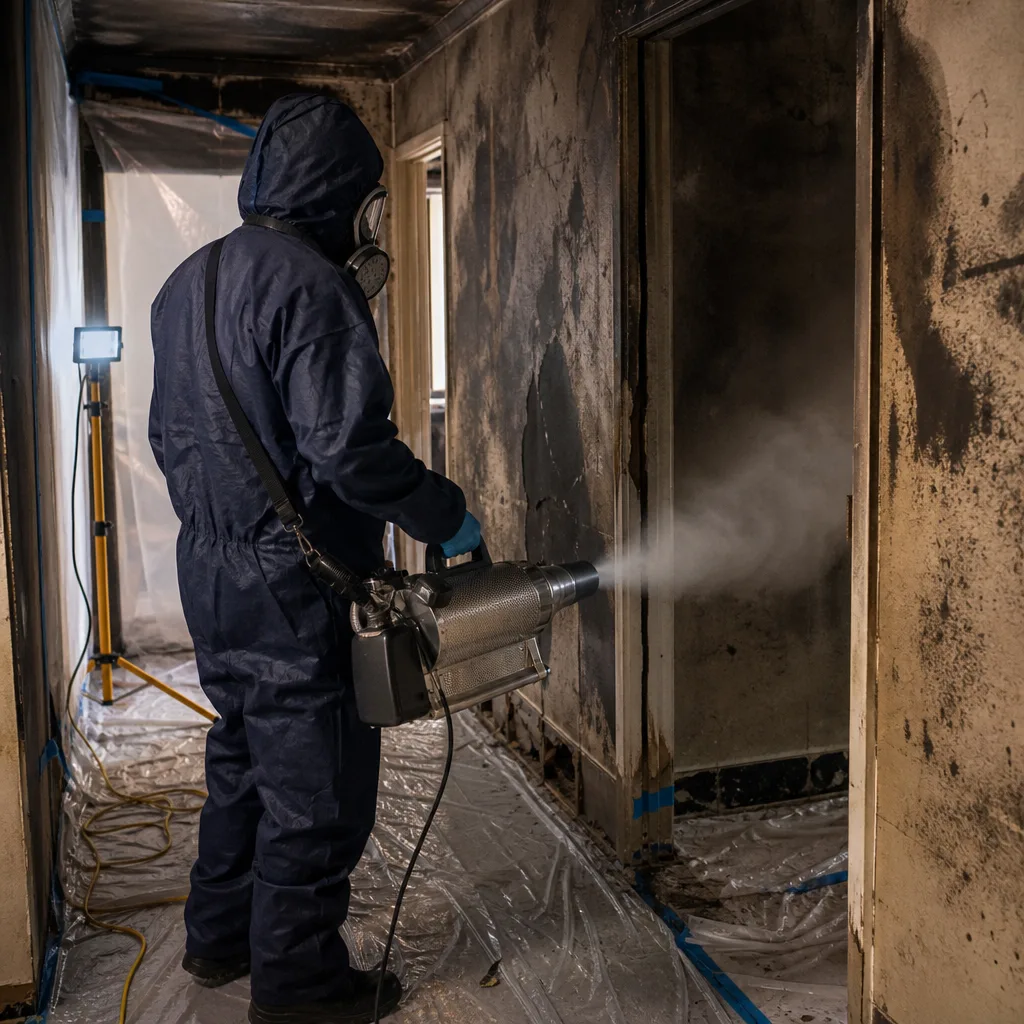
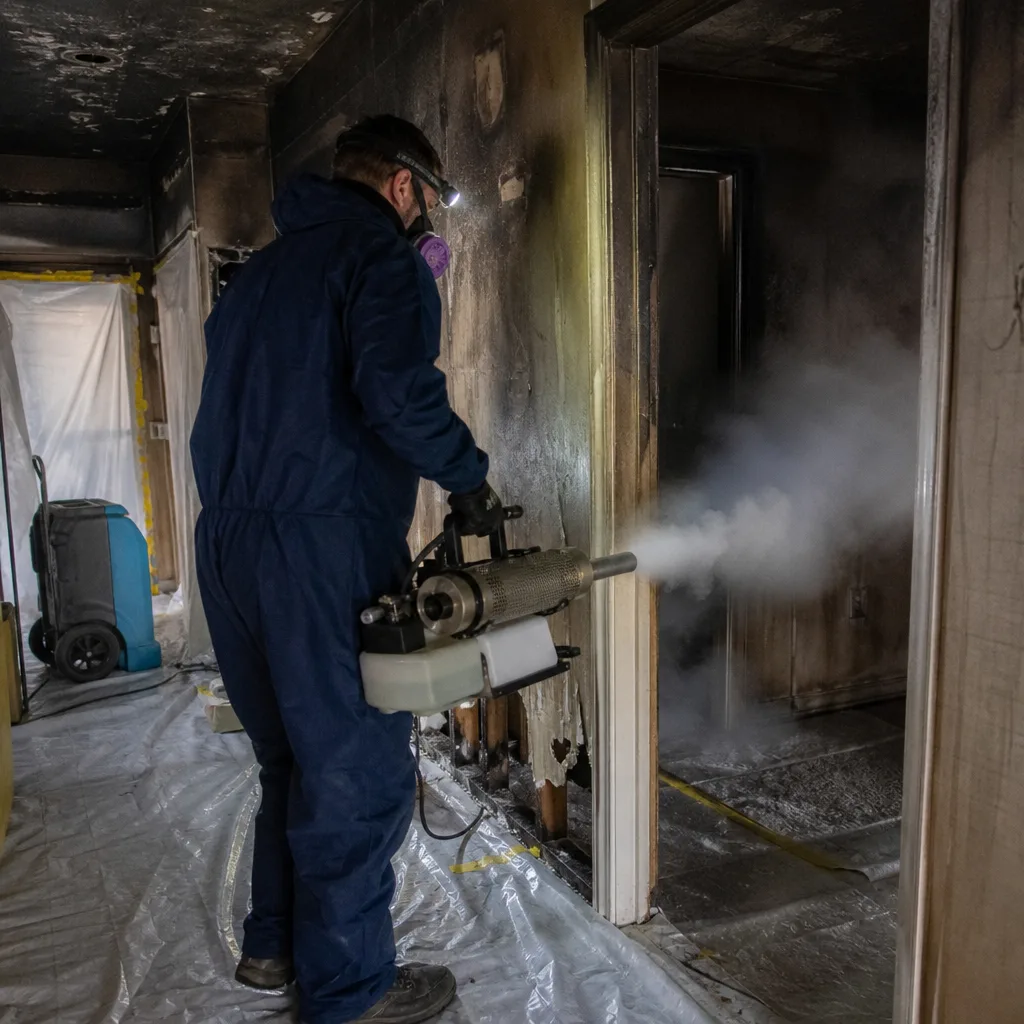
Removal in Des Moines means containment, source removal, and antimicrobial treatment, not surface wiping. For the stem-wall-first pattern common here, we erect containment barriers, remove affected porous material, and treat non-porous surfaces with EPA-registered antimicrobials. Our crews document every square foot with photos before, during, and after. The written scope defines the containment perimeter, the disposal protocol, and the drying equipment schedule. No additions once the crew is inside.
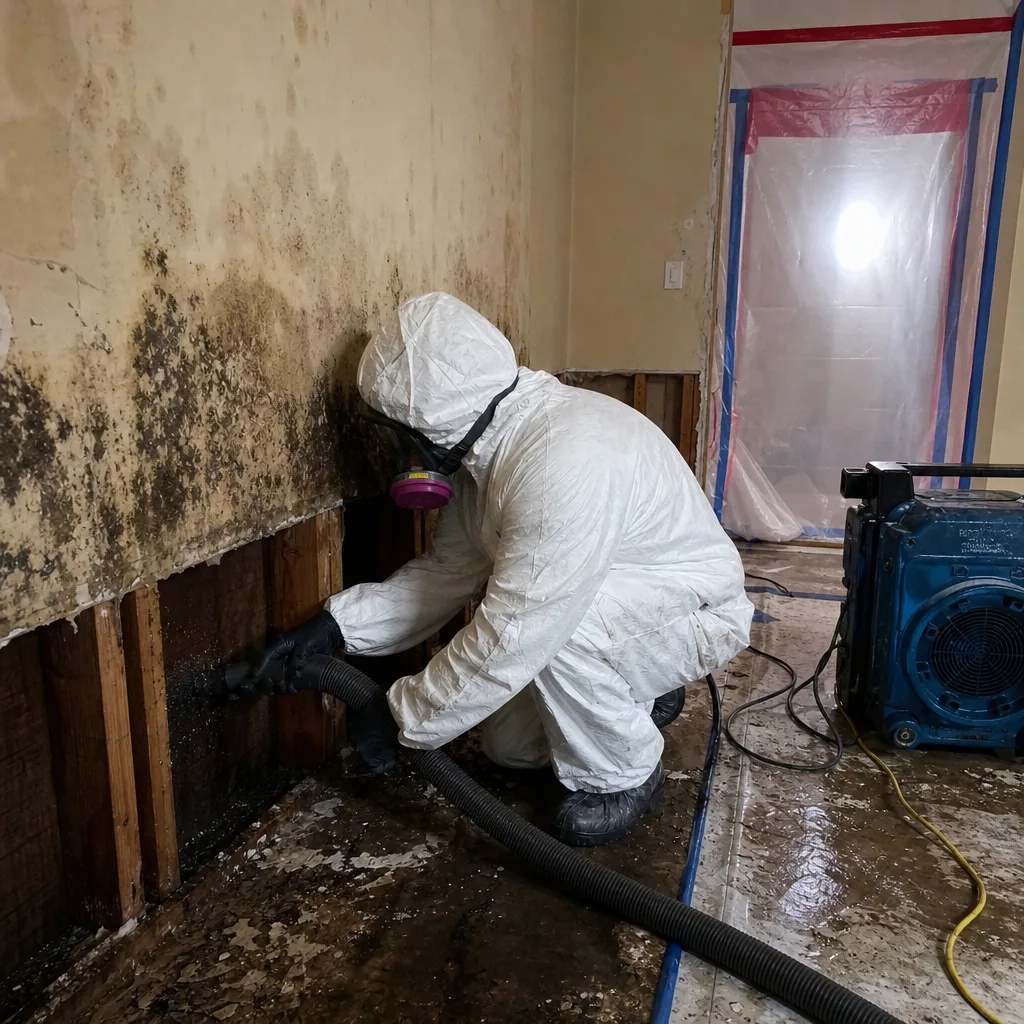
Black Mold Remediation
Stachybotrys and other toxigenic species in Des Moines almost always trace back to chronic moisture, not a single event. The marine climate off Puget Sound keeps relative humidity elevated year-round, and the unencapsulated crawl spaces of 1950s-70s homes along Des Moines Creek provide the perfect substrate. Black mold remediation here requires addressing both the colony and the vapor pressure differential that feeds it. We deploy Dri-Eaz and Phoenix dehumidification systems to establish tertiary drying, documented to IICRC standards with daily psychrometric data.
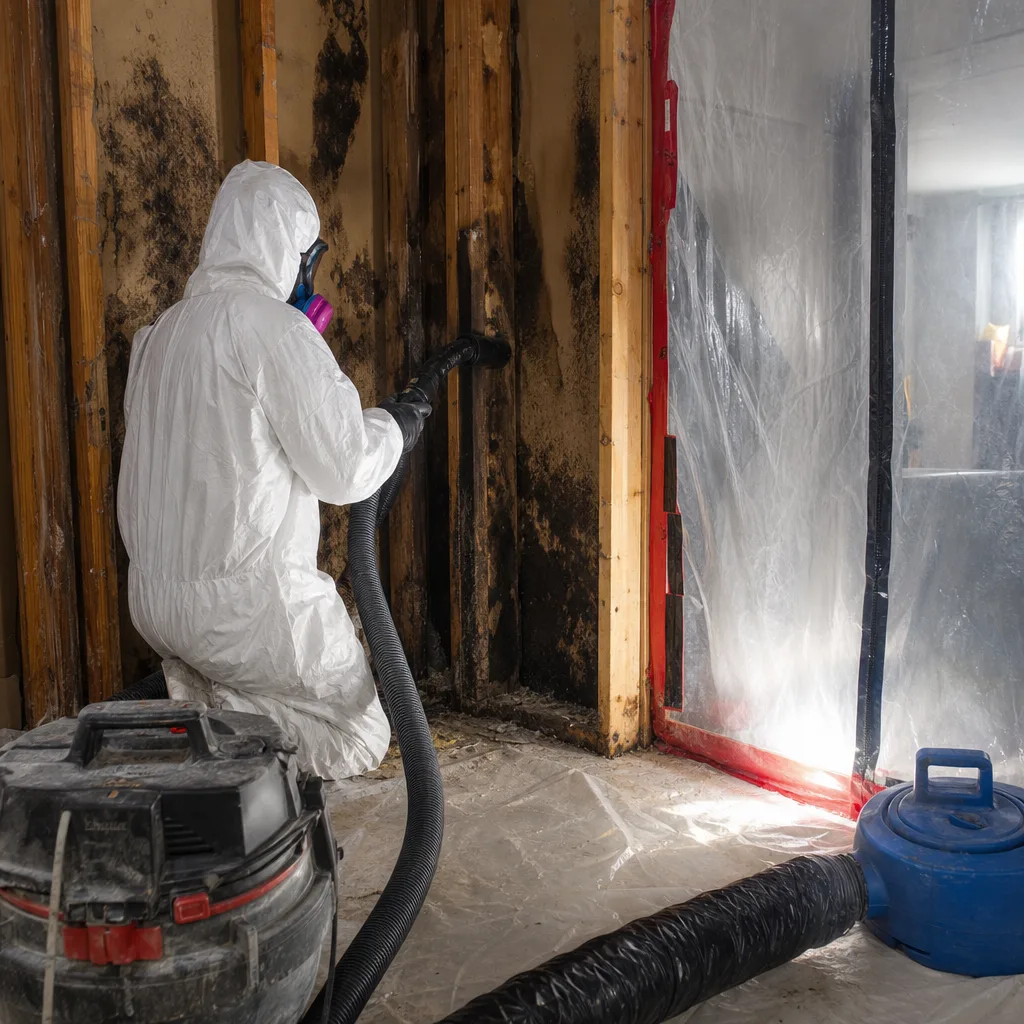
Air Quality Restoration
Post-remediation air testing in Des Moines verifies that spore counts have returned to ambient levels for this specific marine climate. We don’t compare your results to Phoenix or Denver standards. Our air quality restoration includes HEPA filtration during work, negative air pressure containment, and third-party lab verification when required for insurance or real estate transactions. The documentation package becomes part of your permanent record.
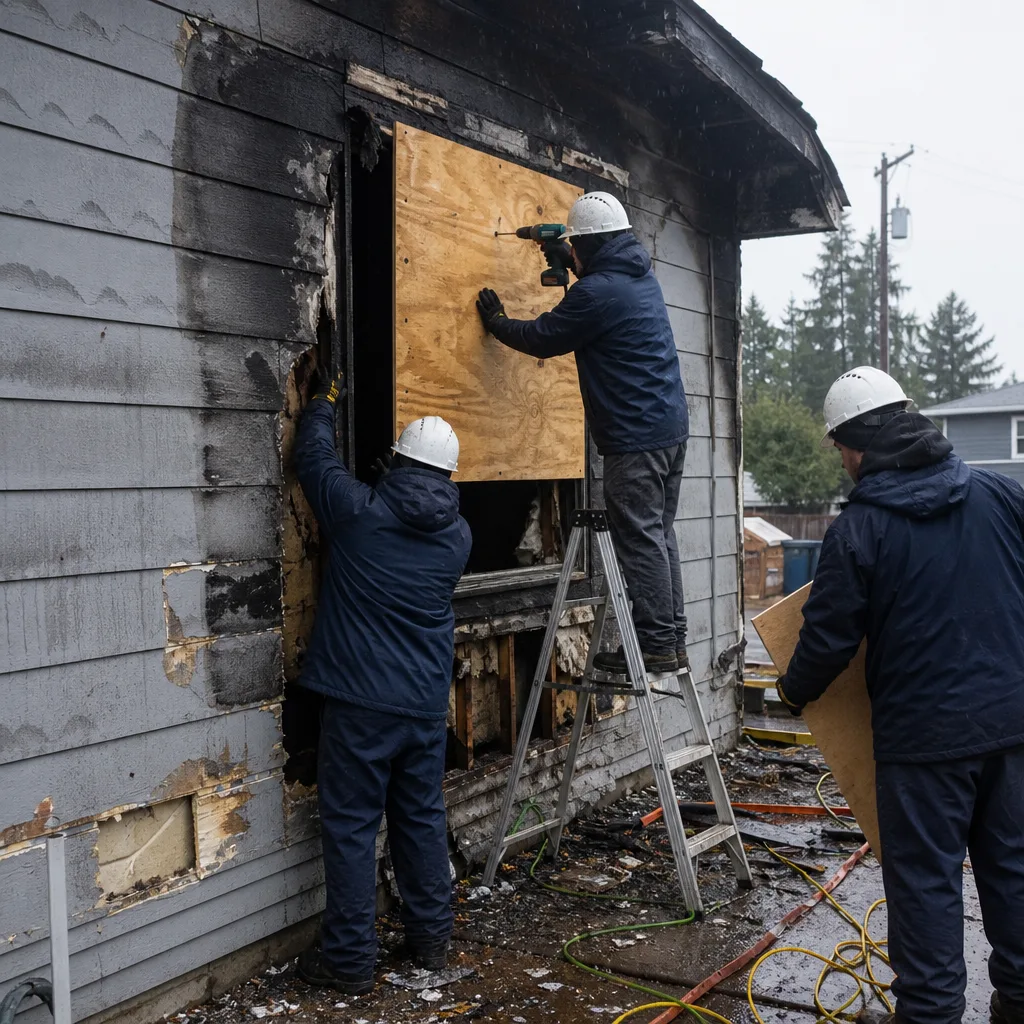
Crawl Space Treatment
This is where Des Moines differs from every inland city we serve. Crawl space treatment here must address two simultaneous moisture sources: hillside groundwater pushing laterally under slabs, and marine vapor intrusion from persistent Puget Sound humidity. Encapsulation alone won’t stop groundwater migration. Our crawl space treatment includes moisture source identification, structural drying with documented baselines, vapor barrier installation where appropriate, and ongoing humidity control recommendations. We treat the stem walls, not just the joists.
Moisture & Humidity Control
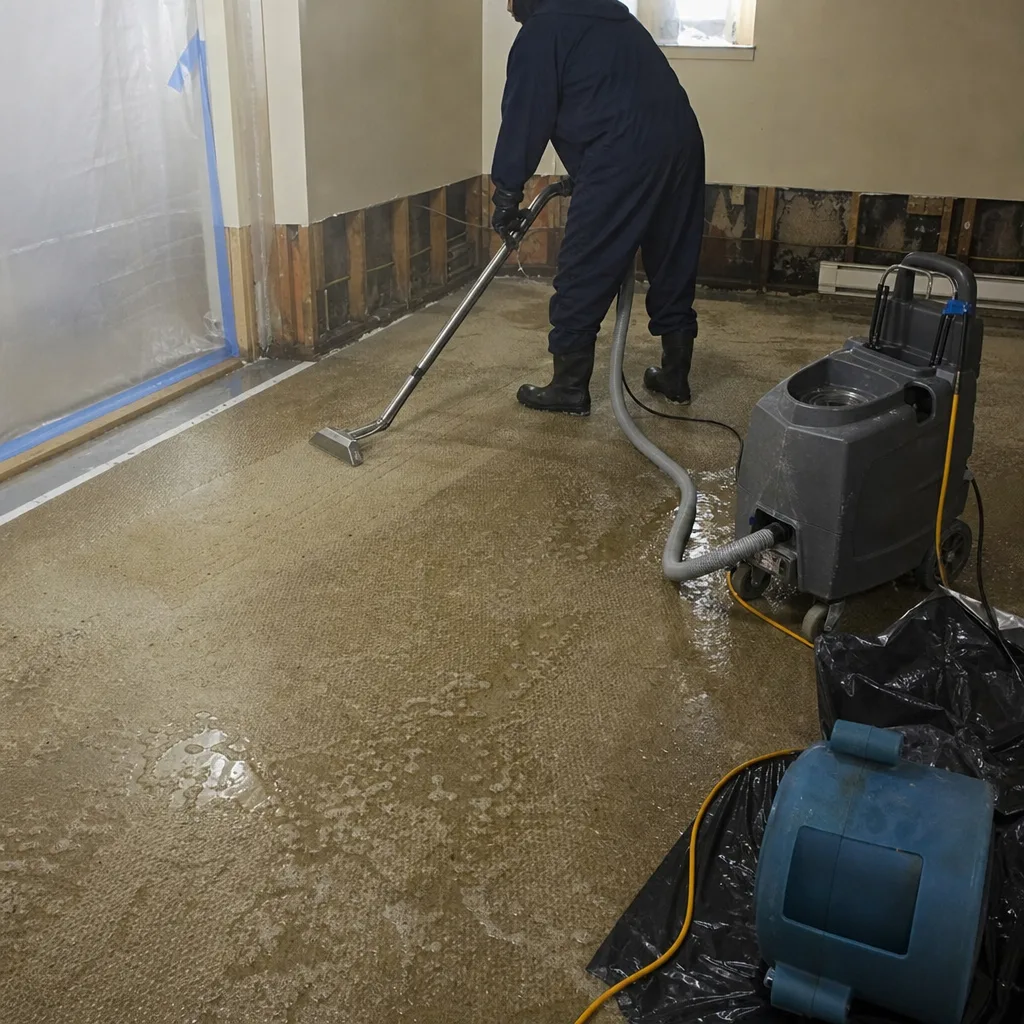
Moisture control in Des Moines requires understanding vapor pressure differential, the force that drives humid marine air into cooler crawl spaces. We install and monitor professional-grade dehumidification from Dri-Eaz and Phoenix, with daily logs tracking grains per pound and relative humidity. Homeowners receive the drying log as a standard deliverable, never an upsell. This documentation is what turns a restoration invoice into a claim an insurer pays without a fight.
What happens when you call
- 1
A real person answersNo phone trees - you reach a local pro.
- 2
You get an upfront price rangeHonest numbers before anyone is dispatched.
- 3
A background-checked tech heads outLicensed & insured, dispatched right away.
- 4
You approve before work beginsNothing starts until you say go.
BeforeAfterTrusted Brands We Service in Des Moines
Our Des Moines crews deploy professional-grade drying systems from Dri-Eaz, Phoenix, and XPOWER, documented to IICRC, RIA, and IFA standards. We stock local inventory of replacement vapor barriers, antimicrobial treatments, and HEPA filtration media so Des Moines jobs aren’t delayed waiting for parts. Equipment selection follows the moisture load: Phoenix 200 MAX dehumidifiers for heavy stem-wall saturation, Dri-Eaz Revolution units for sustained tertiary drying, XPOWER air movers for targeted vapor pressure disruption. Every machine’s output is logged daily.
Common Mold Remediation Problems We See in Des Moines Homes
- Upstairs dehumidifiers miss the actual colonization zone. Homeowners treat the musty odor with a portable unit running in the living room, never realizing Des Moines’s lateral groundwater migration has already colonized the interior faces of the stem walls below. No upstairs dehumidifier can reach that zone. The mold spreads while the homeowner believes they’re controlling it.
- Surface-only cleanup after rain events guarantees return. Contractors skip moisture mapping at the stem-wall line during multi-day Pacific storms, so Category 2 or Category 3 water wicks under the slab and the mold returns within weeks. We map to the foundation perimeter every time.
- Deferred encapsulation compounds damage for years. Encapsulation or vapor barrier installation is deferred on 1950s-70s ranch and split-level crawl spaces along the Des Moines Creek corridor, letting marine vapor intrusion and hillside groundwater compound silently. By the time visible damage appears, the colony has often been active for multiple seasons.
- Flatland contractors apply inland assumptions to bluff topography. Technicians trained on Federal Way or Tacoma flatland homes look for mold on floor joists and miss the stem-wall pattern entirely. Des Moines’s dual-source moisture assault requires different detection protocols and different drying strategies.
Pricing for Mold Remediation in Des Moines, WA
Mold inspection and testing in Des Moines runs $350-$650, including full moisture mapping, documented photography, and a written scope with fixed price. Crawl space mold remediation for the stem-wall-first pattern typical here ranges $1,800-$4,500, depending on affected linear footage of stem wall, whether vapor barrier replacement is required, and the extent of structural drying needed. Black mold or toxigenic species remediation with full containment and third-party air verification runs $3,500-$7,500. Air quality restoration and post-remediation verification adds $400-$800.
What affects cost: the linear feet of stem wall affected, the presence of finished lower-level spaces requiring containment extension, the need for vapor barrier or encapsulation installation, and whether the moisture source requires drainage correction beyond the remediation scope. Every Des Moines job receives a written price before work begins, with no scope-creep additions once the crew is inside. Haven Standard, Clause 1. Bring a competitor’s written estimate and we’ll review it at no charge.
We Also Serve Cities Near Des Moines
Our Mold Remediation in Des Moines crews also respond to Mold Remediation calls in Tacoma, Fircrest, Milton, and Federal Way. Each city gets the same documentation-first protocol, but Des Moines’s bluff topography and dual-source moisture environment create remediation challenges distinct from any of them.
Serving Des Moines, WA - Our Local Coverage Area
We’re based in the Des Moines area and know this community well. Use the map below to see our service coverage - if you’re nearby, we can almost certainly help.
FAQs - Mold Remediation in Des Moines
Because Des Moines’s mid-slope residential band sits between the bluff top and the marina, multi-day rain events push groundwater laterally under slabs and into crawl spaces, so the mold colony forms on the interior faces of foundation stem walls where the homeowner’s upstairs dehumidifier never reaches it. This stem-wall-first pattern is far less common in flatter inland suburbs like Federal Way. A homeowner near the Des Moines Creek corridor called after noticing a musty odor upstairs; our tech ran moisture mapping in the unencapsulated crawl space and found the actual colonization on the interior faces of the stem walls, not the joists, where the homeowner’s dehumidifier had been running for weeks. We set up containment, removed the affected material, applied antimicrobial treatment, and ran structural drying with Dri-Eaz dehumidification and XPOWER air movers against a documented baseline. The drying logs showed the stem walls back to pre-loss condition, and the homeowner could finally connect the smell to the source. Call (253) 265-9692 for inspection and written scope.
Mold colonization can begin 24-72 hours after water intrusion in Des Moines’s marine climate, where persistent Puget Sound humidity keeps ambient moisture levels elevated year-round. The Pacific marine climate delivers concentrated rainfall from November through March, and Des Moines’s bluff topography channels runoff directly toward the mid-slope residential band, raising groundwater tables faster than flat inland areas experience. That means water sits longer and mold establishes faster. Speed matters for mitigation, but remediation after established colonization follows a scoped, scheduled protocol with written pricing. Call (253) 265-9692 for emergency response or scheduled inspection.
Des Moines’s dual-source moisture assault, unique among our service cities, combines hillside groundwater from bluff runoff with persistent marine vapor intrusion from Puget Sound, a combination far less common in inland suburbs like Federal Way. The majority of Des Moines was built out between the 1950s and 1970s as a Puget Sound bedroom community, resulting in unencapsulated crawl spaces maximally vulnerable to this compound moisture environment. Homes closer to the marina corridor and along Des Moines Creek predate modern vapor barriers entirely. Restoration contractors working here know to look for the stem-wall tell, where hillside groundwater migrates under slabs and colonizes foundation walls that a homeowner’s dehumidifier never touches. Call (253) 265-9692 for a crawl space inspection with full moisture mapping.
Water in Des Moines crawl spaces is categorized by contamination level per IICRC standards: Category 1 (clean water), Category 2 (gray water with chemical or biological load), or Category 3 (black water with sewage or ground contaminants). During multi-day rain events, the Des Moines Creek corridor is particularly prone to localized flooding that backs up into crawl spaces, often elevating Category 1 groundwater to Category 2 or 3 through soil contact and cross-contamination. The category determines PPE requirements, antimicrobial selection, disposal protocol, and whether structural materials can be salvaged or must be removed. We document the category determination with photos and written justification on every job. Call (253) 265-9692 for assessment and written scope.
A Des Moines homeowner should expect a written scope delivered before work begins, defining the containment perimeter, the affected square footage by location, the removal and treatment protocol, the drying equipment schedule with daily log requirements, and the fixed price. Haven Standard, Clause 1. The scope for stem-wall-first colonization specifically addresses interior foundation faces, not just floor joists, and includes moisture source identification for the dual-source environment. Photo documentation is standard on every visit, not an upsell. The 365-Day Done Right Promise applies to all work. Call (253) 265-9692 to schedule inspection and receive your written scope.
Written by Alicia Brennan, Owner at Back to Dry Restoration, serving Des Moines since 2011 under The Haven Standard.